What You Need to Know About the Visa Processing Freeze in 2026
Immigration news update: reports of a visa processing freeze for 75 countries. Learn what it may mean and next steps—call 1-844-967-3536.
Published on January 15, 2026
Talk to an immigration attorney
Free call. A clear plan for your case.
Free & confidential · Se habla espanol · 24/7

Have questions? Talk to an attorney - free evaluation.
Call 1-844-967-3536Worried how the latest immigration news affects you?
Schedule a confidential case review with an immigration attorney - know exactly where you stand.
What You Need to Know About the Visa Processing Freeze in 2026
This immigration news story is drawing attention because it may affect visa applicants from many countries, including people seeking to visit, work, study, or reunite with family in the United States. If you or a loved one has a pending visa interview, a recent refusal, or urgent travel plans, it is important to understand what a “freeze” could mean, what parts of the process may still move forward, and what options may exist.
Need a Work Visa or Permit?
H-1B, TN, L-1, and more. We help workers and employers navigate the visa process.
According to a widely shared report, the U.S. may have frozen visa processing for applicants from a group of countries. You can review the referenced report here: report on the alleged visa processing freeze affecting multiple countries.
Worried about how this immigration news may affect your case? Talk with an immigration lawyer before you make travel or filing decisions. Contact us to discuss your situation—call 1-844-967-3536. Se Habla Español.
1) What This Immigration News Could Mean for Charlotte Residents
For many people in charlotte, immigration is personal. A change in visa operations can affect family visits, fiancé visas, student plans, and employer hiring timelines.
A. Who is most likely to feel the impact
If visa processing slows or pauses, the effects often hit people with time-sensitive needs. This can include:
- Family-based cases waiting on consular interviews (spouses, parents, children)
- Nonimmigrant visas (B-1/B-2 visitors, F-1 students, J-1 exchange visitors)
- Employment visas (such as H-1B, L-1, O-1) that require consular stamping
B. Why it matters in the Charlotte region
Charlotte-area employers, universities, and hospitals often rely on global talent. When consular posts stop scheduling or stop issuing visas, hiring and start dates can change quickly.
In our experience serving charlotte residents, even short delays can cause real problems—missed weddings, postponed semesters, and stalled job onboarding.
C. What a “freeze” may look like in real life
A freeze is not always a single clear announcement. Sometimes it shows up as:
- Interview calendars suddenly closing
- Administrative processing (221(g)) increasing
- Longer security checks and background review timelines
- Cases held without a clear estimate
2) How U.S. Visa Processing Works (and Where It Can Pause)
To make sense of this immigration news, it helps to separate USCIS processing from consular processing. USCIS reviews petitions inside the U.S., while U.S. embassies and consulates handle most visa interviews abroad.
A. USCIS vs. Department of State: two different tracks
Most visa journeys have two stages:
- Petition stage (often with USCIS): for example, I-130, I-129F, I-140, I-129
- Visa issuance stage (Department of State consular processing): interview, security checks, and the visa stamp
USCIS information and processing basics are available at USCIS.gov.
B. Why consular posts can slow down or stop issuing visas
The Department of State manages visa operations and has broad authority to set procedures, staffing, and security screening. Official guidance for U.S. visas is published at travel.state.gov’s U.S. visa portal.
Even when a petition is approved, a consulate can delay issuance for additional review, documentation requests, or security checks. That can feel like a “freeze” to applicants.
C. “Administrative processing” (221(g)) and what it means
Many applicants get a 221(g) refusal, which is not always a permanent denial. It often means the case is temporarily refused while the consulate completes checks or waits for missing documents.
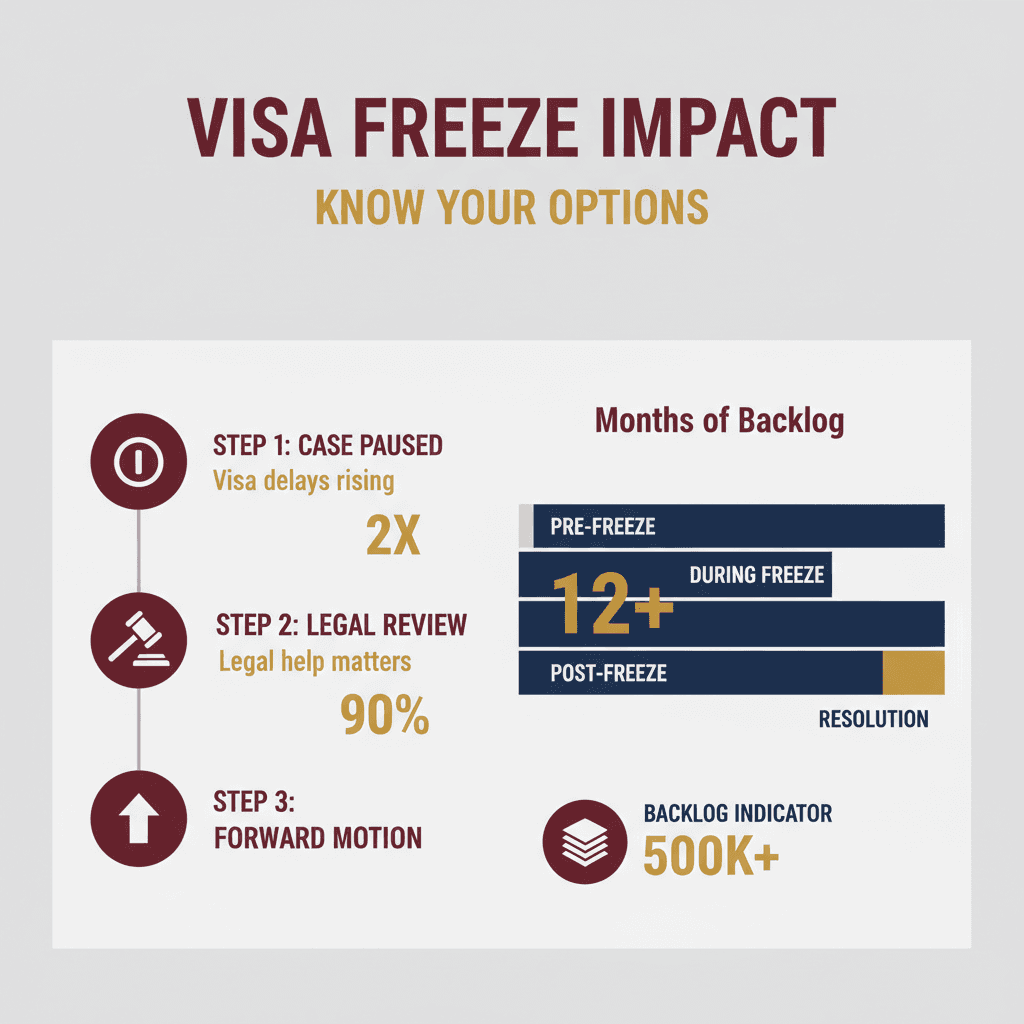
Because timing matters, document quality and case strategy can make a difference—especially when posts tighten procedures due to global events.
3) The Legal Backdrop: What the Government Can and Cannot Do
When major policy shifts hit the headlines, people ask: “Can they really do that?” The answer depends on the legal tool being used and whether it is a visa-issuance pause, an entry restriction, or a security-based review policy.
A. Entry restrictions vs. visa processing pauses
There is a difference between (1) restricting entry to the U.S. and (2) restricting visa issuance or consular operations. Entry restrictions are often tied to the President’s authority under the Immigration and Nationality Act (INA), including INA § 212(f) (8 U.S.C. § 1182(f)).
Visa issuance rules are also governed by statute and regulations, and consular officers have wide discretion in individual cases.
B. A key case to know: Trump v. Hawaii
Courts have reviewed executive actions affecting travel and entry in the past. One major Supreme Court case is Trump v. Hawaii, 138 S. Ct. 2392 (2018), which discussed the scope of INA § 212(f) authority. That case does not answer every question about consular operations, but it explains why broad restrictions can be difficult to challenge.
C. What to watch for in official updates
Because headlines move fast, the most reliable confirmation comes from official government sources. If you are tracking developments from this immigration news story, monitor:
- U.S. Department of State announcements and consular post updates
- USCIS policy updates (for petition-related changes)
- EOIR updates for Immigration Court impacts (if your case is in removal proceedings)
EOIR information is available at justice.gov/eoir.
Do you have a pending visa interview, a 221(g), or urgent travel plans? Call 1-844-967-3536 to speak with our team, or message us here. Se Habla Español.
4) Practical Steps If Your Visa Case Is Affected
When uncertainty hits, it is easy to panic. A better approach is to take a few clear steps that protect your timeline and your record.
A. Check what stage your case is in
Different steps apply depending on where you are in the process:
- USCIS petition pending: focus on evidence, deadlines, and requests for evidence (RFEs).
- NVC stage (for many immigrant visas): confirm fees, civil documents, and affidavit of support items are complete.
- Consular interview scheduled or pending: review the consulate’s website and appointment system; document every update.
B. Avoid common mistakes that can make delays worse
During periods of heightened screening, small errors can become big delays. Watch out for:
- Inconsistent addresses, job history, or dates across forms
- Missing translations or incorrect civil documents
- Overstays or prior immigration violations not fully disclosed
- Social media or security-related questions answered carelessly
C. Consider alternative legal pathways (when appropriate)
Depending on your facts, there may be options that reduce travel uncertainty, such as:
- Change/extend status inside the U.S. (when eligible)
- Adjustment of status for qualified applicants already in the U.S.
- Expedite requests in limited situations (medical emergencies, urgent humanitarian reasons)
Not every option fits every case. An individualized legal review is key, especially when the latest immigration news signals a tightening environment.
5) How Vasquez Law Firm, PLLC Helps During Rapid Policy Changes
What's Your Immigration Situation?
Answer 3 questions - we'll tell you your options
Question 1 / 3
What best describes your situation?
Keep Reading

Policy shifts are stressful because they change timelines and expectations. Vasquez Law Firm, PLLC helps clients respond with a plan, not guesses. Attorney Vasquez, JD has 15 years of immigration law experience and is admitted to the North Carolina State Bar and the Florida Bar.
A. Strategy built around your real goal
Some clients want the fastest lawful option. Others want the option with the lowest risk of refusal. We build a strategy based on your priorities and your record, then map the steps and likely timelines.
Learn more about our Immigration Law services, including family immigration, work visas, and defense-related matters.
B. Strong documentation to reduce delays
When consular posts increase scrutiny, documentation matters. We focus on clear, organized evidence, including:
- Relationship evidence for family and fiancé cases
- Employer support letters and role descriptions for work visas
- Financial sponsorship documents (where required)
- Prior immigration history and any prior refusals
C. Local, bilingual guidance for Charlotte-area families
Serving charlotte residents means we understand local needs and timelines. If your issue ties into removal defense, hearings may be connected to the Charlotte Immigration Court (EOIR). We also routinely assist clients from nearby communities like Concord, Gastonia, and Rock Hill.
Our team is bilingual—Se Habla Español—so you can explain your situation clearly and confidently.
6) Frequently Asked Questions About Visa Freezes and Processing Delays
Q1: Is a “visa processing freeze” the same as a travel ban?
A:Not always. A travel ban usually focuses on restricting entry into the U.S. A “freeze” may refer to slowed consular operations, paused interview scheduling, or heightened screening. The legal authority and impact can be different.
Q2: If my USCIS petition is approved, can the consulate still delay my visa?
A:Yes. USCIS approval is often only step one. Consular officers can still request more documents, conduct security checks, or place a case into administrative processing. That is one reason this kind of immigration news can affect even “approved” cases.
Q3: What does 221(g) mean, and how long does it take?
A:A 221(g) refusal means the case is temporarily refused while the consulate completes additional steps, such as background checks or reviewing missing documents. Timing varies widely. A lawyer can help you respond correctly and track the case without creating inconsistent statements.
Q4: Can I expedite my visa interview if there is a medical emergency?
A:Sometimes. Expedites are discretionary and require proof. Each consulate has its own process, and not every emergency qualifies. We often advise clients to prepare a short, clear request with supporting records and a realistic timeline plan.
Q5: I am in Charlotte—does this affect Immigration Court cases too?
A:Visa processing is usually handled by the Department of State, while Immigration Court is under EOIR. They are separate systems. But a visa delay can still affect a person’s broader immigration plan, especially if they have pending proceedings, prior removal orders, or need waivers.
Q6: What should I bring to my consultation about visa delays?
A:Bring your receipt numbers, USCIS approvals, DS-160/DS-260 confirmation pages, refusal sheets (including 221(g)), interview appointment notices, and any prior immigration history. A full record helps identify options and risks quickly.
Get clear answers before you take your next step. If today’s immigration news has you worried about your visa or your family’s plans, contact Vasquez Law Firm, PLLC now. Call 1-844-967-3536 or schedule your consultation. Se Habla Español.
Disclaimer: This article is for general information only and does not create an attorney-client relationship. Immigration rules can change quickly, and outcomes depend on individual facts.

William Vasquez
Founder & CEO, Vasquez Law Firm, PLLC
William Vasquez is the founder and CEO of Vasquez Law Firm, PLLC, a results-driven firm specializing in immigration, criminal defense, personal injury, and workers' compensation. A U.S. Air Force veteran and recipient of the Joint Service Achievement Medal, William is dedicated to fiercely fighting for his clients' rights.
Related Legal Services
Need legal help? Learn more about our immigration law practice, or contact us for a free evaluation.
You can also visit North Carolina immigration lawyers for more information.