How Co-Employee Liability Affects Workers Compensation Claims in 2026
Wondering how co-employee liability works under Florida and NC workers comp rules? Learn key facts and get a free case evaluation from Vasquez Law.
Published on April 16, 2026
Hurt on the job?
Free review of your workers' comp claim.
Free & confidential · Se habla espanol · 24/7

Have questions? Talk to an attorney - free evaluation.
Call 1-844-967-3536Hurt on the Job? Claim What You Are Owed
A review of your workers' comp claim - we handle the fight.
How Co-Employee Liability Affects Workers Compensation Claims in 2026
If you’re injured on the job in Orlando or North Carolina, understanding co-employee liability is crucial in figuring out who may be responsible for your injuries. Co-employee liability involves questions about whether a fellow employee’s actions can make an employer liable in a workers' compensation claim. In this article, learn the basics of co-employee liability under Florida and North Carolina laws, explore common scenarios, and find out when you need a workers compensation lawyer to protect your rights.
Need help with your case? Our experienced attorneys are ready to fight for you. Se Habla Español.
Or call us now: 1-844-967-3536
Quick Answer
Co-employee liability refers to whether the actions or negligence of a fellow employee can hold the employer responsible under workers compensation laws. In Florida and North Carolina, employers generally have immunity from lawsuits involving co-employees. However, exceptions exist when employer negligence or statutory exceptions apply.
- Employers usually shielded from co-employee lawsuits in workers comp claims
- Employer negligence can open liability despite co-employee involvement
- Florida and North Carolina have specific statutes addressing these issues
- Understanding these rules is key for injured workers seeking benefits
- Legal help can clarify complex cases and protect worker rights
Understanding Co-Employee Liability
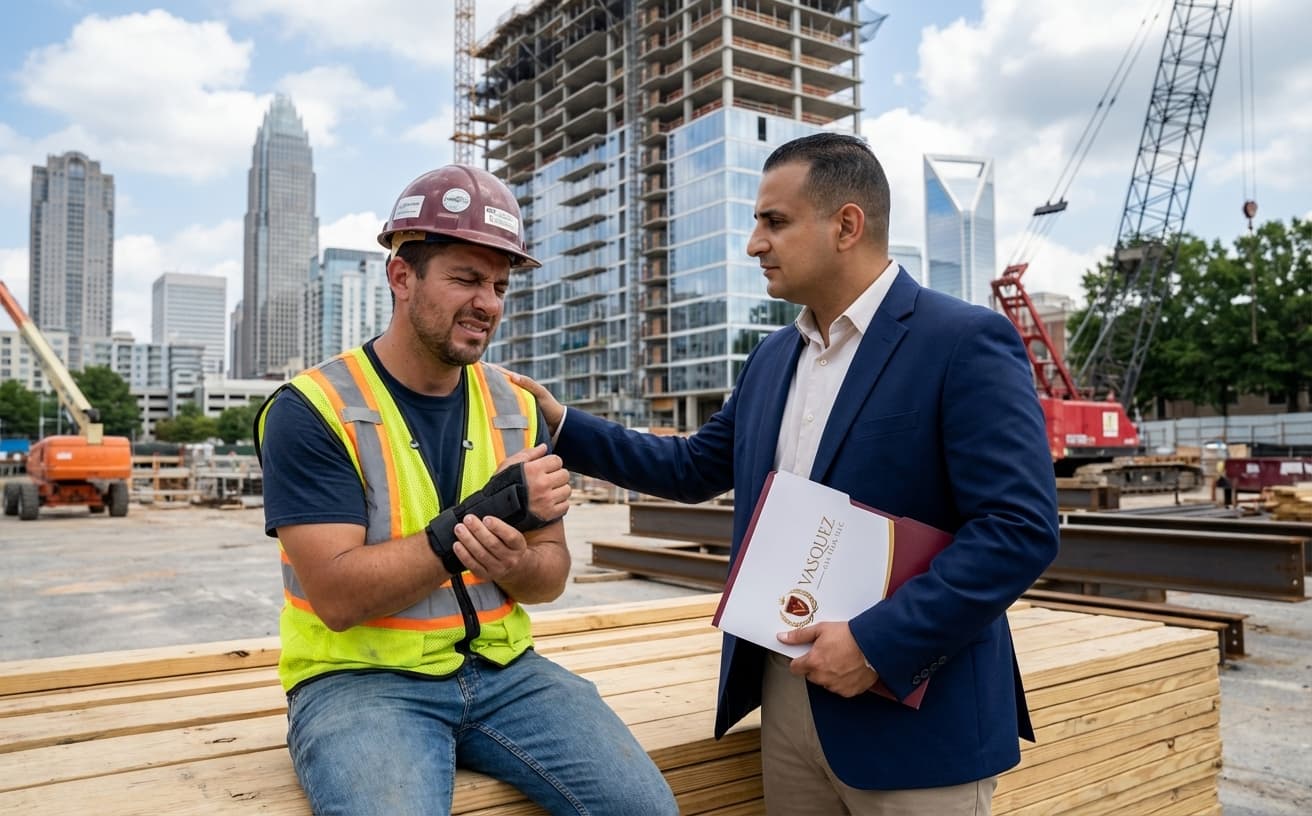
Imagine a construction worker in Orlando who falls due to a coworker’s unsafe handling of machinery. Can the injured worker hold the employer responsible for the co-employee’s mistake? This question lies at the heart of co-employee liability in workers compensation claims.
Co-employee liability examines if an employee's actions can legally make the employer accountable for workplace injuries. Both North Carolina and Florida workers compensation laws generally shield employers from liability caused solely by co-employees. These laws are intended to reduce costly litigation and protect businesses under the workers compensation exclusive remedy.
Key Statutes in Florida and North Carolina
Florida Statutes 440.20 defines employer liability limits, emphasizing that workers compensation acts as the exclusive remedy for workplace injuries. Similarly, North Carolina General Statutes § 97-10.1 establishes employer immunity from lawsuits related to employee injuries, including those caused by fellow employees.
Exceptions to Co-Employee Immunity
Exceptions occur when employers are negligent in ways exposing workers to harm—such as failing to provide proper training, ignoring known hazards, or not enforcing safety rules. Florida’s Section 440.1025 outlines conditions where employer liability may extend beyond general immunity.
Vicarious Liability Florida Context
Under vicarious liability, employers can be held responsible for employee actions during work duties. However, co-employee immunity limits this in co-employee injury cases unless exceptions apply. Subcontractor laws in Florida may complicate liability determinations by distinguishing employee versus subcontractor status, which impacts co-employee liability.
Step-by-Step: How to Protect Your Claim
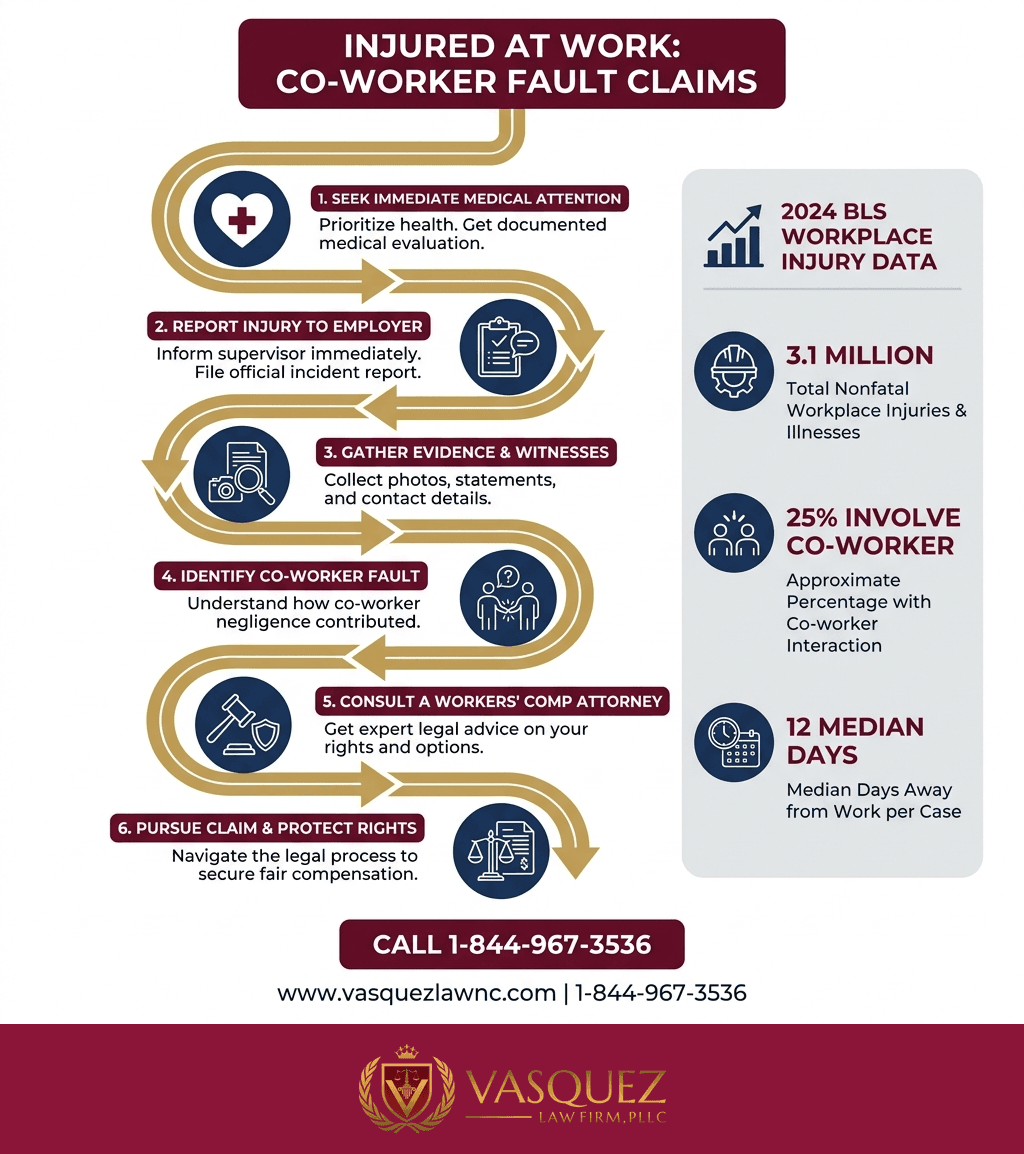
- Report Your Injury Immediately: Notify your employer or supervisor about the incident and injury as soon as possible. Immediate reporting is vital to protect your rights.
- Seek Medical Attention: Get prompt medical care and maintain records of all treatments related to your injury.
- Document Details: Record how the injury occurred, including the co-employee’s role, any witnesses, and unsafe conditions.
- File a Workers Compensation Claim: Submit the claim according to employer and state guidelines, meeting deadlines set under Florida Statutes workers compensation rules or North Carolina law.
- Consult a Workers Compensation Attorney: Early legal advice helps navigate complex co-employee liability rules and ensures your claim receives full attention.
Documents and Evidence Checklist
- Incident reports or employer injury forms
- Medical records and doctor's notes
- Witness statements and contact information
- Photos or videos of injury site or equipment involved
- Employment contracts or subcontractor agreements if applicable
- Correspondence with employer or insurance representatives
Timeline: What to Expect in Your Case
- Immediately: Report injury and seek medical care.
- First 7 days: Submit workers compensation claim paperwork.
- 2-4 weeks: Claim may be processed and reviewed by insurance.
- 1-3 months: Possible hearings or disputes resolved at NC Industrial Commission or Florida Division of Workers’ Compensation.
- Ongoing: Treatment may continue; appeals or settlements discussed.
Costs and Fees Involved
- Workers compensation claims typically do not have upfront legal fees; attorneys often work on contingency.
- Cost factors include claim complexity, medical expenses, and potential litigation.
- Legal representation can improve outcomes and maximize benefits.
- Employer disputes or co-employee liability claims may extend timelines and costs.
Common Mistakes to Avoid
- Delaying injury reporting—always inform your employer immediately.
- Failing to seek medical care promptly can damage your claim.
- Not documenting the incident thoroughly harms your case credibility.
- Ignoring employer instructions without legal advice may reduce benefits.
- Assuming you cannot challenge denials related to co-employee liability.
- Failing to understand subcontractor status if applicable.
- Not hiring an experienced workers compensation attorney early.
- Attempting to negotiate directly with insurance adjusters without representation.
- Overlooking the importance of witness statements or physical evidence.
- Missing deadlines for claim submissions and appeals.
If you only remember one thing: act quickly, keep records, and get expert legal advice to protect your workers compensation claim involving co-employee liability.
North Carolina and Nationwide Notes
North Carolina Notes
North Carolina workers compensation law grants broad immunity to employers for co-employee actions. The NC Industrial Commission oversees claims and disputes. Employers must carry insurance covering most workplace injuries, but exceptions may arise with gross negligence. Visit NC Industrial Commission for specific rules.
Nationwide Concepts (General Only, Rules Vary)
Across the U.S., workers compensation systems provide employers with immunity from employee lawsuits for workplace injuries. The details about co-employee liability and exceptions differ widely. This overview does not substitute local advice. Always consult a lawyer familiar with your specific jurisdiction.
When to Call a Lawyer Immediately
- Your workers compensation claim is denied or delayed.
- The injury was caused by a co-employee’s intentional action or assault.
- Your employer disputes liability or safety conditions contributed to injury.
- You are classified as a subcontractor and unsure about coverage.
- The insurance company offers a low settlement amount.
- You experienced retaliation or discrimination after filing a claim.
- Your injury results in permanent disability or long-term care needs.
- You don’t understand your rights or the claim process.
About Vasquez Law Firm
At Vasquez Law Firm, we combine compassion with aggressive representation. Our motto "Yo Peleo" (I Fight) reflects our commitment to standing up for your rights. We understand the complexities of workers compensation cases involving co-employee liability for clients in Orlando, Florida, and across North Carolina.
- Bilingual Support: Se Habla Español - our team is fully bilingual
- Service Areas: North Carolina, Florida, and nationwide immigration services
- Experience: Over 15 years helping clients navigate complex legal matters
- Results: Thousands of successful cases across multiple practice areas
Attorney Trust and Experience
Attorney Vasquez holds a Juris Doctor degree and is admitted to practice in both the North Carolina State Bar and Florida Bar. With over 15 years of dedicated legal experience, he has built a reputation for providing personalized attention and achieving favorable outcomes for his clients.
Don't wait to get the help you deserve. Call us now for immediate assistance. Se Habla Español.
Call today: 1-844-967-3536
Frequently Asked Questions
What does co-employee liability mean in workers compensation?
Co-employee liability examines whether an injured worker can hold the employer accountable for injuries caused by another employee. In most cases, the employer is protected by immunity unless negligence or statutory exceptions apply, distinguishing co-employee liability from direct employer fault.
What are the four elements of liability in a workers comp case?
The four elements are duty, breach, causation, and damages. The injured worker must show the employer had a duty to provide a safe workplace, failed that duty, caused injury, and that injury resulted in damages eligible for compensation.
Does employer liability cover injuries caused by co-employees?
Usually, employer liability under workers compensation does not cover injuries caused solely by co-employees. Exceptions arise if the employer’s negligence contributed to unsafe conditions or inadequate training that led to injury.
What types of injuries are not covered under workers compensation?
Injuries caused by intoxication, intentional self-harm, or occurring outside of work duties are generally excluded. Some intentional acts by co-employees may also fall outside coverage unless covered by workplace violence protections.
How do subcontractor laws in Florida affect co-employee liability?
Subcontractor laws influence whether an injured worker is considered an employee or subcontractor, affecting eligibility for workers compensation and potential employer liability for co-employee injuries under different statutes.
Can a worker sue a co-employee directly for injury?
Such lawsuits are generally prohibited under workers compensation rules to maintain workplace harmony. Exceptions exist if the injury resulted from intentional harm or actions outside employment scope.
What is vicarious liability and how does it apply in Florida?
Vicarious liability holds employers responsible for employee actions performed in the scope of work. Florida laws limit this in co-employee injury cases, with key statutes defining when liability applies under workers compensation.
What should I do if I'm injured by a co-employee in Orlando?
Report the injury immediately to your employer, seek medical attention, document the incident including witnesses, and consult a workers compensation lawyer to ensure your rights are protected under Florida laws.
Sources and References
- Occupational Safety and Health Administration (OSHA)
- NC Industrial Commission
- U.S. Department of Labor
Take the first step toward justice today. Our team at Vasquez Law Firm is standing by to help you. Se Habla Español.
Start Your Free Evaluation Now
Call us: 1-844-967-3536
Se Habla Español - Estamos aquí para ayudarle.
If you need legal assistance, learn more about learn about workers compensation rights, or call us at 1-844-967-3536 for a free evaluation.


William Vasquez
Founder & CEO, Vasquez Law Firm, PLLC
William Vasquez is the founder and CEO of Vasquez Law Firm, PLLC, a results-driven firm specializing in immigration, criminal defense, personal injury, and workers' compensation. A U.S. Air Force veteran and recipient of the Joint Service Achievement Medal, William is dedicated to fiercely fighting for his clients' rights.
Related Legal Services
Need legal help? Learn more about learn about workers compensation rights, or contact us for a free evaluation.
You can also visit workers compensation services throughout NC for more information.