What You Need to Know About Divorce Law Changes in North Carolina in 2026
Stay informed about divorce law changes in North Carolina and Florida for 2026. Understand the impact on your case. Contact Vasquez Law for a free consultation.
Vasquez Law Firm
Published on February 21, 2026

Have questions? Talk to an attorney — free evaluation.
Call 1-844-967-3536What You Need to Know About Divorce Law Changes in NC and FL in 2026
Navigating a divorce is already complex, but when you add potential divorce law changes, the process can become even more daunting. As of 2026, discussions around significant shifts in family law, particularly concerning no-fault divorce and alimony, are gaining traction. Understanding these potential changes is crucial for anyone considering or currently undergoing a divorce in North Carolina or Florida. This comprehensive guide from Vasquez Law Firm will help you prepare for any legal shifts and protect your interests, ensuring you are well-informed about your rights and obligations.
Need help with your case? Our experienced attorneys are ready to fight for you. Se Habla Español.
Family law issue in NC?
Divorce, custody, and DV cases need fast strategy. 15-min call — confidential — to walk through your situation.
Schedule Your Free Consultation
Or call us now: 1-844-967-3536
Quick Answer
While no sweeping federal divorce law changes have been enacted as of early 2026, there are ongoing legislative efforts and discussions at both state and federal levels that could impact divorce proceedings. Key areas of potential change include:
- Re-evaluation of no-fault divorce statutes.
- Adjustments to alimony and spousal support guidelines.
- Reforms in child custody and parental rights laws.
- Increased focus on mediation and alternative dispute resolution.
- New considerations for digital assets in property division.
Understanding Potential Divorce Law Changes in 2026
The landscape of family law is always evolving, and 2026 is no exception. While the fundamental principles of divorce remain, there's a growing national conversation about revisiting certain aspects, particularly the concept of no-fault divorce. This discussion is often fueled by various advocacy groups and political movements, aiming to either strengthen traditional marriage or address perceived inequities in current divorce statutes. For individuals in North Carolina and Florida, staying informed about these potential divorce law changes is essential to navigating their legal journey effectively.
Historically, divorce required one party to prove fault, such as adultery or abandonment. The advent of no-fault divorce laws in the 1970s revolutionized this, allowing couples to dissolve their marriage without assigning blame. This shift aimed to reduce animosity and streamline the process. However, some critics argue that no-fault divorce has made it too easy to end marriages, leading to negative societal impacts. Consequently, proposals to amend or even repeal no-fault provisions are periodically introduced, which could significantly alter how divorces are initiated and contested in the future. These discussions are particularly relevant in states like Florida, where the existing laws are being scrutinized.
Beyond no-fault divorce, other areas ripe for reform include the calculation and duration of alimony, the division of marital assets, and child custody arrangements. Economic shifts, evolving family structures, and technological advancements (like digital assets) necessitate constant re-evaluation of current laws. For instance, the rise of cryptocurrency and NFTs introduces new complexities in property division that older statutes may not adequately address. Staying updated on these potential changes is not just about legal compliance; it's about protecting your financial future and your relationship with your children during a sensitive time.
No-Fault Divorce and Its Future: Is it at Risk?
The concept of no-fault divorce has been a cornerstone of modern family law for decades, allowing couples to end their marriage without needing to prove marital misconduct. Instead, they can cite irreconcilable differences or an irretrievable breakdown of the marriage. This approach was widely adopted to reduce conflict, lower legal costs, and prevent parties from being forced to stay in unhappy marriages. However, as of 2026, there's a discernible political movement advocating for a return to fault-based divorce or, at the very least, a significant modification of existing no-fault statutes.
Proponents of these changes often argue that no-fault divorce has contributed to higher divorce rates and that reintroducing fault would encourage couples to work harder on their marriages. They also contend that fault-based grounds could provide a more equitable distribution of assets or greater leverage for a wronged spouse, particularly in cases involving infidelity or abuse. While these arguments resonate with some, opponents emphasize the benefits of no-fault divorce, such as reducing emotional trauma for families, especially children, and preventing the need for public airing of private grievances in court. The debate highlights a fundamental tension between societal values and individual autonomy within marriage.
For states like North Carolina and Florida, where no-fault divorce is currently the standard, any legislative action to roll back these provisions would have profound implications. In North Carolina, a divorce can be granted after a one-year separation without fault, as outlined in N.C. Gen. Stat. § 50-6, which states that "marriages may be dissolved and the parties thereto divorced from the bonds of matrimony on the application of either party, if and when the husband and wife have lived separate and apart for one year, and the plaintiff or defendant in the suit for divorce has resided in the State for a period of six months." In Florida, Florida Statute § 61.052 allows for dissolution of marriage if the marriage is "irretrievably broken." If these statutes were to change, it could mean a longer, more contentious, and more expensive divorce process for many, requiring extensive evidence gathering to prove fault. This uncertainty underscores the importance of consulting with a knowledgeable family law attorney who can provide up-to-date advice.
Alimony and Spousal Support Reforms
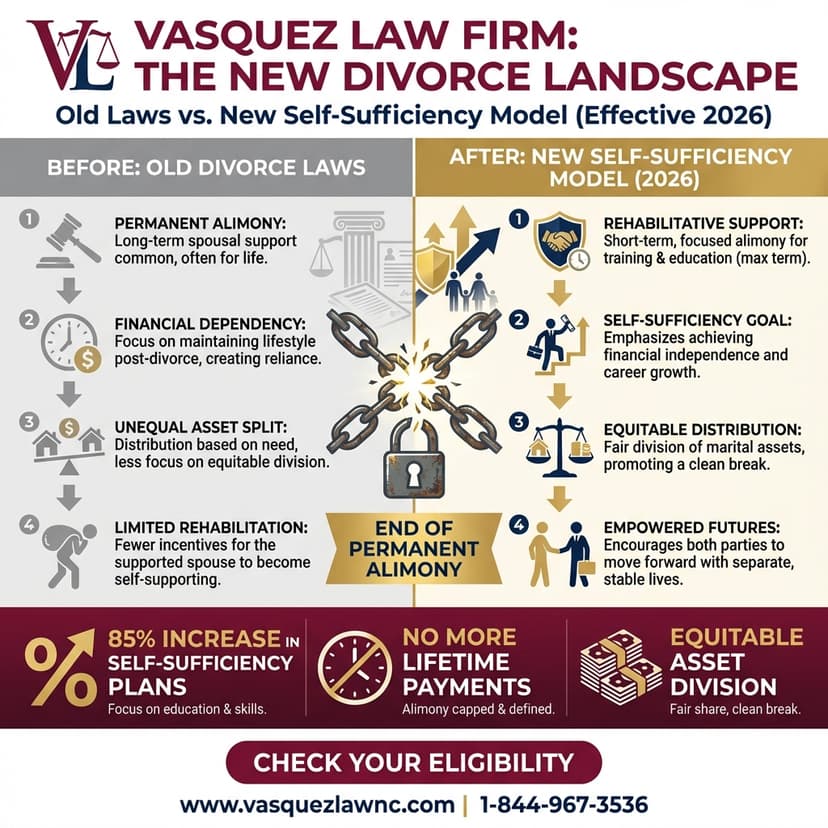
Alimony, also known as spousal support, is a critical component of many divorce settlements, designed to ensure that a financially dependent spouse can maintain a reasonable standard of living after the marriage ends. However, the laws governing alimony are frequently debated and are another area where significant divorce law changes could occur in 2026. The main points of contention often revolve around the duration of payments, the factors considered for awarding alimony, and whether certain types of misconduct, like adultery, should impact eligibility or amount.
In North Carolina, alimony is governed by N.C. Gen. Stat. § 50-16.3A, which specifies that the court considers numerous factors, including the earning capacity of each spouse, the duration of the marriage, and the standard of living established during the marriage. Marital misconduct can also play a role. Florida's approach to alimony, outlined in Florida Statute § 61.08, includes various types of alimony, such as temporary, bridge-the-gap, rehabilitative, durational, and permanent. Both states aim for fairness but have distinct criteria.
Recent proposals, sometimes influenced by national discussions, suggest capping the duration of alimony based on the length of the marriage or introducing stricter guidelines for determining the amount. Some advocates push for the complete elimination of permanent alimony, arguing it creates undue financial burdens on the paying spouse and discourages self-sufficiency. Conversely, others argue that permanent alimony is crucial for older spouses or those who sacrificed career opportunities for family, ensuring they are not left destitute. These reforms could drastically alter financial outcomes for divorcing couples, making it imperative to seek legal counsel to understand how current or proposed laws might affect your specific situation. Vasquez Law Firm is dedicated to helping clients in Orlando and throughout North Carolina and Florida navigate these complex financial aspects of divorce.
Impact on Child Custody and Parental Rights
Child custody and parental rights are arguably the most sensitive aspects of any divorce. While the paramount concern in all custody matters remains the best interests of the child, evolving societal norms and legal theories can lead to significant divorce law changes in this area. In 2026, discussions are focusing on several key themes, including presumptions of shared parenting, parental relocation, and the influence of a child's preference.
Many jurisdictions are moving towards a presumption of equal shared parenting, meaning courts would start with the assumption that children benefit most from having both parents equally involved in their lives, unless there's evidence to the contrary. This contrasts with older models that might favor one parent as the primary custodian. Such a shift would require parents to demonstrate why equal parenting is not feasible or not in the child's best interest, rather than arguing for sole custody from the outset. In North Carolina, child custody is governed by N.C. Gen. Stat. § 50-13.1 et seq., which grants courts broad discretion to determine what arrangements best promote the welfare and interests of the child. Florida's statutes, specifically Florida Statute § 61.13, also prioritize the child's best interests, with a focus on shared parental responsibility unless it would be detrimental to the child.
Another area of potential reform involves parental relocation. Currently, a parent wishing to move a significant distance with a child often needs court approval, especially if the move impacts the other parent's visitation rights. New legislation could establish clearer guidelines or presumptions regarding relocation, balancing a parent's right to move with the child's right to maintain a relationship with both parents. Additionally, the age at which a child's preference in custody matters is considered by the court is often debated, with some advocating for lower ages and others for maintaining current standards. Any changes in these areas would directly affect parents and children involved in divorce proceedings, making it crucial to have legal representation that understands and can adapt to these evolving standards.
Step-by-Step: Navigating Divorce Amid Potential Changes
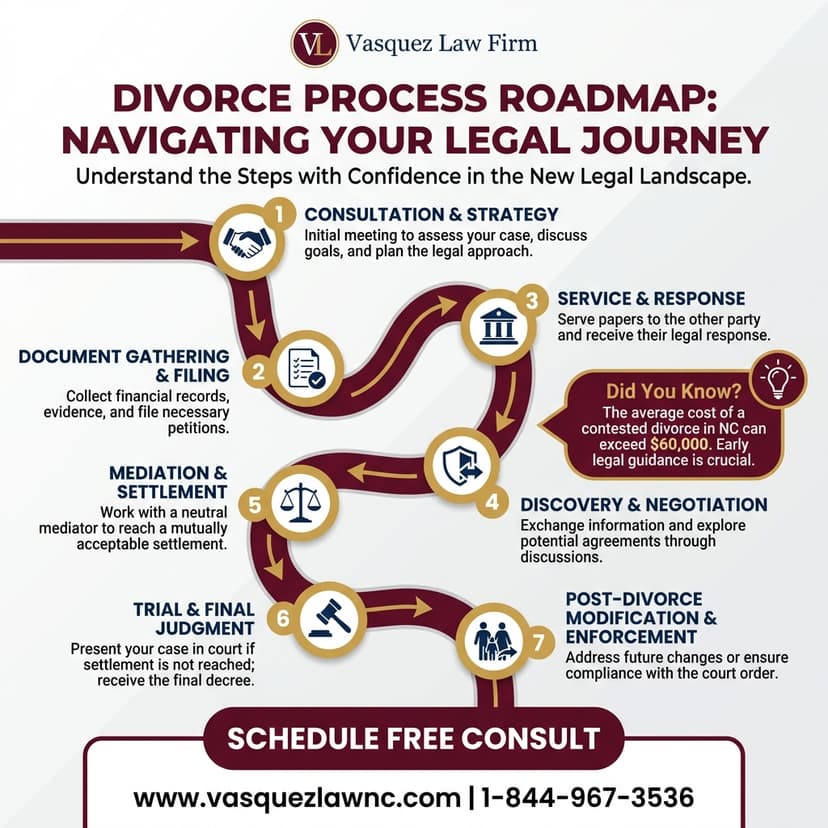
Facing a divorce is challenging enough without the added uncertainty of potential legal reforms. However, by understanding a proactive approach, you can better protect your interests. Here’s a step-by-step guide to navigating your divorce in 2026, especially if divorce law changes are on the horizon:
- Educate Yourself on Current Laws: Before anything else, understand the current divorce laws in North Carolina and Florida. This foundational knowledge will help you grasp the impact of any proposed changes. Focus on areas like property division, alimony, child custody, and support.
- Consult with an Experienced Attorney: This is perhaps the most critical step. A knowledgeable family law attorney, like those at Vasquez Law Firm, can provide up-to-date information on pending legislation, interpret how potential changes might affect your specific case, and advise on the best course of action.
- Gather Financial Documentation: Regardless of legal changes, comprehensive financial disclosure is always required. Start collecting bank statements, tax returns, pay stubs, investment records, and any documents related to assets and debts. This will be invaluable for property division and support calculations.
- Understand Your Assets and Debts: Create a detailed inventory of all marital and separate property, including real estate, vehicles, retirement accounts, and business interests. Also list all debts. Knowing your financial picture will be crucial for negotiation and litigation.
- Consider Mediation or Collaborative Divorce: If possible, explore alternative dispute resolution methods. Mediation can often lead to more amicable and cost-effective solutions, potentially avoiding lengthy court battles that could be further complicated by evolving laws.
- Prioritize Your Children's Well-being: In any divorce involving children, their best interests should be paramount. Work with your attorney to develop a parenting plan that fosters stability and supports your children's needs, adapting to any potential shifts in custody laws.
- Stay Informed and Adaptable: Legal processes can be slow, but legislative proposals can move quickly. Remain in close communication with your attorney to stay informed about any new developments and be prepared to adjust your strategy as necessary.
Common Mistakes to Avoid in a Changing Legal Landscape
When facing divorce law changes, it's easy to make missteps that could negatively impact your case. Avoiding these common errors is crucial for a smoother, more favorable outcome:
- Delaying Legal Consultation: Waiting to speak with an attorney can put you at a disadvantage. Early legal advice ensures you understand your rights and the potential impact of any new legislation before critical decisions are made.
- Hiding or Mismanaging Assets: Attempting to conceal assets or engaging in reckless spending during a divorce is a serious mistake. Courts have sophisticated methods to uncover such actions, which can lead to severe penalties and negatively affect property division.
- Posting Inappropriately on Social Media: Anything you post online can be used against you in court. Avoid discussing your divorce, disparaging your spouse, or sharing questionable content. Maintain a private and respectful online presence.
- Moving Out Without Legal Advice: While sometimes necessary, moving out of the marital home prematurely can have implications for property rights, child custody, and even spousal support, depending on your state's laws. Always consult your attorney first.
- Ignoring Temporary Orders: During divorce proceedings, the court may issue temporary orders regarding child support, custody, or spousal maintenance. Failing to comply with these orders can result in legal repercussions.
- Engaging in Excessive Conflict: While emotions run high, allowing conflict to escalate unnecessarily can prolong the divorce, increase legal costs, and negatively impact children. Focus on constructive communication where possible.
- Failing to Update Estate Planning Documents: Divorce has significant implications for wills, trusts, and beneficiary designations. Neglecting to update these documents promptly can lead to unintended consequences after your divorce is finalized.
- Not Understanding Financial Implications: Many individuals focus solely on getting out of the marriage without fully grasping the long-term financial impact of property division, taxes, and support orders. Work closely with your attorney and financial advisors.
If you only remember one thing: Always prioritize obtaining timely and expert legal advice from a qualified family law attorney. Their guidance is indispensable for navigating complex legal changes and protecting your future.
NC, FL, and Nationwide Notes on Divorce Law
Divorce law is primarily state-specific, meaning that while federal discussions around divorce law changes may spark conversations, the actual implementation and nuances vary significantly from North Carolina to Florida and across the nation.
North Carolina Notes on Divorce Law
North Carolina is a no-fault divorce state, requiring a one-year separation before a divorce can be finalized. This means that spouses must live separate and apart for at least a year and a day, with at least one spouse intending for the separation to be permanent. Fault grounds, such as adultery or abandonment, can be considered in alimony determinations but are not required for the divorce itself. Equitable distribution is the standard for dividing marital property, meaning assets and debts acquired during the marriage are divided fairly, though not necessarily equally. Child custody and support decisions are made based on the child's best interests. Any significant divorce law changes in North Carolina would likely involve adjustments to the one-year separation rule or the factors considered for alimony and property division.
Florida Notes on Divorce Law
Florida also operates under a no-fault divorce system, requiring only that the marriage be deemed "irretrievably broken." There is no mandatory separation period, but one spouse must have resided in Florida for at least six months prior to filing. Florida law provides for equitable distribution of marital assets and liabilities. Alimony in Florida can take several forms, including temporary, bridge-the-gap, rehabilitative, durational, and permanent, with the court considering various factors to determine type and amount. Child custody in Florida focuses on shared parental responsibility, with a detailed parenting plan outlining time-sharing and decision-making. Potential divorce law changes in Florida often revolve around alimony reform, with legislative efforts frequently proposed to cap or limit permanent alimony.
Nationwide Concepts (General Only, Rules Vary)
While specific divorce laws are state-level, certain national trends and discussions influence the legislative landscape across the U.S. The debate over no-fault divorce, for instance, is a national conversation, with some states considering a return to fault-based grounds. Similarly, alimony reform is a widespread topic, with many states exploring ways to standardize or limit spousal support. The treatment of digital assets in property division is another emerging area, as states grapple with how to categorize and distribute cryptocurrencies, NFTs, and other virtual holdings. Child custody laws are increasingly emphasizing shared parenting and the child's best interests, with variations in how these are defined and implemented. It is crucial to remember that these are general concepts, and the precise rules and procedures will always depend on the specific state jurisdiction where the divorce is filed.
When to Call a Lawyer Now
Recognizing the right time to seek legal counsel is paramount, especially with the possibility of divorce law changes. Don't hesitate to contact Vasquez Law Firm if any of these situations apply to you:
- You are considering divorce and want to understand your rights and obligations under current and potential future laws.
- Your spouse has already filed for divorce, and you need immediate legal representation to protect your interests.
- You suspect your spouse is hiding assets or engaging in financial misconduct.
- There are disputes over child custody, visitation, or child support.
- You have significant assets or complex financial holdings that require careful division.
- You are concerned about spousal support (alimony) and how potential changes might affect you.
- Your spouse is being uncooperative or aggressive, making an amicable resolution difficult.
- You need to understand the implications of moving out of the marital home.
- You are facing domestic violence or harassment and need protective orders.
- You have questions about the impact of divorce on your business or professional license.
About Vasquez Law Firm
At Vasquez Law Firm, we combine compassion with aggressive representation. Our motto "Yo Peleo" (I Fight) reflects our commitment to standing up for your rights and ensuring your voice is heard throughout your legal journey. We understand the emotional and financial toll that family law matters can take, and our dedicated team is here to provide unwavering support and strategic advocacy.
- Bilingual Support: Se Habla Español - our team is fully bilingual, ensuring clear communication and understanding for our diverse clientele in North Carolina, Florida, and nationwide for immigration.
- Service Areas: We proudly serve clients in North Carolina and Florida for family law matters, with a focus on providing local, statewide, and nationwide immigration services. Our Orlando office is ready to assist you.
- Experience: With over 15 years of dedicated legal experience, Attorney Vasquez has a proven track record of helping clients navigate complex legal matters and achieving favorable outcomes.
- Results: Thousands of successful cases across multiple practice areas, built on a foundation of personalized attention, thorough preparation, and relentless advocacy.
Attorney Trust and Experience
Attorney Vasquez holds a Juris Doctor degree and is admitted to practice in both the North Carolina State Bar and Florida Bar. With over 15 years of dedicated legal experience, he has built a reputation for providing personalized attention and achieving favorable outcomes for his clients. His deep understanding of family law, coupled with a commitment to client success, makes Vasquez Law Firm a trusted partner during challenging times. Attorney Vasquez and his team are prepared to fight tirelessly for your rights, whether you are in Orlando or elsewhere in North Carolina or Florida.
Don't face your legal challenges alone. Our team is here to help you every step of the way.
Call today: 1-844-967-3536 | Se Habla Español
Frequently Asked Questions
Are divorce laws going to change significantly in 2026?
While no federal changes have been enacted as of early 2026, there are ongoing discussions at both state and federal levels about potential reforms to no-fault divorce, alimony, and child custody. These discussions could lead to legislative proposals that may alter current laws in North Carolina and Florida. It is crucial to stay informed through legal counsel as the situation evolves.
What is the new divorce law in Florida regarding alimony?
As of early 2026, Florida's alimony laws, particularly concerning permanent alimony, are frequently debated. While no new law has been passed to drastically change the current framework, legislative efforts continue to propose caps on duration or stricter guidelines for awarding alimony. Consulting with a Florida family law attorney is essential for the latest information.
Will North Carolina divorce laws change regarding the one-year separation?
North Carolina currently requires a one-year separation period for no-fault divorce. While there are no immediate legislative proposals to change this fundamental requirement, the broader national discussion around no-fault divorce could eventually influence future debates in North Carolina. Any potential changes would require legislative action.
What Are My Options in Family Court?
Answer 3 questions to understand your rights
Question 1 / 3
What family legal issue are you facing?
Keep Reading
Is no-fault divorce at risk of being banned in certain states?
There is a national movement, primarily from conservative groups, advocating for a return to fault-based divorce or significant modifications to no-fault statutes. While a complete ban is unlikely in states that have long-established no-fault laws, some states might introduce stricter requirements or reintroduce fault as a factor in property or alimony decisions. This remains an active legislative discussion.
How might divorce law changes affect child custody arrangements?
Potential changes in child custody laws often focus on presumptions of shared parenting, parental relocation guidelines, and the age at which a child's preference is considered. Many states are moving towards promoting equal involvement of both parents. Any legislative updates could impact how parenting plans are structured and enforced, emphasizing the child's best interests.
What should I do if I'm considering divorce with potential law changes?
If you're considering divorce, it's vital to consult with an experienced family law attorney immediately. They can inform you about current laws, pending legislation, and how potential changes might affect your specific case. Gathering financial documents and exploring mediation are also proactive steps to take.
Can adultery impact my divorce in North Carolina or Florida?
In North Carolina, adultery can be a factor in alimony decisions, potentially impacting the amount or duration of support. In Florida, while adultery does not prevent a no-fault divorce, it can be considered by the court when determining the equitable distribution of marital assets or alimony if it led to depletion of marital funds. It's best to discuss specifics with an attorney.
Why is moving out the biggest mistake in a divorce?
Moving out prematurely can be a significant mistake because it can impact property rights, child custody, and even spousal support. In some jurisdictions, leaving the marital home could be interpreted as abandonment or weaken your claim to the residence. Always consult with your attorney before making any decisions about moving out to understand the potential legal ramifications.
How will digital assets be handled with new divorce laws?
As digital assets like cryptocurrency and NFTs become more prevalent, new divorce laws are likely to address their classification and division. Courts are increasingly treating these as marital property subject to equitable distribution. You should disclose all digital assets to your attorney to ensure they are properly valued and divided in your divorce settlement.
What is the role of a family law attorney if divorce laws are changing?
A family law attorney becomes even more critical when divorce laws are changing. They stay updated on legislative developments, advise clients on how new laws might apply to their case, and adjust legal strategies accordingly. An attorney ensures your rights are protected and you navigate the evolving legal landscape effectively, providing stability during uncertainty.
Sources and References
- North Carolina Courts
- N.C. Gen. Stat. § 50-6 - Absolute divorce
- Florida Statute § 61.052 - Dissolution of marriage
- N.C. Gen. Stat. § 50-16.3A - Alimony
- Florida Statute § 61.08 - Alimony
- N.C. Gen. Stat. § 50-13.1 - Custody and support of minor children
- Florida Statute § 61.13 - Support of children; parenting and time-sharing; powers of court
Ready to take the next step? Contact Vasquez Law Firm today for a free, confidential consultation. We're committed to fighting for your rights and achieving the best possible outcome for your case.
Start Your Free Consultation Now
Call us: 1-844-967-3536
Se Habla Español - Estamos aquí para ayudarle.
Vasquez Law Firm
Legal Team
Our experienced attorneys at Vasquez Law Firm have been serving clients in North Carolina and Florida since 2011, with 70+ years of combined attorney experience. We specialize in immigration, personal injury, criminal defense, workers compensation, and family law.
Related Legal Services
Need legal help? Learn more about speak with a family law attorney, or contact us for a free evaluation.
You can also visit our NC family lawyers for more information.