How to File a Claim After a Head-On Crash in 2026
Involved in a head-on crash in North Carolina? Learn your rights, common injuries, and how to pursue compensation. Contact Vasquez Law Firm for a free consultation.
Published on February 22, 2026
Injured? Get what your case is worth
Free review. No fee unless we win.
Free & confidential · Se habla espanol · 24/7
Have questions? Talk to an attorney - free evaluation.
Call 1-844-967-3536Get What Your Injury Is Worth
Schedule your consultation - no fee unless we win.
How to File a Claim After a Head-On Crash in 2026
A head-on crash is one of the most devastating types of vehicular accidents, often resulting in severe injuries, fatalities, and extensive property damage. These collisions occur when the front ends of two vehicles impact each other, usually because one vehicle crosses the centerline or travels the wrong way on a road. If you or a loved one has been involved in a head-on crash in North Carolina, understanding your legal rights and the steps to take is crucial for securing the compensation you deserve. The immediate aftermath can be chaotic and overwhelming, but acting promptly and correctly can significantly impact your personal injury claim. Vasquez Law Firm is dedicated to helping victims navigate these complex legal waters, offering compassionate yet aggressive representation.
Need help with your case? Our experienced attorneys are ready to fight for you. Se Habla Español.
Schedule Your Free Case Evaluation
Or call us now: 1-844-967-3536
Quick Answer
A head-on crash involves the direct impact of the front ends of two vehicles, typically leading to catastrophic injuries due to the combined forces of both vehicles. Victims in North Carolina may pursue personal injury claims for medical expenses, lost wages, pain, and suffering. It's vital to seek immediate medical attention and consult with an experienced personal injury attorney promptly to protect your legal rights and ensure proper evidence collection.
- Seek immediate medical attention, even for minor symptoms.
- Report the accident to law enforcement and obtain a police report.
- Gather evidence at the scene, including photos and witness information.
- Avoid discussing fault or giving recorded statements to insurance companies without legal counsel.
- Contact a North Carolina personal injury attorney specializing in head-on collisions.
Understanding Head-On Crashes and Their Impact
A head-on crash, also known as a head-on collision, occurs when the front of one vehicle directly impacts the front of another. These accidents are particularly dangerous because the forces of both vehicles combine, often doubling the impact energy compared to other types of collisions. The results can be devastating, leading to severe injuries, long-term disability, or even wrongful death. In North Carolina, these types of accidents are often caused by distracted driving, drunk driving, drowsy driving, or reckless maneuvers like improper passing or swerving to avoid an obstacle.
The severity of injuries sustained in a head-on crash can range from broken bones and internal injuries to traumatic brain injuries and spinal cord damage. Victims often face extensive medical treatments, rehabilitation, and a prolonged recovery period. Beyond physical injuries, the emotional and psychological trauma can be profound, including PTSD, anxiety, and depression. Understanding the mechanics and common causes of these crashes is the first step in building a strong personal injury claim.
The legal complexities involved in a head-on crash claim can be substantial. Determining fault, especially when multiple vehicles are involved or when a driver disputes liability, requires thorough investigation and expert analysis. North Carolina follows a strict contributory negligence rule, which means if you are found even 1% at fault for the accident, you may be barred from recovering any compensation. This makes having an experienced personal injury attorney in Raleigh, NC, even more critical. They can help navigate these challenges, ensuring your rights are protected and that all potential sources of recovery are explored.
Common Causes of Head-On Collisions and Preventative Measures
Head-on crashes are frequently the result of driver error, often exacerbated by impaired judgment or negligence. Some of the most common causes include driving under the influence of alcohol or drugs, which severely impairs a driver's ability to stay in their lane or react appropriately. Distracted driving, such as texting or talking on a cellphone, also diverts attention from the road, leading to lane departures. Driver fatigue can mimic the effects of intoxication, causing drivers to fall asleep at the wheel or experience delayed reactions.
Other contributing factors include reckless driving behaviors like speeding, aggressive overtaking on two-lane roads, or ignoring traffic signs and signals. Poor road conditions, inadequate lighting, or inclement weather can also increase the risk, especially when combined with driver negligence. For instance, an unmarked curve or a sudden patch of black ice could contribute to a driver losing control and crossing into oncoming traffic. In such cases, a thorough investigation is necessary to determine if road design or maintenance played a role.
Preventative measures largely revolve around responsible driving habits. Always avoid driving while impaired, distracted, or fatigued. Adhere to speed limits and traffic laws, especially on undivided highways. Maintain a safe following distance and be extra cautious when driving in adverse weather conditions or at night. While you cannot control other drivers, practicing defensive driving can significantly reduce your risk of being involved in a severe head-on crash. Should an accident occur despite your precautions, knowing what steps to take next is paramount.
Step-by-Step: What to Do After a Head-On Crash
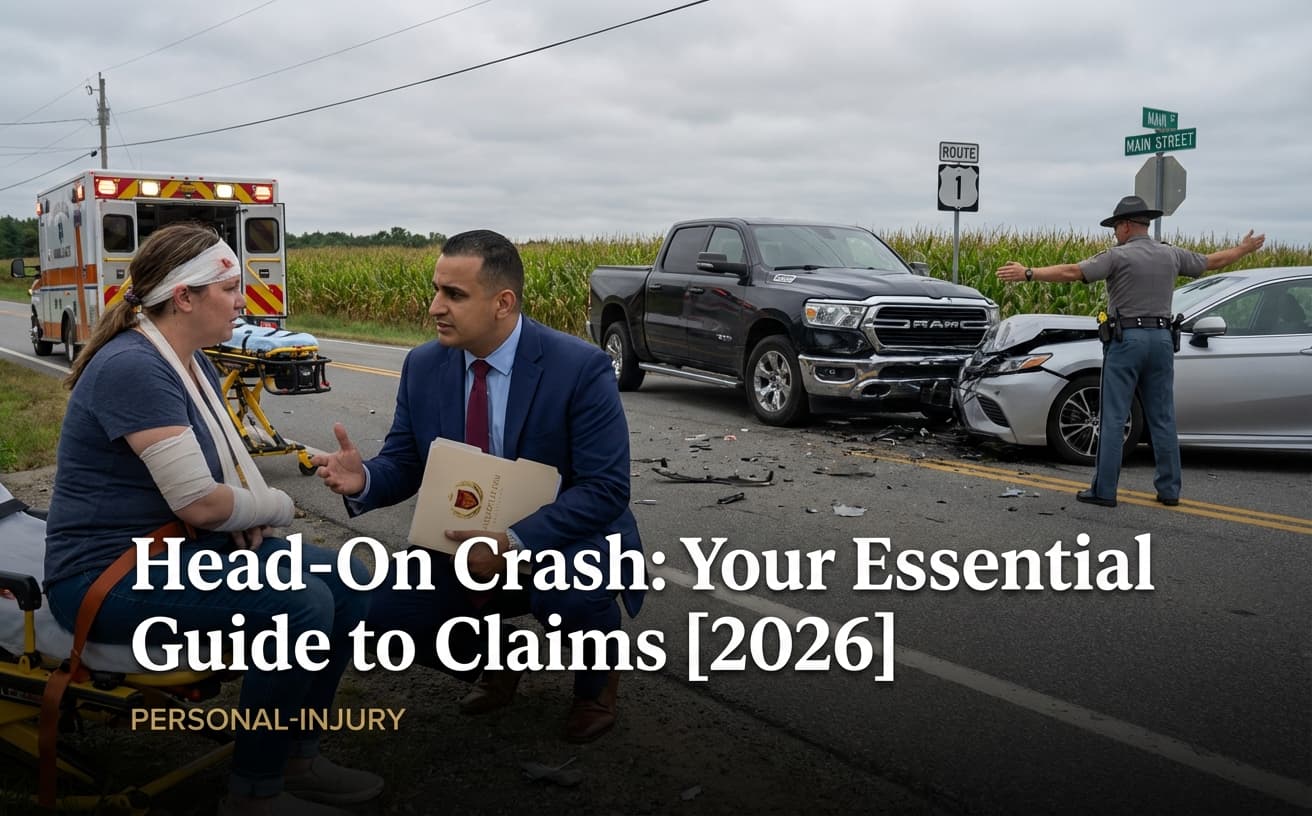
The moments following a head-on crash can be disorienting, but taking the right actions immediately can protect your health and your legal claim. First, ensure your safety and the safety of others. If possible and safe, move your vehicle to the side of the road to prevent further accidents. Check yourself and your passengers for injuries and, if necessary, administer first aid. Even if you feel fine, adrenaline can mask pain, so it's always best to err on the side of caution.
- Seek Medical Attention: Call 911 immediately. Even if you don't feel seriously hurt, some injuries, particularly internal ones or whiplash, may not manifest until hours or days later. Medical documentation is also crucial for your personal injury claim.
- Contact Law Enforcement: Report the head-on crash to the police. They will respond to the scene, secure the area, and create an official accident report. This report is a vital piece of evidence for insurance companies and legal proceedings.
- Gather Information and Evidence: If physically able, take photos and videos of the accident scene, including vehicle damage, road conditions, traffic signs, and any visible injuries. Collect contact information from all parties involved (drivers, passengers) and any witnesses.
- Do Not Admit Fault: Avoid discussing the accident in detail with anyone other than the police or your attorney. Do not apologize or admit fault, even if you think you might be partially responsible. Any statements you make could be used against you later.
- Notify Your Insurance Company: Report the accident to your own insurance company as soon as possible, but be brief. Do not give recorded statements to the other driver's insurance company without consulting your attorney first.
- Consult a Personal Injury Attorney: Contact an experienced North Carolina personal injury attorney specializing in head-on crash cases. They can advise you on your rights, help gather evidence, negotiate with insurance companies, and represent you in court if necessary.
Documents Checklist for Your Head-On Crash Claim
Building a robust personal injury claim after a head-on crash requires thorough documentation. Having all relevant documents organized can significantly streamline the legal process and strengthen your case for compensation. Your attorney will help you collect and organize these, but being proactive can save time and effort. This checklist outlines the key types of information and records you'll need to gather.
- Police Accident Report: The official report filed by law enforcement detailing the crash circumstances, parties involved, and initial findings. This is often the cornerstone of any personal injury claim.
- Medical Records and Bills: All documentation related to your injuries, treatments, diagnoses, prescriptions, and medical expenses. This includes emergency room visits, specialist consultations, therapy records, and invoices.
- Proof of Lost Wages: Pay stubs, employment verification, and letters from your employer detailing income lost due to your injuries and inability to work. This can also include future earning capacity loss.
- Vehicle Repair Estimates or Total Loss Statement: Documentation from mechanics or insurance adjusters regarding the damage to your vehicle and the cost of repairs, or the declaration of a total loss.
- Photographs and Videos: Any visual evidence from the accident scene, vehicle damage, visible injuries, and surrounding conditions. These can provide powerful support for your narrative.
- Witness Statements: Contact information and written statements, if available, from anyone who witnessed the head-on crash. Their unbiased accounts can be invaluable.
- Insurance Policy Information: Details of your own auto insurance policy and the at-fault driver's policy, including coverage limits.
- Personal Journal of Pain and Suffering: A daily log documenting your physical pain, emotional distress, limitations on daily activities, and any other ways the injuries have impacted your life.
Timeline: What to Expect in a Head-On Crash Case
The legal process following a head-on crash can be lengthy and complex, varying significantly based on the severity of injuries, the clarity of fault, and the willingness of insurance companies to settle. While every case is unique, understanding a general timeline can help manage expectations. This overview provides a typical progression, though your specific experience may differ. An experienced attorney from Vasquez Law Firm can provide a more tailored estimate.
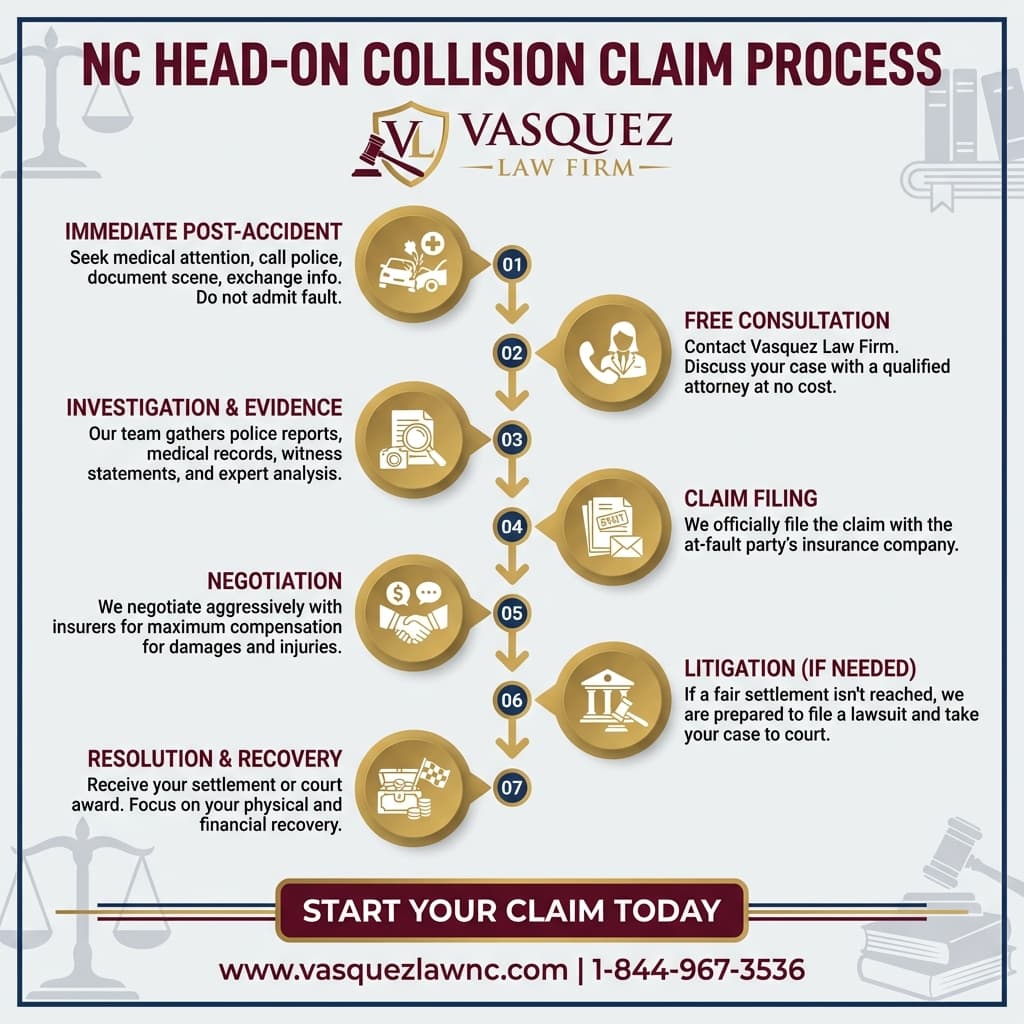
- Immediate Aftermath (Days 1-7): Seek medical attention, report to police, gather initial evidence, and notify your insurance company. This is also when you should contact a personal injury attorney.
- Initial Investigation & Treatment (Weeks 1-12): Your attorney begins investigating the head-on crash, collecting police reports, witness statements, and initial medical records. You will focus on your medical treatment and recovery.
- Medical Treatment & Recovery (Months 3-12+): This phase can be the longest, as you continue treatment until you reach Maximum Medical Improvement (MMI). Your attorney will monitor your medical progress and gather all related bills and records.
- Demand Letter & Negotiation (Months 6-18+): Once MMI is reached, your attorney compiles all damages and sends a demand letter to the at-fault driver's insurance company. Negotiations for a fair settlement begin.
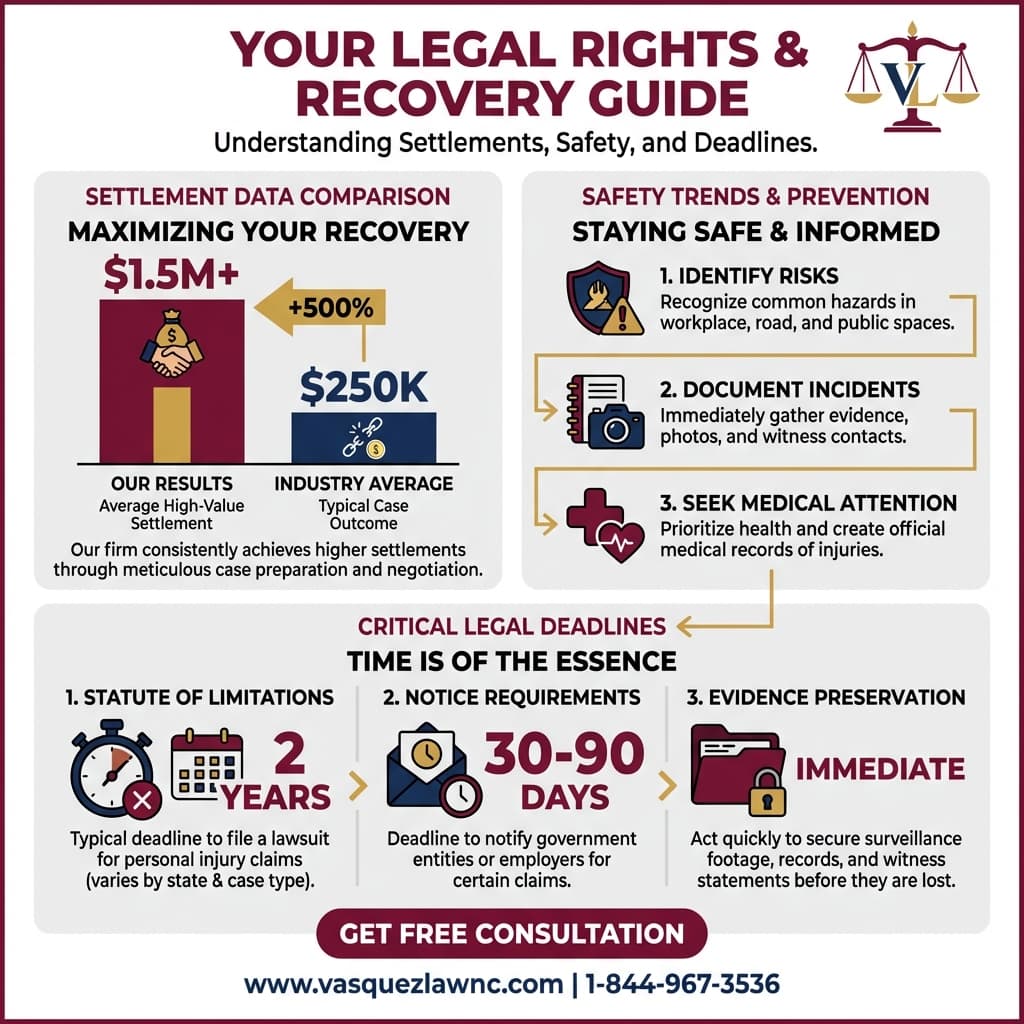
- Filing a Lawsuit (If Necessary - Months 9-24+): If negotiations fail, a lawsuit may be filed. This initiates the litigation process, including discovery (exchanging information), depositions, and potentially mediation. North Carolina has a three-year statute of limitations for personal injury claims, so a lawsuit must be filed within this period (N.C. Gen. Stat. § 1-52).
- Trial (If No Settlement - Months 18-36+): A small percentage of cases go to trial. This involves presenting your case to a judge or jury, who will then decide on fault and damages.
- Settlement or Verdict & Payout (Varies): If a settlement is reached or a verdict is rendered, funds are distributed after legal fees and expenses are paid.
Costs and Fees: What Impacts the Price of Legal Representation
Many victims of a head-on crash worry about the cost of hiring a personal injury attorney, especially when facing mounting medical bills and lost income. However, most personal injury lawyers, including Vasquez Law Firm, work on a contingency fee basis. This means you do not pay any upfront legal fees. Instead, the attorney's fees are a percentage of the final settlement or court award. This arrangement makes quality legal representation accessible to everyone, regardless of their current financial situation.
The percentage charged typically ranges from 33% to 40% of the total recovery, but this can vary based on the complexity of the case and whether it goes to trial. For instance, if a case settles out of court relatively quickly, the percentage might be lower than if it requires extensive litigation and a full trial. Beyond the attorney's fee, there are also case expenses, which include costs for filing fees, obtaining medical records, expert witness fees, deposition costs, and investigation expenses. These expenses are usually paid out of the settlement or award before the attorney's fee is calculated.
It is crucial to have a clear understanding of the fee agreement before hiring an attorney. A reputable firm will provide a written contract detailing all fees and expenses, ensuring transparency. While the percentage might seem substantial, remember that attorneys working on contingency take on significant financial risk, as they only get paid if they win your case. This incentivizes them to fight vigorously for the maximum possible compensation for your head-on crash injuries. Our team at Vasquez Law Firm will discuss all financial aspects with you upfront, so there are no surprises.
Don't face your legal challenges alone. Our team is here to help you every step of the way.
Call today: 1-844-967-3536 | Se Habla Español
Common Mistakes and How to Avoid Them After a Head-On Crash
Navigating the aftermath of a head-on crash can be fraught with pitfalls that can jeopardize your personal injury claim. Being aware of these common mistakes and actively avoiding them is just as important as taking the right steps. Protecting your legal rights means being strategic and informed from the moment the accident occurs until your case is resolved.
- Admitting Fault: Never say "I'm sorry" or accept blame at the scene, even if you feel partially responsible. This can be used against you. Simply state the facts to the police.
- Delaying Medical Treatment: Waiting to see a doctor can signal to insurance companies that your injuries are not severe or were not caused by the accident. Seek immediate medical attention.
- Not Calling the Police: Failing to get an official police report weakens your claim significantly. The report provides an objective account of the head-on crash.
- Not Gathering Evidence: Without photos, witness contacts, and other scene details, proving your case becomes much harder. Document everything you can.
- Giving Recorded Statements to Insurers: The at-fault driver's insurance company is not on your side. Do not give any recorded statements or sign anything without consulting your attorney first.
- Posting on Social Media: Anything you post online can be scrutinized and twisted by insurance companies to undermine your claim. Refrain from discussing your accident or injuries publicly.
- Settling Too Quickly: Insurance companies may offer a quick, lowball settlement before you fully understand the extent of your injuries and long-term costs. Always consult an attorney before accepting any offer.
- Not Hiring an Attorney: Attempting to handle a complex head-on crash claim yourself, especially against experienced insurance adjusters, is a common mistake that often leads to lower compensation.
If you only remember one thing: Always prioritize your health and consult with an experienced personal injury attorney in North Carolina as soon as possible after a head-on crash. Their expertise can be the difference between a fair settlement and an unfair one.
Jurisdiction Notes: Personal Injury in NC
Personal injury law, including claims arising from a head-on crash, is largely governed by state-specific statutes and case law. While general principles apply nationwide, the nuances of North Carolina law are crucial for anyone pursuing a claim within the state. Vasquez Law Firm primarily serves clients throughout North Carolina, particularly in the Raleigh area, for personal injury cases, ensuring our advice is always tailored to local legal requirements. For immigration matters, we also serve clients in Florida and nationwide.
North Carolina Notes
North Carolina operates under a strict contributory negligence rule. This means if you are found to be even 1% at fault for the head-on crash, you may be barred from recovering any damages. This rule is one of the harshest in the country and makes expert legal representation absolutely essential. An attorney will work diligently to establish the other party's sole fault and protect you from any allegations of contributory negligence. Additionally, North Carolina has a three-year statute of limitations for most personal injury claims (N.C. Gen. Stat. § 1-52), meaning you must file a lawsuit within three years from the date of the accident, or you lose your right to sue.
Nationwide Concepts (General Only, Rules Vary by State)
While specific rules like contributory negligence vary, many core concepts of personal injury law are consistent across the United States. These include the duty of care, breach of duty, causation, and damages. Drivers nationwide have a duty to operate their vehicles safely. A breach of this duty, such as through negligent driving, that directly causes a head-on crash and resulting injuries, can lead to liability for damages. Damages typically cover medical expenses, lost wages, property damage, and pain and suffering. However, the exact thresholds, procedures, and available remedies will differ significantly from state to state. It is always best to consult with a local attorney.
When to Call a Lawyer Now After a Head-On Crash
The decision to contact a personal injury attorney after a head-on crash should not be delayed. The sooner you involve legal counsel, the better your chances of preserving critical evidence and building a strong case. Certain situations particularly signal an immediate need for legal expertise to protect your rights and maximize your potential compensation. Delay can lead to lost evidence, missed deadlines, and unfavorable outcomes.
- Serious Injuries: If you or a loved one sustained severe injuries requiring extensive medical treatment, hospitalization, or surgery.
- Disputed Fault: If the other driver, their insurance company, or even the police report suggests you were partially or fully at fault for the head-on crash.
- Wrongful Death: In the tragic event that a head-on crash results in a fatality, you need immediate legal guidance for a wrongful death claim.
- Insurance Company Tactics: If insurance adjusters are pressuring you for a quick settlement, denying your claim, or offering a lowball amount.
- Complex Accident: If multiple vehicles were involved, or the circumstances of the head-on crash are unclear or complicated.
- Loss of Income: If your injuries prevent you from working, leading to significant lost wages and future earning capacity.
- Permanent Disability or Disfigurement: If your injuries are expected to result in long-term or permanent physical limitations or cosmetic changes.
- Emotional Trauma: Beyond physical injuries, significant emotional distress or psychological impact warrants legal consideration.
About Vasquez Law Firm
At Vasquez Law Firm, we combine compassion with aggressive representation. Our motto "Yo Peleo" (I Fight) reflects our commitment to standing up for your rights. We understand the physical, emotional, and financial toll a head-on crash can take on individuals and families. That's why we are dedicated to providing personalized legal services and fighting tirelessly to secure the justice and compensation our clients deserve.
- Bilingual Support: Se Habla Español - our team is fully bilingual and ready to assist clients in both English and Spanish, ensuring clear communication and understanding.
- Service Areas: Personal injury in North Carolina; immigration nationwide, including Florida
- Experience: With over 15 years of dedicated experience, Attorney Vasquez has a proven track record of successfully navigating complex legal matters and achieving favorable outcomes.
- Results: Our firm has helped thousands of clients through challenging legal situations, demonstrating our commitment to achieving the best possible results in diverse practice areas.
Attorney Trust and Experience
Attorney Vasquez holds a Juris Doctor degree and is admitted to practice in both the North Carolina State Bar and Florida Bar. With over 15 years of dedicated legal experience, he has built a reputation for providing personalized attention and achieving favorable outcomes for his clients. His commitment to justice and his aggressive advocacy style make him a formidable opponent for insurance companies and a trusted ally for those seeking justice after a devastating head-on crash.
Don't face your legal challenges alone. Our team is here to help you every step of the way.
Call today: 1-844-967-3536 | Se Habla Español
Frequently Asked Questions
What is the meaning of a head-on crash?
A head-on crash, or head-on collision, occurs when the front ends of two vehicles directly impact each other while traveling in opposite directions. These accidents are particularly dangerous due to the combined force of impact, often leading to severe injuries, fatalities, and extensive damage. They frequently happen when a driver crosses the centerline, drives the wrong way, or loses control of their vehicle, making them a critical concern for road safety.
What are common injuries from a head-on collision?
Common injuries from a head-on collision are often severe and can be life-altering. They include traumatic brain injuries (TBI), spinal cord injuries, broken bones, internal organ damage, severe lacerations, whiplash, and even psychological trauma like PTSD. The immense forces involved mean occupants are subjected to violent impacts, leading to complex and often long-term medical conditions that require extensive treatment and rehabilitation. Immediate medical evaluation is essential.
How is fault determined in a head-on crash in North Carolina?
In North Carolina, fault in a head-on crash is determined through a thorough investigation of evidence, including police reports, witness statements, accident reconstruction, and vehicle damage analysis. North Carolina follows a strict contributory negligence rule. This means if you are found even 1% at fault for the accident, you may be barred from recovering any compensation. This makes proving the other driver's sole negligence critically important for your claim.
What kind of compensation can I seek after a head-on crash?
After a head-on crash, you may seek compensation for various damages. These can include economic damages such as medical expenses (past and future), lost wages (past and future), and property damage. Non-economic damages, such as pain and suffering, emotional distress, loss of enjoyment of life, and disfigurement, may also be recoverable. In cases of extreme negligence, punitive damages might be awarded to punish the at-fault driver.
Should I talk to the other driver's insurance company?
It is generally advisable to avoid giving recorded statements or signing any documents from the other driver's insurance company without first consulting your attorney. Insurance adjusters are trained to minimize payouts, and anything you say can be used against you to reduce or deny your claim. Your attorney can handle all communications with insurance companies on your behalf, protecting your rights and interests.
What is the statute of limitations for a head-on crash claim in NC?
In North Carolina, the statute of limitations for most personal injury claims, including those arising from a head-on crash, is generally three years from the date of the accident. This means you must file a lawsuit within this three-year period, or you will likely lose your right to pursue compensation through the courts. There are very limited exceptions, making timely action crucial. Consulting an attorney quickly ensures deadlines are not missed.
Can I still recover if I was partially at fault?
North Carolina's strict contributory negligence law means that if you are found to be even slightly at fault for the head-on crash, you may be completely barred from recovering any damages. This rule is very harsh compared to most other states. Therefore, it is absolutely essential to have an experienced personal injury attorney who can aggressively defend against any allegations of your fault and work to prove the other party's full liability.
Why should I hire Vasquez Law Firm for my head-on crash case?
Vasquez Law Firm offers compassionate yet aggressive representation for head-on crash victims in North Carolina. With over 15 years of experience, Attorney Vasquez understands the complexities of these devastating cases and the strict contributory negligence laws in NC. We offer bilingual support, work on a contingency fee basis (no upfront costs), and are committed to fighting for maximum compensation for your medical bills, lost wages, and pain and suffering. We fight for you: "Yo Peleo."
What if the at-fault driver was uninsured or underinsured?
If the at-fault driver in your head-on crash was uninsured or underinsured, you might still be able to recover compensation through your own uninsured/underinsured motorist (UM/UIM) coverage. This coverage is designed to protect you in such scenarios. Reviewing your policy with an attorney is crucial to understand your options and file a successful claim against your own insurance company. Vasquez Law Firm can help you navigate these complex claims.
What is the average settlement for a head-on collision?
There is no "average" settlement for a head-on collision, as each case is unique. Settlement amounts depend heavily on factors like the severity of injuries, medical expenses, lost wages, pain and suffering, property damage, and the clarity of fault. Cases involving catastrophic injuries often result in higher settlements. An experienced attorney can provide a realistic assessment of your case's value after a thorough evaluation of all damages and circumstances.
Sources and References
- North Carolina Courts
- North Carolina Department of Transportation (NCDOT)
- North Carolina General Statutes § 1-52
Injured in an accident? Our personal injury attorneys can review your claim.
Ready to take the next step? Contact Vasquez Law Firm today for a free, confidential consultation. We're committed to fighting for your rights and achieving the best possible outcome for your case.
Start Your Free Case Evaluation Now
Call us: 1-844-967-3536
Se Habla Español - Estamos aquí para ayudarle.


William Vasquez
Founder & CEO, Vasquez Law Firm, PLLC
William Vasquez is the founder and CEO of Vasquez Law Firm, PLLC, a results-driven firm specializing in immigration, criminal defense, personal injury, and workers' compensation. A U.S. Air Force veteran and recipient of the Joint Service Achievement Medal, William is dedicated to fiercely fighting for his clients' rights.
Related Legal Services
Need legal help? Learn more about personal injury case consultation, or contact us for a free evaluation.
You can also visit statewide personal injury legal services for more information.