Immigration Law: What You Should Know in Orlando 2026
Find out how immigration law affects you in Orlando in 2026. Learn about requirements, consequences, and get a free consultation with Vasquez Law today.
Published on May 15, 2026
Talk to an immigration attorney
Free call. A clear plan for your case.
Free & confidential · Se habla espanol · 24/7

Have questions? Talk to an attorney - free evaluation.
Call 1-844-967-3536Worried how the latest immigration news affects you?
Schedule a confidential case review with an immigration attorney - know exactly where you stand.
Immigration Law: What You Should Know in Orlando 2026
In Orlando, navigating immigration law can be complex due to frequent changes in federal policies and local enforcement. This 2026 guide explains current immigration laws, key steps to protect your status, and how an immigration lawyer can assist you. Whether you need help with visas, deportation defense, or DACA renewal, understanding the laws that affect you is essential. Vasquez Law Firm offers bilingual support and experienced guidance to help you through every step of the immigration process.
Need help with your case? Our experienced attorneys are ready to fight for you. Se Habla Español.
Or call us now: 1-844-967-3536
Quick Answer
Immigration law in Orlando in 2026 governs who can enter and stay in the U.S., covering visas, deportation, and naturalization. If you face challenges, an immigration lawyer can help protect your rights.
- Current immigration laws are defined mainly by the Immigration and Nationality Act (INA)
- Violating laws can lead to deportation or bans on reentry
- USCIS processing times vary; check the latest updates
- Legal assistance can improve your chances in visa and relief cases
- Local knowledge in Orlando and federal law is vital
Understanding Current Immigration Laws
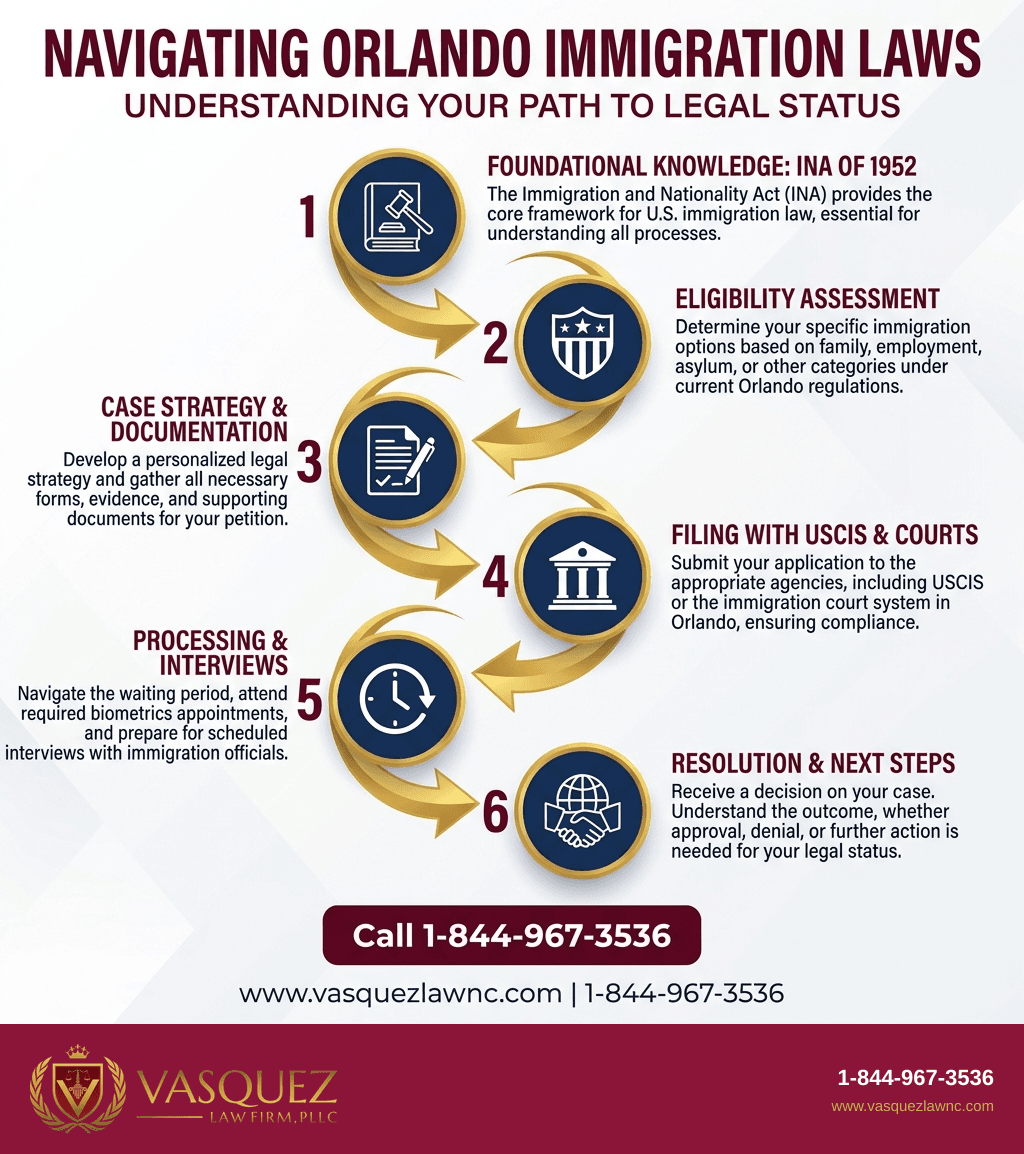
Imagine a young immigrant in Orlando trying to apply for a work visa but unsure which documents to submit or which policies apply. Immigration law in the United States is complex and constantly evolving. The cornerstone is the Immigration and Nationality Act (INA), enacted in 1952. It sets categories for visas, rules for who can be removed, and procedures for obtaining legal status.
As of 2026, the INA remains the primary legislation, codified primarily in 8 U.S.C. §§ 1101 et seq. The law is complemented by regulations like 8 C.F.R. Parts 200-299 that govern USCIS procedures. Recent immigration law news highlights ongoing court decisions affecting enforcement and relief options, such as protections for Dreamers under DACA.
Violating immigration laws can have serious consequences. For instance, overstaying a visa or entering without inspection may trigger bars to re-entry of 3 or 10 years under INA § 212(a)(9)(B), depending on the length of unlawful presence. Criminal convictions also can make an immigrant removable under INA § 237.
Because Orlando is in Florida, which is subject to federal enforcement by DHS and ICE, immigrants face particular challenges. Local policies may affect community cooperation with federal agents, but federal law ultimately controls immigration status.
Our immigration legal services include guidance on current laws and changes you need to watch in 2026.
Immigration Law USA Basics
The United States regulates immigration primarily through federal law. State laws cannot create immigration statuses but can affect areas like labor protections or driver’s licenses. The federal system enforces visa issuance, removal proceedings, and naturalization, typically processed by USCIS, immigration courts (EOIR), and enforcement agencies.
Key Immigration Laws List
- Immigration and Nationality Act (INA): Governs admissions, relief, deportation.
- Illegal Immigration Reform and Immigrant Responsibility Act (IIRIRA) 1996: Strengthened removal laws.
- Immigration Act of 1990: Increased visa numbers and diversity visas.
- DACA Executive Actions: Deferred action for childhood arrivals.
Immigration Laws History Brief
Immigration laws in the U.S. have shifted from open borders to restrictive phases with quotas and enforcement. Key historical points include the 1924 Immigration Act, introducing quotas; the INA in 1952, consolidating prior laws; and recent debates on humanitarian protections.
Step-by-Step: How to Navigate Immigration Processes
A typical process for an immigration case in Orlando starts with understanding your eligibility, then applying for the correct visa or status adjustment, attending biometrics and interviews, and awaiting USCIS decisions. Timelines vary, so planning is essential.
- Consult an Immigration Lawyer: Get personalized advice based on your case.
- Prepare and Submit Application: Complete required forms like I-485 or I-765 accurately with supporting documents.
- Biometrics Appointment: USCIS schedules fingerprinting and photo collection.
- Attend Interviews: If required, respond promptly to USCIS requests for interviews.
- Receive Decision: USCIS will notify approval, denial, or request additional evidence.
- Challenge Denials: Consider appeals or motions on denial within deadlines.
Throughout these steps, deadlines and document accuracy are critical. Our Attorney Vasquez Law Firm team helps clients in Orlando avoid missteps and prepares strong cases.
Documents Checklist for Immigration Cases
- Passport biographic page
- Birth certificates or proof of identity
- Proof of immigration status or entry documents
- Marriage certificates, if applying through family
- Employment or school records
- Criminal records or police clearances
- Proof of continuous residence or physical presence
- Biometrics appointment notices
Expected Timelines for Immigration Applications
- Form I-485 (Adjustment of Status) processing: 8 to 26 months (USCIS 2026 data)
- DACA renewal processing: approximately 6 to 12 months (as per USCIS DACA page)
- H-1B visa processing: 3 to 6 months with premium processing option
- Naturalization (Form N-400): 12 to 18 months
Costs and Fees: What Impacts the Price
- USCIS filing fees often range from $410 to $1,760 or more, depending on the form
- Attorney fees vary based on case complexity and services provided
- Costs rise if appeals or motions are needed after denials
- Additional costs may include translations, medical exams, and travel for interviews
Common Mistakes to Avoid in Immigration Cases
- Incomplete Applications: Submit everything required at once to avoid delays.
- Missing Deadlines: Respond timely to USCIS notices and requests to keep your case valid.
- Failure to Disclose: Omitting relevant information can lead to denials or removal.
- Incorrect Filing Fees: Paying wrong fees can delay or reject your case.
- Not Attending Biometrics: Missing appointments can result in case closure.
- Poor Legal Advice: Rely on experienced lawyers familiar with Orlando and federal law.
- Ignoring Changes in Law: Stay updated or have your lawyer monitor policy shifts.
If you only remember one thing: Keep all documentation complete and seek trusted legal advice early.
Jurisdiction: Orlando, FL and Nationwide Context
Florida Notes
Orlando is subject to federal immigration law enforced locally by ICE and USCIS. While state laws cannot change immigration requirements, Florida’s policies, local agencies, and community initiatives shape immigrant experiences. Access to bilingual help and knowing local filing offices matter.
Nationwide Concepts (General Only)
Immigration law operates under federal jurisdiction nationwide. Eligibility requirements, visa categories, and removal grounds apply everywhere. However, processing times and field office experiences may vary by region, including North Carolina versus Florida. Stay informed about your specific locale's updates.
When to Call an Immigration Lawyer
- If you receive a Notice to Appear (NTA) for removal proceedings
- If your visa application was denied or delayed
- If you experience a change in status or job
- If you face criminal charges or arrests
- If you need help with DACA renewal or adjustment of status
- If you are unsure about eligibility for waivers or relief
- If you get a Request for Evidence (RFE) or Notice of Intent to Deny (NOID)
- If you want to apply for citizenship or naturalization
About Vasquez Law Firm
At Vasquez Law Firm, we combine compassion with aggressive representation. Our motto "Yo Peleo®" (I Fight) reflects our commitment to standing up for your rights.
- Bilingual Support: Se Habla Español — Spanish-speaking attorneys and staff available
- Service Areas: North Carolina, Florida, and nationwide immigration services
- Experience: Over 30 years helping clients navigate complex legal matters
- Results: Thousands of successful cases across multiple practice areas
Attorney Trust and Experience
William J. Vásquez is admitted to the North Carolina State Bar and to the U.S. Courts of Appeals for the 4th, 5th, and 11th Circuits. Florida matters are handled by Florida Bar attorney Harold Estrada-Rodriguez. Our firm provides dedicated legal representation with personalized attention.
Don't wait to get the help you deserve. Call us now for immediate assistance.
Se Habla Español
Frequently Asked Questions
What are the current immigration laws in the United States?
As of 2026, U.S. immigration laws are governed predominantly by the Immigration and Nationality Act. These laws regulate visas, naturalization, and deportation processes. Recent updates include changes affecting DACA recipients and processing times. It is vital to keep current with USCIS policies or consult legal counsel for specific cases.
What happens if you violate U.S. immigration laws?
Violations like overstaying a visa or unauthorized work carry serious consequences such as removal, future entry bans, or denial of benefits. The law under INA sections 212 and 237 outlines penalties. Legal representation can help mitigate outcomes through waivers or defenses.
What is the Immigration and Nationality Act (INA)?
The INA is the principal federal statute for immigration law, enacted in 1952. It sets the framework for visa eligibility, deportation grounds, and citizenship requirements. Its provisions guide USCIS and immigration courts nationwide.
Can an immigrant be deported after becoming a U.S. citizen?
U.S. citizens generally cannot be deported. However, citizenship obtained by fraud may be revoked under INA §340(a). Non-citizens remain subject to removal for violations or crimes.
How long does it take to process immigration applications?
USCIS processing times vary by form and location. For example, Form I-485 can take 8 to 26 months. DACA renewal currently averages 6-12 months. Check the USCIS processing times page for the latest.
What are common reasons for visa denial?
Reasons include insufficient evidence, failure to prove ties to home country (INA 214(b)), past immigration violations, or criminal records. Proper documentation and legal guidance improve approval chances.
What should I bring to my immigration lawyer consultation?
Bring all identification, immigration documents, USCIS notices, criminal history, and any previous filings. This enables your lawyer to assess your case accurately.
How can Vasquez Law help with immigration cases in Orlando?
Vasquez Law Firm has experienced immigration lawyers providing bilingual assistance in Orlando. We assist with visa petitions, adjustment of status, deportation defense, and DACA renewals to protect your rights and keep you informed throughout.
Sources and References
- U.S. Citizenship and Immigration Services
- Executive Office for Immigration Review
- Legal Information Institute
Take the first step toward justice today. Our team is standing by to help.
Start Your Free Evaluation Now
Call us: 1-844-967-3536
Se Habla Español - Estamos aquí para ayudarle.

William Vasquez
Founder & CEO, Vasquez Law Firm, PLLC
William Vasquez is the founder and CEO of Vasquez Law Firm, PLLC, a results-driven firm specializing in immigration, criminal defense, personal injury, and workers' compensation. A U.S. Air Force veteran and recipient of the Joint Service Achievement Medal, William is dedicated to fiercely fighting for his clients' rights.
Related Legal Services
Need legal help? Learn more about our immigration law practice, or contact us for a free evaluation.
You can also visit our North Carolina immigration practice for more information.

![Explain Resignation of Border Patrol Chief Mike Banks [2026]](/_next/image?url=https%3A%2F%2Fvuuyorlsmhunqektprqy.supabase.co%2Fstorage%2Fv1%2Fobject%2Fpublic%2Fblogs%2Fimmigration-header-1782500616122.png&w=1920&q=75)