How a Judge Blocked the DHS ICE Rule and What It Means for Congress Oversight
Learn how a judge blocked the DHS/ICE rule, impacting congressional oversight. For help, call our lawyers. Contact us for a free consultation today.
Published on February 2, 2026· Updated June 26, 2026
Talk to an immigration attorney
Free call. A clear plan for your case.
Free & confidential · Se habla espanol · 24/7

Have questions? Talk to an attorney - free evaluation.
Call 1-844-967-3536Worried how the latest immigration news affects you?
Schedule a confidential case review with an immigration attorney - know exactly where you stand.
How a Judge Blocked the DHS ICE Rule and What It Means for Congress Oversight
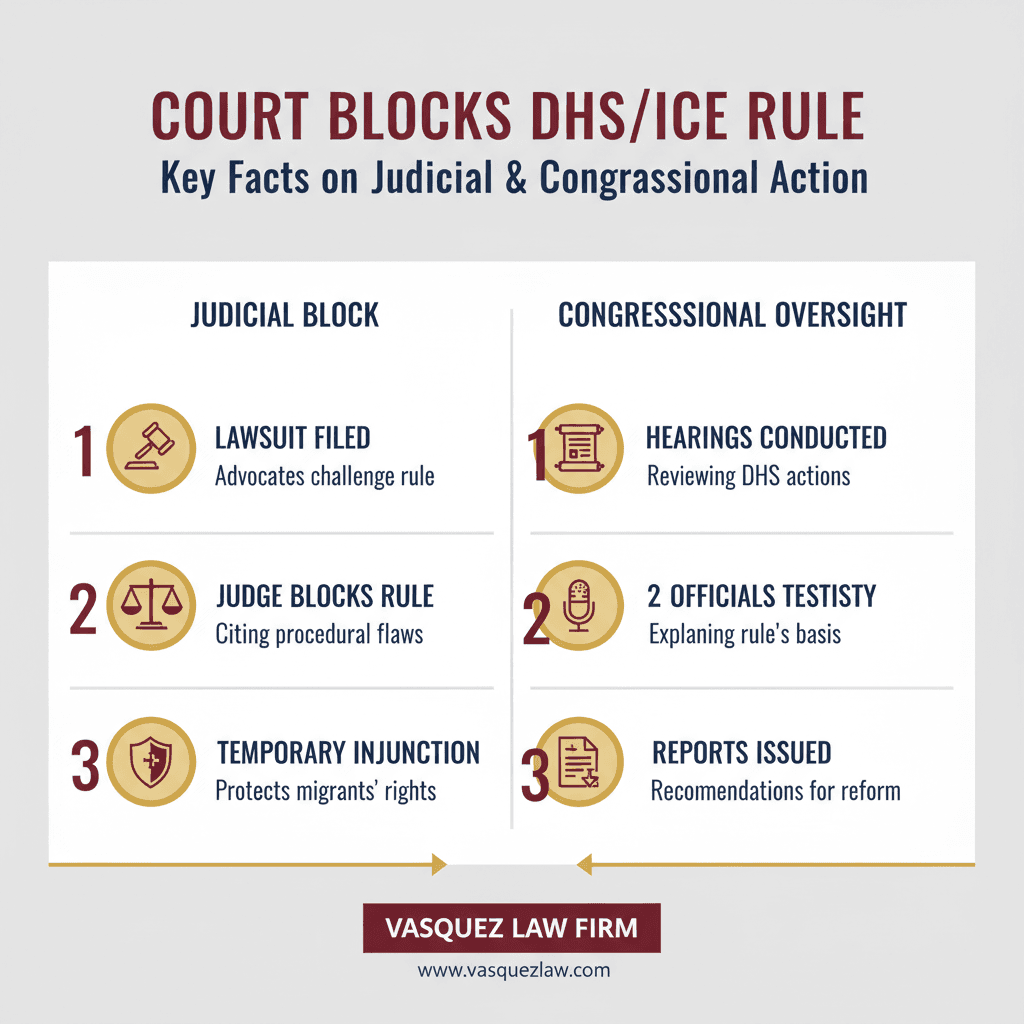
Judge Jia M. Cobb has issued a Temporary Restraining Order against the DHS/ICE rule that required a seven-day notice for congressional oversight at detention facilities, protecting congressional rights.
Need help with your case? Our experienced attorneys are ready to fight for you. Se Habla Español.
Schedule Your Free Case Evaluation
Or call us now: 1-844-967-3536
Quick Answer
On February 2, 2026, a federal judge blocked the DHS/ICE rule requiring seven-day notices for congressional visits. This reaffirms congressional oversight rights.
- Judge: Jia M. Cobb
- Rule: Seven-day notice
- Court: U.S. District Court
- Outcome: Temporary Restraining Order (TRO)
- Impact: Unannounced visits allowed
Why This Matters
The ruling on the DHS/ICE seven-day notice requirement is a significant development in maintaining transparency and oversight in detention facilities. For Congress, this decision supports their constitutional duty to oversee federal immigration operations without undue restrictions, ensuring humane conditions are maintained in detention centers.
This judicial decision stems from a likely violation of Section 527 of the U.S. Code, which prohibits using federal funds to limit Congress's access to detention sites. By blocking the rule, the court emphasizes that congressional checks and balances are critical, especially in immigration enforcement.
For community members and policymakers, understanding this ruling's implications is essential, as it affects oversight practices nationwide, including in North Carolina and Florida.
Step-by-step: What to Do
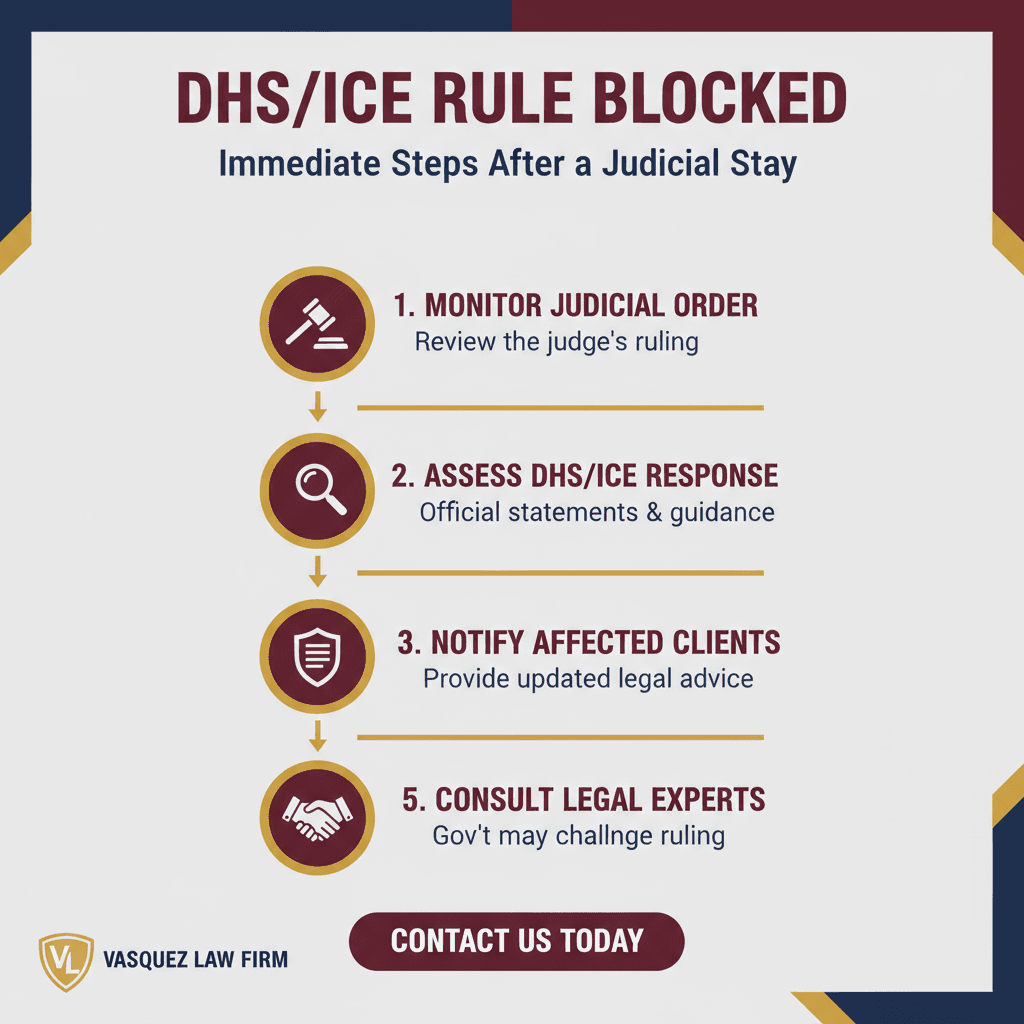
- Stay Informed: Follow developments in the court's proceedings.
- Engage with Representatives: Contact local congressional offices to express your concerns or support regarding recent rulings.
- Monitor Policy Changes: Keep track of any adjustments in detention center oversight policies.
- Reach Out for Legal Assistance: If you or your family are affected, consult with an immigration attorney.
- Advocate for Transparency: Support initiatives that promote accountability within immigration agencies.
Documents or Evidence Checklist
- Proof of congressional communication
- Relevant court documentation
- Personal identification details
- Historical case precedents
- News articles on DHS/ICE rulings
Timeline: What to Expect
- Immediate Effect: The Temporary Restraining Order is effective immediately from February 2, 2026.
- 14-Day Period: The TRO provides that the ruling will expire within 14 days unless extended.
- Possible Extensions: Legal proceedings may result in extensions or additional rulings.
- Policy Appeals: The DHS/ICE might consider appeals or policy adjustments.
Costs and Fees: What Impacts the Price
- Legal Representation: Costs may vary based on attorney fees and legal complexity.
- Documentation Expenses: Acquiring and preparing necessary documents might add costs.
- Case Management Fees: Fees incurred in managing the legal processes.
- Unexpected Legal Developments: Additional rulings or appeals can affect costs.
Common Mistakes and How to Avoid Them
- Ignoring Updates: Stay informed about ongoing decisions impacting immigration policies.
- Misinterpreting Legal Terms: Consult legal experts when interpreting court rulings.
- Neglecting to Contact Representatives: Engage with local representatives about your concerns.
- Undervaluing Legal Support: Seek advice from a trusted immigration attorney.
- Skimping on Documentation: Ensure all necessary documentation is thorough and accurate.
If you only remember one thing: Always consult with a legal professional to understand the implications of immigration rulings.
NC, FL, and Nationwide Notes
For immigration issues related to the DHS/ICE ruling, it is crucial to understand the applicability across different jurisdictions, including North Carolina and Florida:
- North Carolina: Local impacts on how congressional oversight is exercised at state detention facilities.
- Florida: Insights into state-specific policies and reforms might reflect national trends.
- Nationwide: This ruling is an essential part of the broader dialogue on federal immigration enforcement practices.
When to Call a Lawyer Now
- If directly affected by DHS/ICE policies
- When denied access to family or community members in detention
- If facing legal action or deportation issues
- To understand the implications of recent rulings
- When needing representation for congressional hearings
- If navigating procedural complexities
- To challenge detention conditions
- For advocacy within immigration reform
About Vasquez Law Firm
At Vasquez Law Firm, we combine compassion with aggressive representation. Our motto "Yo Peleo" (I Fight) reflects our commitment to standing up for your rights.
- Bilingual Support: Se Habla Español - our team is fully bilingual
- Service Areas: North Carolina, Florida, and nationwide immigration services
- Experience: Over 15 years helping clients navigate complex immigration cases
- Results: Thousands of successful cases across multiple practice areas
Attorney Trust and Experience
Attorney Vasquez holds a Juris Doctor degree and is admitted to practice in both the North Carolina State Bar and Florida Bar. With over 15 years of dedicated legal experience, he has built a reputation for providing personalized attention and achieving favorable outcomes for his clients.
Don't face your legal challenges alone. Our team is here to help you every step of the way.
Call today: 1-844-967-3536 | Se Habla Español
Frequently Asked Questions
What was the recent ruling about DHS/ICE notice requirements?
The ruling involved blocking a DHS/ICE policy requiring a seven-day notice before congressional visits to detention sites, ensuring unrestricted congressional oversight.
Who issued the Temporary Restraining Order?
The Temporary Restraining Order was issued by U.S. District Judge Jia M. Cobb, who found the notice requirements likely violated certain federal statutes.
How does this impact detention center policies?
The ruling allows for unannounced congressional visits, which may lead to greater transparency and improved conditions within detention facilities.
Is this ruling permanent?
No, the Temporary Restraining Order is initially in place for 14 days and may be extended pending further legal proceedings.
Are there likely to be appeals?
Yes, DHS/ICE could pursue legal appeals or policy adjustments in response to the ruling, affecting future oversight rules.
How can individuals be involved in oversight decisions?
Engage with local representatives, support advocacy groups, and stay informed about ongoing legislative changes affecting immigration oversight.
What should I do if affected by recent DHS/ICE policies?
Contact an immigration attorney to understand your rights and explore your legal options if adversely impacted by recent policy changes.
How often does Congress conduct detention site visits?
These visits vary depending on legislative schedules and oversight priorities, which could increase following this ruling.
Sources and References
- U.S. Citizenship and Immigration Services (USCIS)
- Executive Office for Immigration Review (EOIR)
- U.S. Department of State
Need immigration help? Our immigration attorneys can review your case.
Ready to take the next step? Contact Vasquez Law Firm today for a free, confidential consultation. We're committed to fighting for your rights and achieving the best possible outcome for your case.
Start Your Free Case Evaluation Now
Call us: 1-844-967-3536
Se Habla Español - Estamos aquí para ayudarle.

William Vasquez
Founder & CEO, Vasquez Law Firm, PLLC
William Vasquez is the founder and CEO of Vasquez Law Firm, PLLC, a results-driven firm specializing in immigration, criminal defense, personal injury, and workers' compensation. A U.S. Air Force veteran and recipient of the Joint Service Achievement Medal, William is dedicated to fiercely fighting for his clients' rights.
Related Legal Services
Need legal help? Learn more about how our immigration attorneys can help, or contact us for a free evaluation.
You can also visit North Carolina immigration lawyers for more information.