What the Refugee Arrest Memo Means for Your Rights in 2026
Understand the refugee arrest memo and its impact on your rights in 2026. Get critical legal guidance. Contact Vasquez Law Firm for a free consultation.
Published on February 20, 2026
Talk to an immigration attorney
Free call. A clear plan for your case.
Free & confidential · Se habla espanol · 24/7
Have questions? Talk to an attorney - free evaluation.
Call 1-844-967-3536Worried how the latest immigration news affects you?
Schedule a confidential case review with an immigration attorney - know exactly where you stand.
What the Refugee Arrest Memo Means for Your Rights in 2026
The landscape of immigration law is constantly shifting, and recent developments, particularly concerning any potential refugee arrest memo, have created significant uncertainty for many individuals seeking safety and asylum in the United States. As of 2026, understanding your rights and the legal framework surrounding refugee status and potential detention is more crucial than ever. This comprehensive guide will explain what a refugee arrest memo could entail, how it might affect those seeking or holding refugee status, and the immediate steps you should take to protect yourself and your family. Vasquez Law Firm is committed to providing vigilant advocacy for refugees and asylum seekers across North Carolina, Florida, and nationwide.
Need help with your case? Our experienced attorneys are ready to fight for you. Se Habla Español.
Schedule Your Free Case Evaluation
Or call us now: 1-844-967-3536
Quick Answer: Understanding the Refugee Arrest Memo
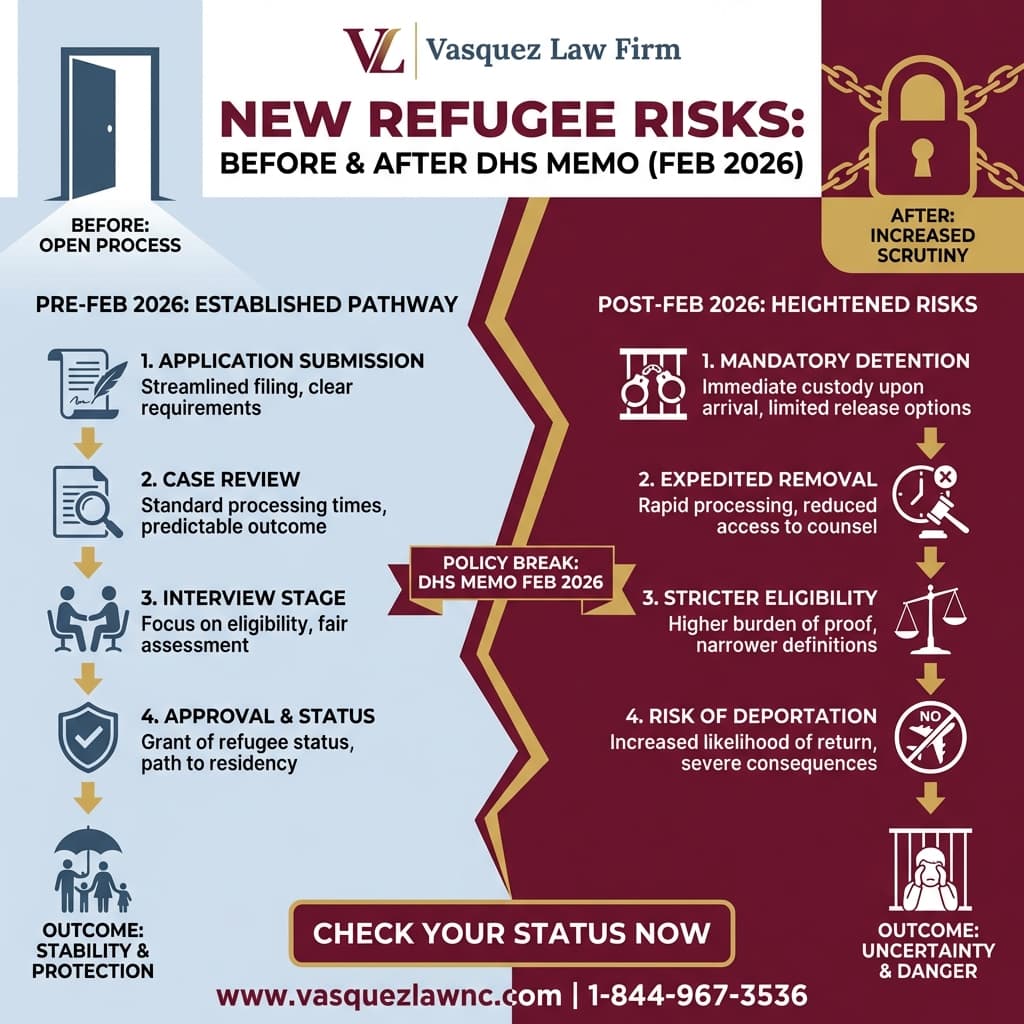
A refugee arrest memo, if issued, would typically be a directive from a federal agency like the Department of Homeland Security (DHS) or Immigration and Customs Enforcement (ICE) outlining policies for the arrest and detention of individuals with refugee status or those seeking asylum. Such a memo could signal increased enforcement or changes in how refugee claims are processed and managed, potentially leading to immediate detention for certain individuals.
- A memo could change detention policies for asylum seekers.
- It may affect individuals at the border or within the U.S. interior.
- Understanding your legal rights is paramount.
- Immediate legal counsel is crucial if you are detained or approached by immigration officials.
- Policies can impact eligibility for relief and status adjustment.
- It could influence the process for claiming asylum or refugee status.
What is a Refugee Arrest Memo and Its Implications?
A refugee arrest memo is a formal directive from a government agency, typically within the Department of Homeland Security (DHS), that provides guidance or mandates specific actions regarding the apprehension, detention, and processing of individuals who are refugees or asylum seekers. These memos can significantly alter how immigration officers and agents interact with this vulnerable population. They may introduce new criteria for arrest, change release policies, or streamline deportation proceedings for certain categories of individuals. Historically, such memos have been used to implement broader immigration enforcement strategies, sometimes leading to widespread fear and confusion within immigrant communities.
The implications of such a memo are far-reaching. For individuals already granted refugee status, a memo might introduce new grounds for review or even revocation, potentially leading to arrest and detention if their status is questioned. For those seeking asylum, it could mean more stringent detention policies upon arrival or during their application process. The legal landscape for refugees is complex, governed by both domestic law, such as the Immigration and Nationality Act (INA) (8 U.S.C. § 1101 et seq.), and international treaties. Any new memo must operate within these established legal frameworks, but its interpretation and implementation can have immediate and severe consequences.
Who is Affected by Such a Memo?
The potential scope of a refugee arrest memo is broad, impacting several groups within the United States and at its borders. Primarily affected would be individuals who have recently arrived at U.S. borders and are seeking asylum, often referred to as asylum seekers. These individuals may face immediate detention under new directives, potentially without the opportunity for parole or bond that might have been available under previous policies. Additionally, individuals already granted refugee status who may have committed certain offenses or whose status is under review could also be targeted.
Furthermore, those who have applied for asylum but are awaiting a decision, or who are in the process of adjusting their status, could also see their cases impacted by new enforcement priorities. Even individuals with Temporary Protected Status (TPS) or Deferred Enforced Departure (DED) might experience indirect effects, as a broader enforcement push often leads to increased scrutiny across all non-citizen populations. Understanding your specific category and the potential risks is a critical first step in preparing for any policy changes. Vasquez Law Firm helps clients in Charlotte, across North Carolina, Florida, and nationwide understand their unique situations.
Your Rights as a Refugee or Asylum Seeker in 2026
Even in the face of a potential refugee arrest memo, individuals seeking or holding refugee status possess fundamental legal rights under U.S. and international law. It is vital to remember that you have the right to due process, which means you are entitled to a fair legal hearing before an immigration judge if the government seeks to remove you. You also have the right to legal representation, though the government is not obligated to provide it for you in immigration proceedings. This makes securing private counsel incredibly important.
Upon arrest, you have the right to remain silent and should not sign any documents you do not understand. You also have the right to speak with an attorney before answering questions from immigration officials. Knowing these rights is your first line of defense. Any changes in policy cannot override these constitutional and statutory protections without significant legal challenge. Vasquez Law Firm is dedicated to ensuring that these rights are upheld for every client, regardless of their immigration status or the current political climate.
Key Protections Under U.S. Law
U.S. law provides several key protections for refugees and asylum seekers, even amidst potential changes like a refugee arrest memo. The Refugee Act of 1980, which incorporates international refugee law into U.S. domestic law, establishes the framework for granting asylum and refugee status. This framework is based on the 1951 Refugee Convention and its 1967 Protocol, which prohibit refoulement, meaning the return of refugees to countries where they face persecution.
Additionally, the Fifth Amendment to the U.S. Constitution guarantees due process rights to all persons within U.S. jurisdiction, including non-citizens. This means that individuals cannot be deprived of life, liberty, or property without proper legal procedures. While the specifics of immigration enforcement can be aggressive, these foundational legal principles remain critical. An experienced immigration attorney can help ensure that these protections are rigorously applied to your case, advocating fiercely on your behalf.
Step-by-Step: Responding to a Refugee Arrest Memo or Detention
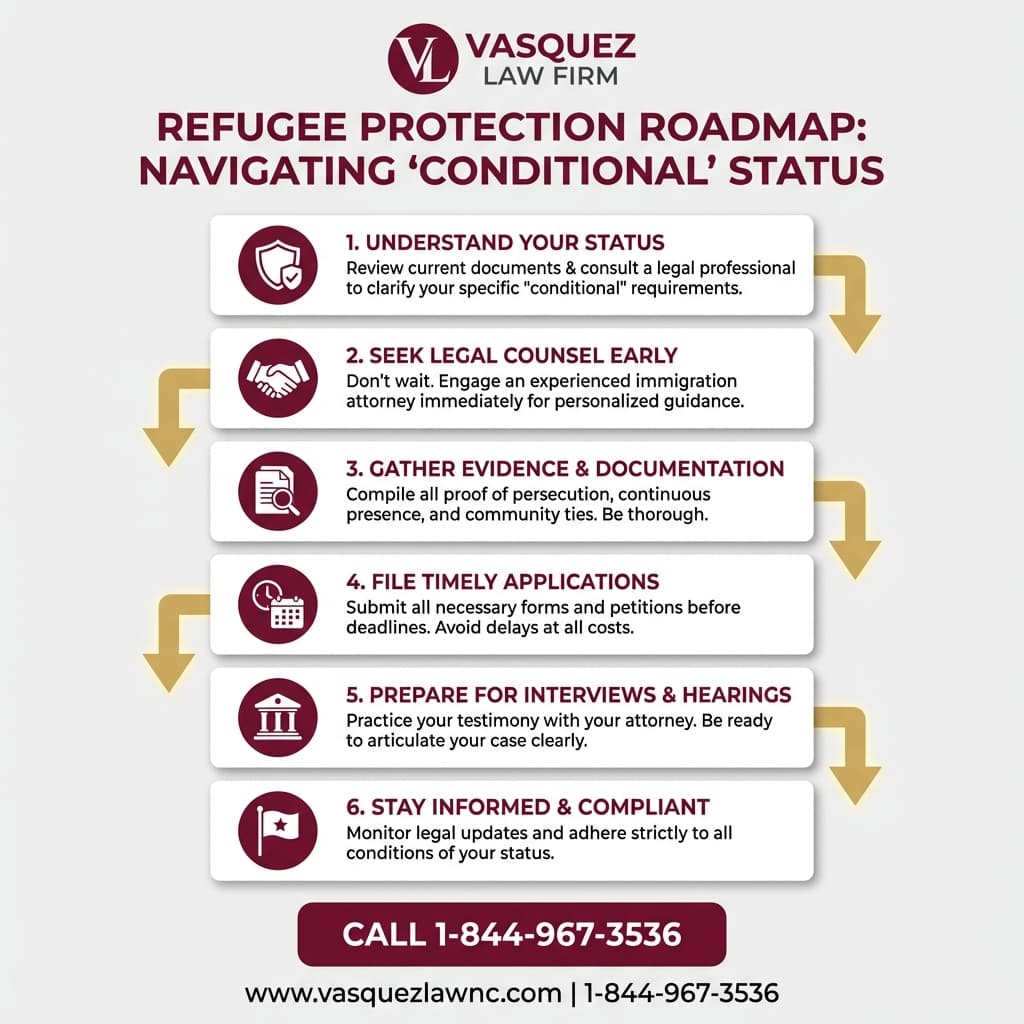
If you or a loved one is impacted by a refugee arrest memo or detained by immigration officials, swift and informed action is essential. These steps outline a general course of action, but remember that immediate legal counsel is the most crucial step.
- Remain Calm and Assert Your Rights: If approached by ICE or other immigration officials, remain calm. You have the right to remain silent and the right to speak with an attorney. Do not open your door to immigration agents unless they have a warrant signed by a judge. Ask to see a warrant and verify it is a judicial warrant, not an administrative warrant.
- Do Not Sign Anything: Never sign any document you do not fully understand, especially if you are under duress or without legal counsel. Signing certain documents could waive your rights or lead to voluntary deportation.
- Contact an Immigration Attorney Immediately: This is the most critical step. An attorney can advise you on your rights, communicate with officials on your behalf, and begin the process of seeking your release or defending your status. Vasquez Law Firm offers free case evaluations to assess your situation.
- Gather Information: If detained, try to remember or write down as many details as possible: the agency involved, the officers' names or badge numbers, the date, time, and location of your arrest, and any documents you were given.
- Notify Family/Friends: If possible, let a trusted person know you have been detained and where. Provide them with your attorney's contact information.
- Prepare for Court Proceedings: Your attorney will guide you through the immigration court process, which may include bond hearings, master calendar hearings, and individual hearings. They will help you gather necessary documentation and prepare your defense.
Documents and Evidence Checklist for Refugee Cases
Preparing for a refugee or asylum case, especially in light of a refugee arrest memo, requires meticulous documentation. Having these documents readily available can significantly strengthen your case and expedite legal processes.
- Proof of Identity: Passports, birth certificates, national ID cards.
- Proof of Persecution: Police reports, medical records, news articles, affidavits from witnesses, photos, videos, or other evidence demonstrating harm or fear of harm in your home country.
- Personal Statements: A detailed written declaration describing your experiences and reasons for seeking asylum or refugee status.
- Travel Documents: Any visas, entry stamps, or other records of your arrival in the U.S.
- Family Information: Marriage certificates, birth certificates of dependents, to establish family ties for derivative asylum claims.
- Legal Documents: Copies of any notices to appear, court orders, or previous immigration applications.
- Financial Records: If applicable, to demonstrate economic hardship or support claims.
Common Mistakes to Avoid with Refugee Arrest Memos
Navigating the complexities of immigration law, particularly concerning a refugee arrest memo, is fraught with potential pitfalls. Avoiding common mistakes can significantly impact the outcome of your case. Being proactive and informed is key to protecting your rights and future.
- Not Asserting Your Rights: Failing to remain silent or signing documents without legal review can severely jeopardize your case. Always remember your right to counsel and to refuse to answer questions without an attorney present.
- Providing False Information: Any inconsistencies or false statements can lead to accusations of fraud, which can result in denial of status, detention, and even criminal charges. Always be truthful with your attorney and immigration officials.
- Delaying Legal Counsel: Waiting to contact an attorney can mean missed deadlines, forfeited rights, or lost opportunities for release. Immediate legal intervention is crucial.
- Failing to Gather Sufficient Evidence: A weak case often stems from insufficient documentation of persecution or fear. Meticulously collect all possible evidence.
- Not Understanding Your Specific Status: Misinterpreting whether you are an asylum seeker, refugee, or hold another status can lead to incorrect legal strategies. Understand your exact immigration standing.
- Ignoring Court Notices: Missing court dates or failing to respond to official notices can lead to an order of removal (deportation) in absentia. Always take all official communications seriously.
- Traveling Internationally Without Legal Advice: For individuals with pending asylum cases or certain statuses, international travel can lead to denial of re-entry or abandonment of their application. Consult an attorney before any international travel.
If you only remember one thing: Always consult with an experienced immigration attorney immediately if you or a loved one is detained or receives any notice from immigration authorities, especially concerning a refugee arrest memo. Your rights depend on it.
Navigating Refugee Arrest Memos in NC, FL, and Nationwide
The impact of a refugee arrest memo is felt across the nation, including specific regions like North Carolina and Florida, which have significant immigrant populations. While immigration law is primarily federal, its enforcement and the practical implications for individuals can vary based on local policies, the presence of specific immigration courts, and the operational priorities of local ICE field offices. Understanding these nuances is crucial for effective legal strategy.
North Carolina Considerations
In North Carolina, areas like Charlotte are home to diverse immigrant communities, and any new refugee arrest memo would directly affect residents and newcomers. The state has several immigration courts, including one in Charlotte, where asylum claims are adjudicated. Local ICE field offices would implement directives from any memo, potentially increasing arrests in communities or at workplaces. Vasquez Law Firm, based in North Carolina, is acutely aware of these local dynamics and provides tailored legal representation to clients throughout the state. We monitor changes at the immigration courts and local enforcement agencies closely to provide the most current advice.
Florida Considerations
Florida, with its extensive coastline and proximity to the Caribbean and Latin America, is a primary port of entry for many asylum seekers. A refugee arrest memo could lead to a significant increase in detentions at the border and within the state's interior. Florida also has multiple immigration courts and large detention facilities. The policies implemented by local ICE and CBP (Customs and Border Protection) offices in Florida can be particularly aggressive. Vasquez Law Firm extends its immigration services to Florida, understanding the unique challenges and legal environment faced by refugees and asylum seekers in the state. Our bilingual team is ready to assist those impacted by evolving policies.
Nationwide Enforcement Trends
Federal immigration law, including policies derived from a refugee arrest memo, applies nationwide. The U.S. Citizenship and Immigration Services (USCIS) is responsible for adjudicating asylum claims, while ICE is tasked with interior enforcement. The Executive Office for Immigration Review (EOIR) oversees the immigration courts where removal proceedings occur. Any nationwide memo would establish uniform guidelines, but local interpretation and resource allocation can lead to differing enforcement intensities across states. It is critical for individuals across the U.S. to stay informed and seek legal counsel, as even seemingly minor policy shifts can have major consequences. Vasquez Law Firm operates on a national scale for immigration cases, offering robust defense against federal enforcement actions.
Don't face your legal challenges alone. Our team is here to help you every step of the way.
Call today: 1-844-967-3536 | Se Habla Español
When to Call a Lawyer Now: Urgent Triggers
The moment you suspect you might be affected by a refugee arrest memo or any immigration enforcement action, immediate legal consultation is paramount. Time-sensitive situations require swift action to protect your rights and explore all available legal avenues. Do not delay seeking professional guidance.
- You or a family member has been detained by ICE or CBP.
- You receive a Notice to Appear (NTA) in immigration court.
- Immigration officials visit your home or workplace.
- You are asked to sign any document by an immigration official.
- Your asylum application has been denied, or your refugee status is under review.
- You have a pending asylum case and are considering international travel.
- You believe you are eligible for asylum or refugee status but haven't applied.
- You have a final order of removal and need to explore options to reopen your case.
- You are facing criminal charges that could impact your immigration status.
- You need to understand the implications of a new policy, such as a refugee arrest memo, on your specific situation.
About Vasquez Law Firm
At Vasquez Law Firm, we combine compassion with aggressive representation. Our motto "Yo Peleo" (I Fight) reflects our commitment to standing up for your rights, especially in complex and challenging immigration cases. We understand the fear and uncertainty that a refugee arrest memo or similar policy changes can bring, and we are here to provide unwavering support and expert legal guidance.
- Bilingual Support: Se Habla Español - our team is fully bilingual, ensuring clear communication and understanding.
- Service Areas: We proudly serve clients in North Carolina, Florida, and provide comprehensive immigration services nationwide.
- Experience: With over 15 years of dedicated legal experience, we have a proven track record of helping clients navigate intricate legal matters.
- Results: Our firm is built on achieving favorable outcomes, with thousands of successful cases across multiple practice areas, including complex immigration litigation.
Attorney Trust and Experience
Attorney Vasquez holds a Juris Doctor degree and is admitted to practice in both the North Carolina State Bar and Florida Bar. With over 15 years of dedicated legal experience, Attorney Vasquez has built a reputation for providing personalized attention and achieving favorable outcomes for his clients. He leads a team that is not only highly skilled but also deeply empathetic to the struggles faced by immigrants and refugees. His commitment to justice and relentless advocacy makes Vasquez Law Firm a trusted ally in your legal journey.
Frequently Asked Questions About Refugee Arrest Memos
What exactly is the difference between a refugee and an asylum seeker?
A refugee is someone who seeks protection from persecution and applies for status while outside the U.S., typically processed by the Department of State. An asylum seeker is someone already in the U.S. or at a port of entry who seeks protection from persecution and applies for asylum with USCIS or in immigration court. Both seek protection based on similar grounds, but their application locations differ.
Can a refugee arrest memo revoke my already granted refugee status?
While a memo cannot unilaterally revoke status without due process, it could introduce new grounds for review or heightened scrutiny that might lead to revocation proceedings. Your refugee status is protected by law, but any changes in policy could trigger an examination of your eligibility. It is crucial to consult with an attorney immediately if your status is questioned.
What should I do if ICE agents come to my home or workplace without a warrant?
If ICE agents come to your home, do not open the door unless they have a judicial warrant signed by a judge. Ask them to slide the warrant under the door or hold it up to a window. If they do not have a judicial warrant, you are not required to let them in. At your workplace, you have the right to remain silent and request an attorney. Do not answer questions or sign documents without legal counsel.
How does a refugee arrest memo affect individuals seeking asylum at the border?
A refugee arrest memo could significantly impact asylum seekers at the border by potentially changing policies on detention, parole, or expedited removal. It might lead to longer detention periods, limited access to legal resources, or more immediate processing of claims, often under more restrictive conditions. Legal representation at this stage is critical to assert your rights and present your case effectively.
Is it safe to travel within the U.S. if I have pending asylum or refugee status?
Generally, traveling within the U.S. is permissible for individuals with pending asylum or refugee status. However, it is always wise to carry valid identification and proof of your legal status. Be aware that any interaction with law enforcement could potentially lead to immigration scrutiny, especially if a new refugee arrest memo increases enforcement. Consult with an attorney before any long-distance travel to understand specific risks.
What is the role of an immigration attorney in responding to a refugee arrest memo?
An immigration attorney plays a critical role in responding to a refugee arrest memo by clarifying its legal implications, advising you on your rights, and representing you in all immigration proceedings. They can help prepare your asylum claim, fight for your release from detention, challenge adverse decisions, and ensure you receive due process. Their expertise is invaluable in navigating complex and evolving immigration policies.
Can a refugee arrest memo lead to immediate deportation?
While a memo itself doesn't directly lead to immediate deportation, it could outline policies that expedite removal proceedings for certain individuals, especially those deemed inadmissible or who have violated immigration laws. You still have a right to a hearing before an immigration judge. However, a memo might influence detention and bond decisions, making it harder to fight your case from outside detention. Legal counsel is essential to prevent expedited removal.
Are there any specific legal defenses available against actions based on a refugee arrest memo?
Yes, several legal defenses may be available, depending on your individual circumstances. These include demonstrating a credible fear of persecution, proving eligibility for asylum or withholding of removal, challenging the legality of your arrest or detention, or applying for other forms of relief, such as adjustment of status. An experienced attorney can evaluate your case and determine the most effective legal strategies, citing relevant statutes and precedents.
How can I stay updated on new immigration policies like a refugee arrest memo?
Staying updated on immigration policies is vital. You can monitor official government websites like USCIS.gov and Justice.gov/eoir. Additionally, reputable legal news sources and immigration advocacy organizations often provide timely updates and analysis. Consulting regularly with an immigration attorney is the best way to understand how new policies, such as a refugee arrest memo, specifically apply to your situation and to receive personalized advice.
What is the difference between asylum and withholding of removal?
Both asylum and withholding of removal protect individuals from being returned to a country where they fear persecution. Asylum offers a path to permanent residency (Green Card) and allows family members to be included. Withholding of removal, under INA § 241(b)(3), only prevents deportation to the country of feared persecution and does not offer a direct path to a Green Card or family benefits. It is a more limited form of relief, often granted when asylum eligibility is not fully met, but the risk of persecution is high.
Sources and References
- U.S. Citizenship and Immigration Services (USCIS)
- Executive Office for Immigration Review (EOIR)
- Immigration and Nationality Act (INA) - Cornell Law School
Facing charges? Our criminal defense attorneys can review your case.
Ready to take the next step? Contact Vasquez Law Firm today for a free, confidential consultation. We're committed to fighting for your rights and achieving the best possible outcome for your case.
Start Your Free Case Evaluation Now
Call us: 1-844-967-3536
Se Habla Español - Estamos aquí para ayudarle.


William Vasquez
Founder & CEO, Vasquez Law Firm, PLLC
William Vasquez is the founder and CEO of Vasquez Law Firm, PLLC, a results-driven firm specializing in immigration, criminal defense, personal injury, and workers' compensation. A U.S. Air Force veteran and recipient of the Joint Service Achievement Medal, William is dedicated to fiercely fighting for his clients' rights.
Related Legal Services
Need legal help? Learn more about our immigration law practice, or contact us for a free evaluation.
You can also visit our North Carolina immigration practice for more information.