USCIS Fraud Case Leads to 18-Month Sentence in 2026
The June 2026 USCIS announcement revealed that Venerando Aquino Martin was sentenced to 18 months for a large visa fraud scheme involving fraudulent work permits under the Registry provision. This article explains who is affected, what the law says about Registry eligibility and employment authorization, and what steps applicants should take if they suspect fraud. The case underscores USCIS’s commitment to detecting and prosecuting immigration benefit fraud, with implications for applicants in Raleigh, NC and Orlando, FL.
Published on June 1, 2026
Have questions? Talk to an attorney - free evaluation.
Call 1-844-967-3536Free Tool
Check Your USCIS Case Status Now
Enter your receipt number - get the official USCIS status in English or Spanish. No registration.
This article provides general legal information, not individualized legal advice. Reading does not create an attorney-client relationship. For advice specific to your situation, contact Vasquez Law Firm.
What happened in the USCIS visa fraud case announced in June 2026?
Need a Work Visa or Permit?
H-1B, TN, L-1, and more. We help workers and employers navigate the visa process.
In June 2026, U.S. Citizenship and Immigration Services (USCIS) announced the sentencing of Venerando Aquino Martin to 18 months in prison for orchestrating a large-scale immigration fraud scheme involving fraudulent visa applications and employment authorization documents.
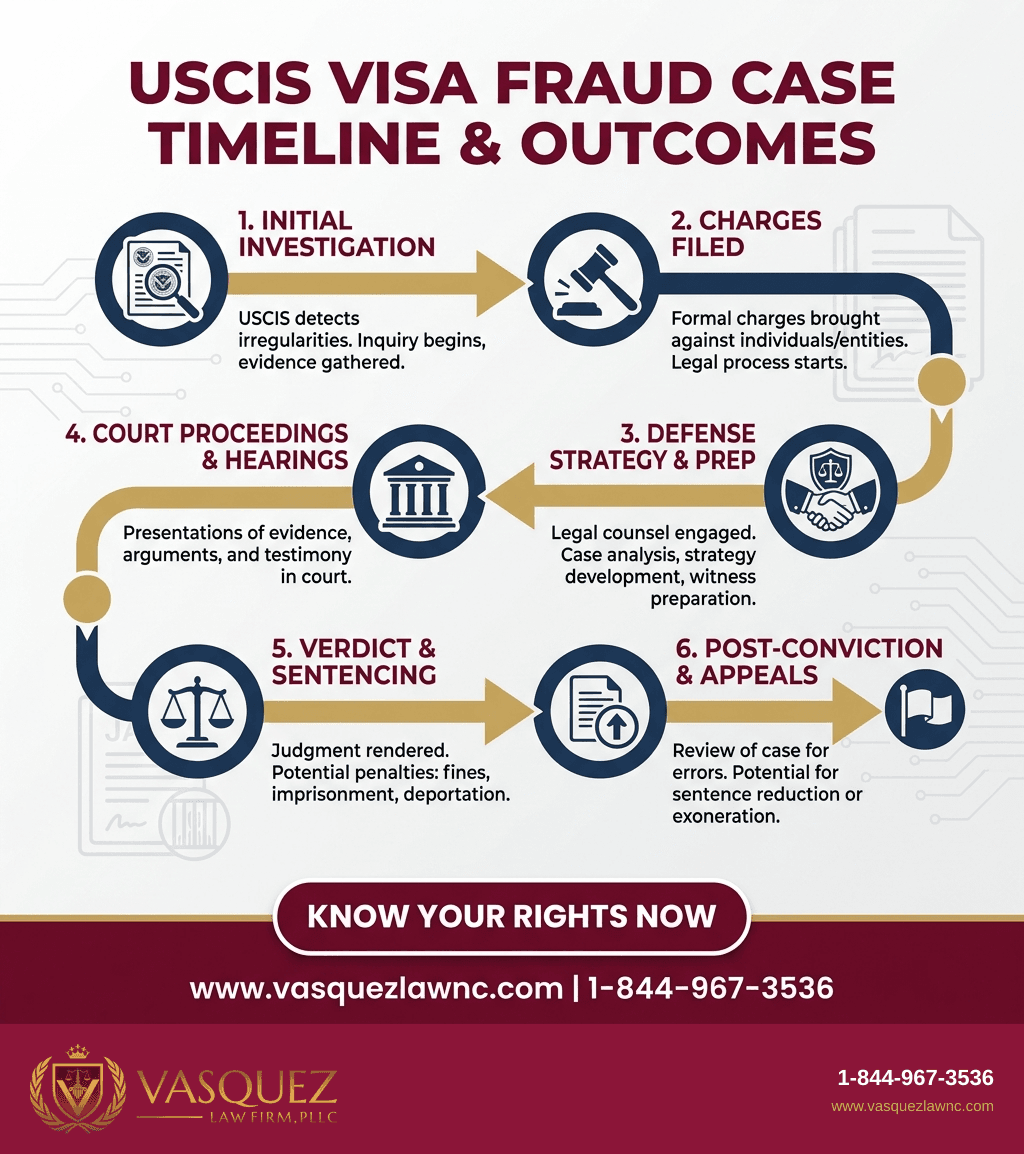
Between September 2023 and April 2025, Martin submitted approximately 242 fraudulent applications falsely claiming eligibility for work permits under the "Registry" provision of the Immigration and Nationality Act (INA). This led to 66 work permits being issued to ineligible applicants, many of whom were illegal aliens in the Commonwealth of the Northern Mariana Islands (CNMI). USCIS revoked all 66 work permits after uncovering the fraud and initiated deportation proceedings against those involved.
The investigation was prompted by an alert USCIS officer in Guam who noticed suspicious patterns in Martin's applications. The case was prosecuted by the U.S. Attorney’s Office for the Districts of Guam and the Northern Mariana Islands, with assistance from Homeland Security Investigations Saipan. The court also ordered Martin to serve one year of supervised release and pay a $200 assessment fee.
This case highlights USCIS’s enhanced screening and vetting efforts to detect and prevent immigration benefit fraud, particularly in vulnerable jurisdictions such as the CNMI. The agency encourages the public to report suspected fraud using its Tip Form.
For more details, see the official USCIS news release: USCIS Screening and Vetting Efforts Lead to 18-month Sentencing of Illegal Alien in Fraud Case.
Who is affected by this USCIS immigration fraud case?
The primary individuals affected by this fraud case are the applicants who received fraudulent work permits under the Registry provision, as well as the broader immigration system that relies on the integrity of USCIS adjudications.
Specifically, 66 illegal aliens in the Commonwealth of the Northern Mariana Islands were issued work permits based on fraudulent applications submitted by Martin. These individuals are now subject to revocation of their work authorization and potential deportation.
While the case occurred in the CNMI, the implications extend to other jurisdictions including Raleigh, NC, where USCIS offices continue to enforce strict vetting to prevent similar fraud schemes. The fraudulent applications falsely claimed eligibility under the Registry provision, which applies only to individuals who entered the United States before January 1, 1972.
Many applicants in this case were ineligible; some were not even born before 1972, making them ineligible for Registry-based benefits. This misrepresentation undermines the legal immigration process and harms lawful applicants waiting for benefits.
USCIS’s revocation of the 66 work permits and initiation of deportation proceedings serves as a warning to those who might attempt to exploit immigration benefits fraudulently. The case also underscores the importance of legal representation and compliance with immigration laws for applicants in Raleigh, NC and Orlando, FL.
What does the law say about the Registry provision and employment authorization?
The Registry provision of the Immigration and Nationality Act allows certain individuals who entered the United States before January 1, 1972, to apply for lawful permanent resident status. While their adjustment application is pending, they may be eligible for employment authorization.
Under 8 U.S.C. § 1255 (INA § 245), eligible applicants can adjust status to lawful permanent resident. The Registry provision is a special eligibility category under this statute.
Employment authorization eligibility classes are detailed in 8 CFR § 274a.12, which governs who may receive work permits. Fraudulent claims of eligibility under Registry violate these regulations and are subject to revocation and penalties.
In this case, Martin submitted applications falsely asserting applicants qualified under Registry, even though nearly all were ineligible. USCIS detected this pattern and revoked the improperly issued work permits.
"USCIS’ investigative efforts discovered that Martin charged applicants thousands of dollars to prepare and submit fraudulent applications for immigration benefits under the ‘Registry’ provision of the Immigration and Nationality Act. This provision allows certain individuals who entered the United States before Jan. 1, 1972, to apply for a Permanent Resident Card and receive work permits while that application is pending." (Source: USCIS, https://www.uscis.gov/newsroom/news-releases/uscis-screening-and-vetting-efforts-lead-to-18-month-sentencing-of-illegal-alien-in-fraud-case)
The INA and corresponding regulations provide USCIS with authority to investigate and prosecute fraud, revoke benefits, and initiate removal proceedings against those who obtain immigration benefits illegally.
What should applicants do if they suspect or are involved in immigration benefit fraud?
If you suspect immigration benefit fraud or abuse, USCIS encourages reporting via its official Tip Form. Applicants should always seek qualified legal counsel before submitting immigration applications to avoid mistakes or exploitation.
At our Raleigh, NC and Orlando, FL offices, we typically see that the most common mistake applicants make is relying on unauthorized representatives or fraudulent preparers who promise guaranteed approvals. These situations often lead to serious consequences including denial, revocation, or even criminal charges.
Here are recommended steps if you are concerned about fraud or want to protect your immigration status:
- Verify the credentials of anyone assisting with your immigration application.
- Consult with a licensed immigration attorney before submitting any forms.
- Report suspected fraud to USCIS using their Tip Form available on their website.
- Keep copies of all submitted documents and correspondence.
- If you receive a notice of fraud or revocation, contact an attorney immediately to discuss your options.
Below is a comparison table of legitimate Registry eligibility versus common fraudulent claims uncovered in this case:
| Eligibility Factor | Legitimate Registry Applicant | Fraudulent Claim Examples |
|---|---|---|
| Date of Entry | Before Jan. 1, 1972 | Entered after 1972 or unknown |
| Proof of Entry | Official records or credible evidence | Falsified or no documentation |
| Application Fees | Standard USCIS fees | Charged thousands by preparer |
| Work Authorization | Granted while Registry application pending | Work permits issued fraudulently |
Taking these precautions can help protect your immigration benefits and avoid legal complications.
What happens next after the USCIS fraud case sentencing?
Following the sentencing of Venerando Aquino Martin, USCIS has revoked all 66 fraudulently issued work permits and initiated deportation proceedings against the illegal aliens involved. The case serves as a precedent for continued vigilance against immigration benefit fraud.
USCIS and its partners will likely increase screening and vetting efforts, particularly in jurisdictions vulnerable to fraud such as the CNMI. Applicants in Raleigh, NC and Orlando, FL should expect continued enforcement and should maintain compliance with all immigration laws.
The U.S. Attorney’s Office emphasized the importance of prosecuting immigration fraud to protect the integrity of the system and lawful applicants.
What's Your Immigration Situation?
Answer 3 questions - we'll tell you your options
Question 1 / 3
What best describes your situation?
Keep Reading
"The court also ordered him to serve one year of supervised release and pay a $200 mandatory assessment fee." (Source: USCIS, https://www.uscis.gov/newsroom/news-releases/uscis-screening-and-vetting-efforts-lead-to-18-month-sentencing-of-illegal-alien-in-fraud-case)
Applicants who have been victims of fraudulent preparers should consult an immigration attorney to evaluate their options, including potential relief or reapplication under proper procedures.
For ongoing updates and guidance, individuals should monitor USCIS announcements and consult trusted legal sources such as our immigration practice page at Vasquez Law Firm Immigration Services.
Frequently Asked Questions about USCIS Immigration Fraud Cases
What is the Registry provision under U.S. immigration law?
The Registry provision allows certain individuals who entered the U.S. before January 1, 1972, to apply for lawful permanent residence. It is a special eligibility category under 8 U.S.C. § 1255. Applicants may receive work authorization while their Registry adjustment application is pending.
How does USCIS detect immigration benefit fraud?
USCIS uses screening and vetting procedures, including pattern analysis by officers, to identify suspicious applications. Fraud Detection and National Security Directorate investigates cases where fraudulent activity is suspected, as in the 2026 CNMI case.
What are the consequences of submitting fraudulent immigration applications?
Consequences include denial or revocation of benefits, criminal prosecution, fines, imprisonment, and deportation. The 2026 case resulted in an 18-month prison sentence and supervised release for the preparer involved.
Can work permits issued under fraudulent applications be revoked?
Yes. USCIS revoked all 66 work permits issued fraudulently in the recent case. Revocation leads to loss of employment authorization and may trigger removal proceedings.
What should I do if I suspect immigration fraud?
Report suspected fraud to USCIS using their Tip Form. Consult a licensed immigration attorney before submitting applications and avoid unauthorized representatives to protect your immigration status.
This article provides general legal information, not individualized legal advice. Reading does not create an attorney-client relationship. For advice specific to your situation, contact Vasquez Law Firm.
Reviewed by William Vasquez, Founder & CEO, Vasquez Law Firm, PLLC.
Related Topics

William Vasquez
Founder & CEO, Vasquez Law Firm, PLLC
William Vasquez is the founder and CEO of Vasquez Law Firm, PLLC, a results-driven firm specializing in immigration, criminal defense, personal injury, and workers' compensation. A U.S. Air Force veteran and recipient of the Joint Service Achievement Medal, William is dedicated to fiercely fighting for his clients' rights.
Related Legal Services
Need legal help? Learn more about our immigration law practice, or contact us for a free evaluation.
You can also visit North Carolina immigration lawyers for more information.
![70 Billion Immigration Enforcement Funding Package Stalled [2026]](/_next/image?url=https%3A%2F%2Fvuuyorlsmhunqektprqy.supabase.co%2Fstorage%2Fv1%2Fobject%2Fpublic%2Fblogs%2Fimmigration-header-1783353576108.png&w=1920&q=75)