How Visa Regulations Impact Your US Immigration in 2026
Learn how visa regulations in 2026 affect US immigration processes. Understand new rules and protect your status. Contact Vasquez Law for help today.
Published on July 16, 2026· Updated August 6, 2026
Talk to an immigration attorney
Free call. A clear plan for your case.
Free & confidential · Se habla espanol · 24/7
Have questions? Talk to an attorney - free evaluation.
Call 1-844-967-3536Worried how the latest immigration news affects you?
Schedule a confidential case review with an immigration attorney - know exactly where you stand.
How Visa Regulations Impact Your US Immigration in 2026
Visa regulations are the rules that control who can enter and stay in the US. They affect millions of foreign people, including students, workers, and families. In 2026, changes to these visa rules—such as those for student visas and journalist visas—are causing big effects. Knowing these visa rules is very important to keep your legal status and to apply or renew your visa correctly in Raleigh, NC, and Orlando, FL. Vasquez Law Firm offers expert immigration help in these areas. This article explains the latest visa rules for 2026, how they affect people in North Carolina and Florida, important steps for applicants, common mistakes to avoid, and when to get legal help.
Need help with your case? Our experienced lawyers are ready to fight for you. Se Habla Español.
Or call us now: 1-844-967-3536
Quick Answer
Visa regulations in 2026 include new rules for student and journalist visas. They require more documents and take longer to process. These changes affect visa applicants in Raleigh, NC, and Orlando, FL. You need to prepare carefully and get legal help to keep your legal status and follow the new rules.
- More careful checks on some visa types
- More documents needed
- Longer processing times at USCIS and consulates
- Old policies from past governments still affect cases
- Legal help increases your chance of success
Understanding Visa Regulations and Policies
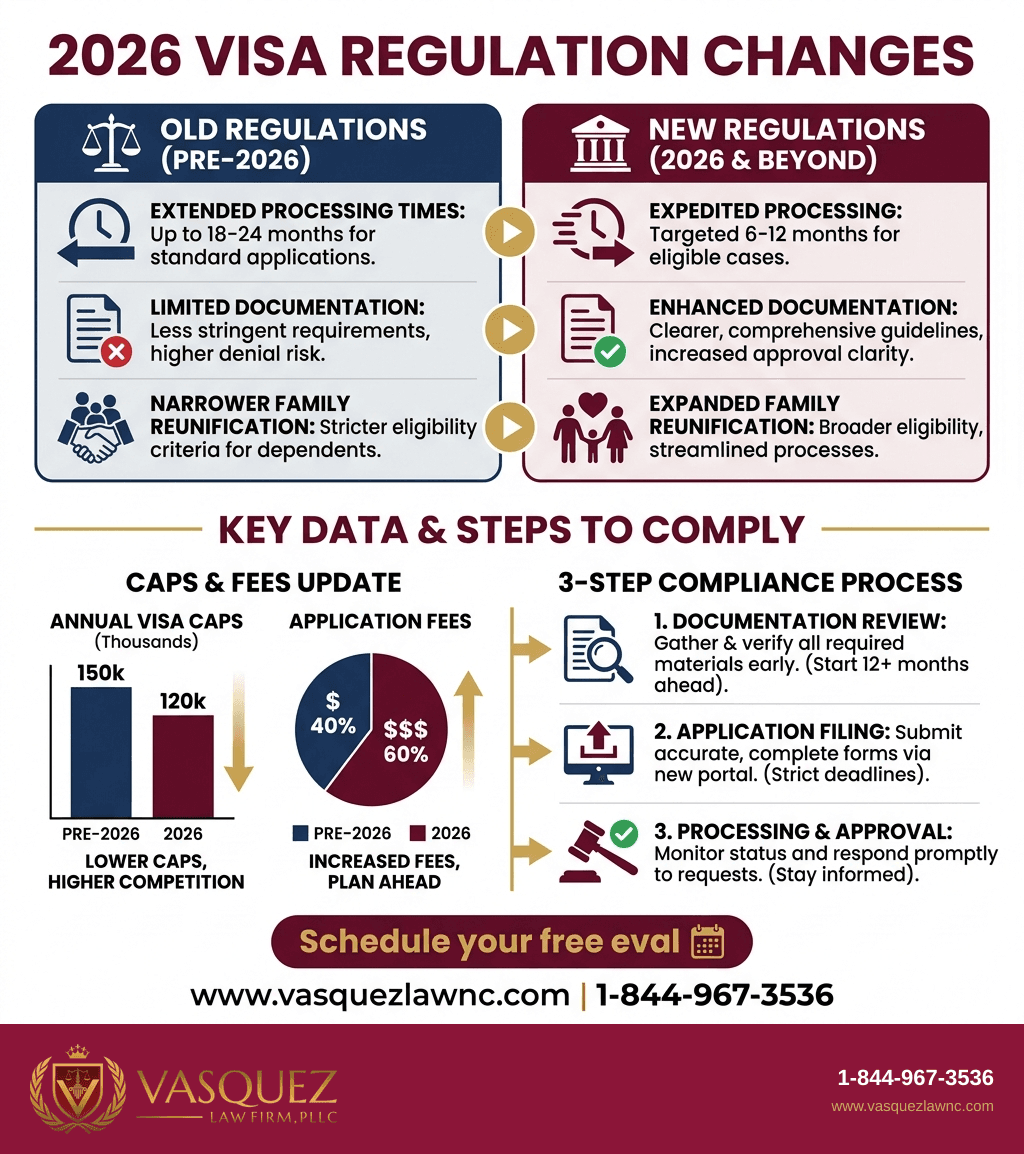
Every year, the US changes its visa rules to respond to political, economic, and security needs. In 2026, new visa rules focus on tighter control for student and journalist visas. For example, the US government now checks visa applications more closely for foreign students at universities in North Carolina and Florida. This means USCIS and consulate officers ask for more proof that applicants will follow visa rules and leave on time.
The Visa Core Rules 2026 include new document standards and keep some rules from past years. One is the public charge rule. This rule can deny visas if the applicant might depend on public benefits. Applicants must show they can support themselves financially.
Knowing these visa rules is very important for anyone applying for visas in Raleigh, NC, Orlando, FL, or anywhere in the US. Whether you apply for a student visa, a journalist visa (called I-category), or family-based immigrant visas, the new rules require you to follow them carefully to avoid denial or delays.
Many applicants miss small changes to the Visa Rules for Issuers and consular processing. These rules affect how consulates check backgrounds and documents. The Visa Rules PDF on official government websites gives detailed information. But it can be hard to understand without legal help.
Key Visa Regulation Highlights in 2026
- Stronger background checks for journalists and students
- Changed interview steps and scheduling
- Stricter proof needed to show you will return to your home country
- Longer wait times for visa approvals because of more security checks
If you want to know how visa rules affect your immigration or family petition case, our immigration legal services can give you advice made for your situation.
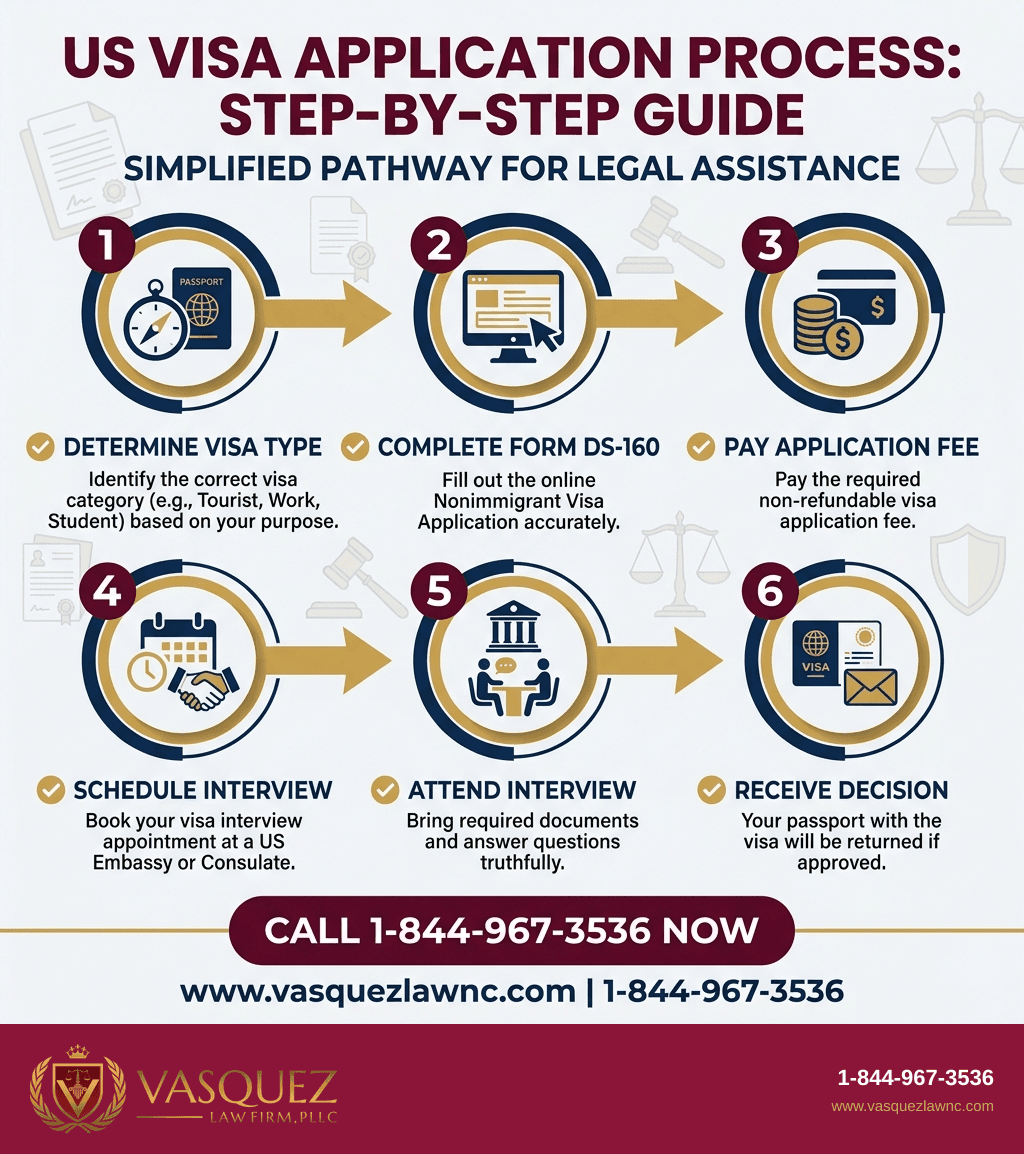
Step-by-Step Process for US Visa Applications
Applying for a US visa involves many steps. The 2026 visa rules have updated these steps. The process starts by choosing the right visa type. Usually, this is a nonimmigrant visa (for temporary stay) or an immigrant visa (for permanent stay), depending on your reason.
Step 1: Determine Visa Category
Find the visa that fits your case: student visas (F or M), work visas (H-1B, L-1), or family-based immigrant visas. Each type has its own rules and forms.
Step 2: Complete the Visa Application Form
Fill out the right online form like DS-160 for nonimmigrant visas or DS-260 for immigrant visas. Make sure all information is correct and complete.
Step 3: Pay Visa Application Fees
Pay the visa fees. Fees depend on the visa type. Usually, fees are not returned if your visa is denied.
Step 4: Gather Supporting Documents
Collect documents like your passport, photos that meet US visa photo rules, proof of ties to your home country, financial papers, acceptance letters, and other evidence explained below.
Step 5: Schedule and Attend Visa Interview
The consulate or USCIS office will set an interview. At the interview, you answer questions about your purpose, plans, and qualifications. Visa officers use the interview to decide if you meet the new rules.
Step 6: Wait for Processing and Decision
After the interview, the time to process your visa varies. It depends on visa type, security checks, and the local consulate’s workload. Check current USCIS processing times at USCIS Processing Times.
Don't wait to get the help you deserve. Call us now for immediate assistance.
Documents and Evidence Checklist
Sending all required documents avoids delays and denials. Here is a checklist for common visa types in 2026:
- Valid passport with at least six months left after your planned stay
- Completed visa application form (DS-160 or DS-260)
- Recent passport-style photos that meet US visa photo rules
- Proof of enrollment or acceptance letters for student visas
- Job offer or contract letters for work visas
- Financial proof showing you can support yourself without public help
- Proof of ties to your home country, like property, family, or a job
- Police clearance certificates, if needed
- Extra forms like I-20 (for F-1 students) or I-797 notices
Not sending all needed documents is a common reason for visa denial under stricter visa regulations.
Timeline and What to Expect in 2026
The time to get a US visa can vary a lot. Usually, expect these steps and times:
- Form preparation: 1-2 weeks to gather and fill out all materials
- USCIS or consulate processing: 4-20 weeks depending on visa type and security checks
- Interview scheduling: 2-6 weeks after you send your application
- Final decision: Up to 4 weeks after the interview for approval or denial
This timeline can be longer if security checks increase or more people apply.
Infographic: US Visa Application Timeline 2026 shows this process visually.
Costs and Fees Affecting Visa Applications
Visa fees differ by type but usually range from $160 (nonimmigrant visas) to over $700 for immigrant visas. Other costs may include:
- Extra fees for faster processing of some work visas
- Medical exam costs needed for immigrant visas
- Fees for translating and authenticating documents
- Travel costs for interviews at consulates in Raleigh, NC, Orlando, FL, or other places
Some fees are not returned even if your visa is denied. Planning for these costs and knowing the fee schedule helps avoid surprises.
Common Mistakes and How to Avoid Them
- Incomplete applications: Always check all form fields before sending to avoid rejection.
- Missing documents: Use the checklist carefully; one missing paper can delay or deny your visa.
- Not preparing for the interview: Practice common questions and bring all original documents.
- Giving false information: Always tell the truth; lies can cause permanent bans.
- Ignoring new rules: Talk to lawyers to make sure you meet the latest 2026 visa requirements.
- Slow replies to government requests: Answer USCIS or consulate questions quickly.
- Not working with a qualified lawyer: Legal mistakes can be costly; Vasquez Law Firm can guide you well.
If you remember one thing: Accurate, complete applications with legal advice have the best chance under the 2026 visa rules.
Jurisdiction Notes for North Carolina and Florida
North Carolina Notes
Immigration and visa applications for people in Raleigh follow federal law. But local USCIS offices and consulates nearby affect scheduling and document submission. Vasquez Law Firm’s Raleigh office helps clients with local rules and procedures.
Florida Notes
People in Orlando have access to major consular offices nearby. Local updates, especially for foreign students and journalists, may differ a bit because of consular policies in Florida. Vasquez Law Firm’s Orlando office gives personal support to these clients.
Federal and Nationwide Regulations
All visa rules come from federal law, including 8 U.S.C. and 8 C.F.R. These laws control who can get visas and how to apply for both immigrant and nonimmigrant visas across the US. Recent changes by USCIS and the Executive Office for Immigration Review (EOIR) apply to all states equally.
When to Call a Lawyer Now
- If you get a Request for Evidence (RFE) or Notice of Intent to Deny (NOID) from USCIS
- If your visa application is delayed longer than the usual processing times
- If you do not understand how the new visa rules affect your eligibility
- If your visa interview is denied or refused under Section 214(b)
- If you have past immigration problems or criminal records affecting your case
- If you need help preparing for difficult consular interviews or waivers
- If you want a full review or appeal of a denied visa application
- If you need advice on keeping legal status while changing visas
About Vasquez Law Firm
At Vasquez Law Firm, we combine care with strong representation. Our motto "Yo Peleo" (I Fight) shows our promise to stand up for your rights.
- Bilingual Support: Se Habla Espaol Spanish-speaking lawyers and staff available
- Service Areas: North Carolina, plus Florida and nationwide for immigration
- Experience: Over 30 years helping clients with complex legal issues
- Results: Thousands of successful cases in many practice areas
Attorney Trust and Experience
William J. Vásquez is licensed by the North Carolina State Bar (2011) and the U.S. Courts of Appeals for the 4th, 5th, and 11th Circuits. The firm has given focused legal help since 2011, with personal attention to each client.
Don't wait to get the help you deserve. Call us now for immediate assistance.
Frequently Asked Questions
What are the new visa regulations in 2026?
Visa regulations in 2026 involve tighter scrutiny for student and journalist applicants, increased documentation requirements, and longer USCIS and consular processing times. Applicants at offices in Raleigh, NC, and Orlando, FL, should prepare accordingly to meet updated standards and avoid application delays.
How do Trumps visa rules affect applicants today?
Several visa requirements introduced during the Trump administration continue into 2026, including public charge rules and enhanced background checks. These policies affect visa eligibility and processing nationwide, so applicants must understand their ongoing impact and comply to avoid denials.
What documents are required for a US visa application?
Applicants must submit a valid passport, completed visa forms (DS-160 or DS-260), compliant photographs, proof of ties to their home country, and supporting documents like acceptance letters or work contracts. Exact requirements vary by visa type.
How long does the US visa application process take in 2026?
Processing timelines vary but usually range from one to six months depending on visa type and consular workload. USCIS updates processing statistics on their website. Preparing documents carefully and early improves chances of timely approval.
What are visa chargeback rules?
Visa chargeback rules relate to financial transaction disputes involving Visa payment cards and are not directly related to immigration visas. However, understanding these rules is useful for managing finances in the US.
Can visa regulations change while my application is pending?
Yes, visa regulations can change. Applicants should monitor news and seek legal advice to adapt their applications accordingly, ensuring compliance and reducing risk of denial.
What mistakes should I avoid in my visa application?
Common mistakes include incomplete forms, missing documentation, poor interview preparation, misrepresentation, and ignoring updated rules. Avoid these by working closely with immigration attorneys and reviewing all application components carefully.
How can Vasquez Law Firm help with visa regulations compliance?
Vasquez Law Firm guides clients through complex immigration laws, helps prepare full applications, represents clients during interviews, and responds to government inquiries. Our Raleigh, NC, and Orlando, FL offices offer skilled attorneys to improve your chances under 2026 visa regulations.
Sources and References
- U.S. Citizenship and Immigration Services
- Executive Office for Immigration Review
- Legal Information Institute
Take the first step toward justice today. Our team is standing by to help.
Start Your Free Evaluation Now
Call us: 1-844-967-3536
Se Habla Espaol - Estamos aqu para ayudarle.

William Vasquez
Founder & CEO, Vasquez Law Firm, PLLC
William Vasquez is the founder and CEO of Vasquez Law Firm, PLLC, a results-driven firm specializing in immigration, criminal defense, personal injury, and workers' compensation. A U.S. Air Force veteran and recipient of the Joint Service Achievement Medal, William is dedicated to fiercely fighting for his clients' rights.
Related Legal Services
Need legal help? Learn more about experienced immigration attorneys in Charlotte, or contact us for a free evaluation.
You can also visit statewide immigration attorneys for more information.