How Visa Sanctions Affect Immigrants in Orlando in 2026
Learn how visa sanctions impact immigrants in Orlando in 2026. Understand restrictions and your rights. Contact Vasquez Law for a free evaluation today.
Published on May 5, 2026
Talk to an immigration attorney
Free call. A clear plan for your case.
Free & confidential · Se habla espanol · 24/7

Have questions? Talk to an attorney - free evaluation.
Call 1-844-967-3536Worried how the latest immigration news affects you?
Schedule a confidential case review with an immigration attorney - know exactly where you stand.
How Visa Sanctions Affect Immigrants in Orlando in 2026
Visa sanctions continue to influence immigration patterns and opportunities for individuals seeking to enter the United States, including Orlando residents and Dreamers. In 2026, understanding visa sanctions and their consequences is critical for anyone involved with U.S. immigration. This article explains what visa sanctions mean, which countries are affected, and how visa suspensions impact immigrant visa applications in Orlando and nationwide. We also provide practical steps for residents to protect their immigration interests despite these challenges.
Need help with your case? Our experienced attorneys are ready to fight for you. Se Habla Español.
Or call us now: 1-844-967-3536
Quick Answer
Visa sanctions are government-imposed restrictions that limit or suspend the issuance of visas to nationals from certain countries. These sanctions can temporarily halt immigrant and nonimmigrant visa processing, affecting applicants in Orlando and nationwide.
- Sanctions apply to specific countries based on political or security concerns.
- Visa bans often include suspension of certain visa categories.
- Revocations or restrictions can occur due to changes in U.S. immigration policy.
- Sanctions affect both immigrant visas and temporary nonimmigrant visas.
- Legal assistance helps protect rights during visa suspension periods.
Understanding Visa Sanctions and Restrictions
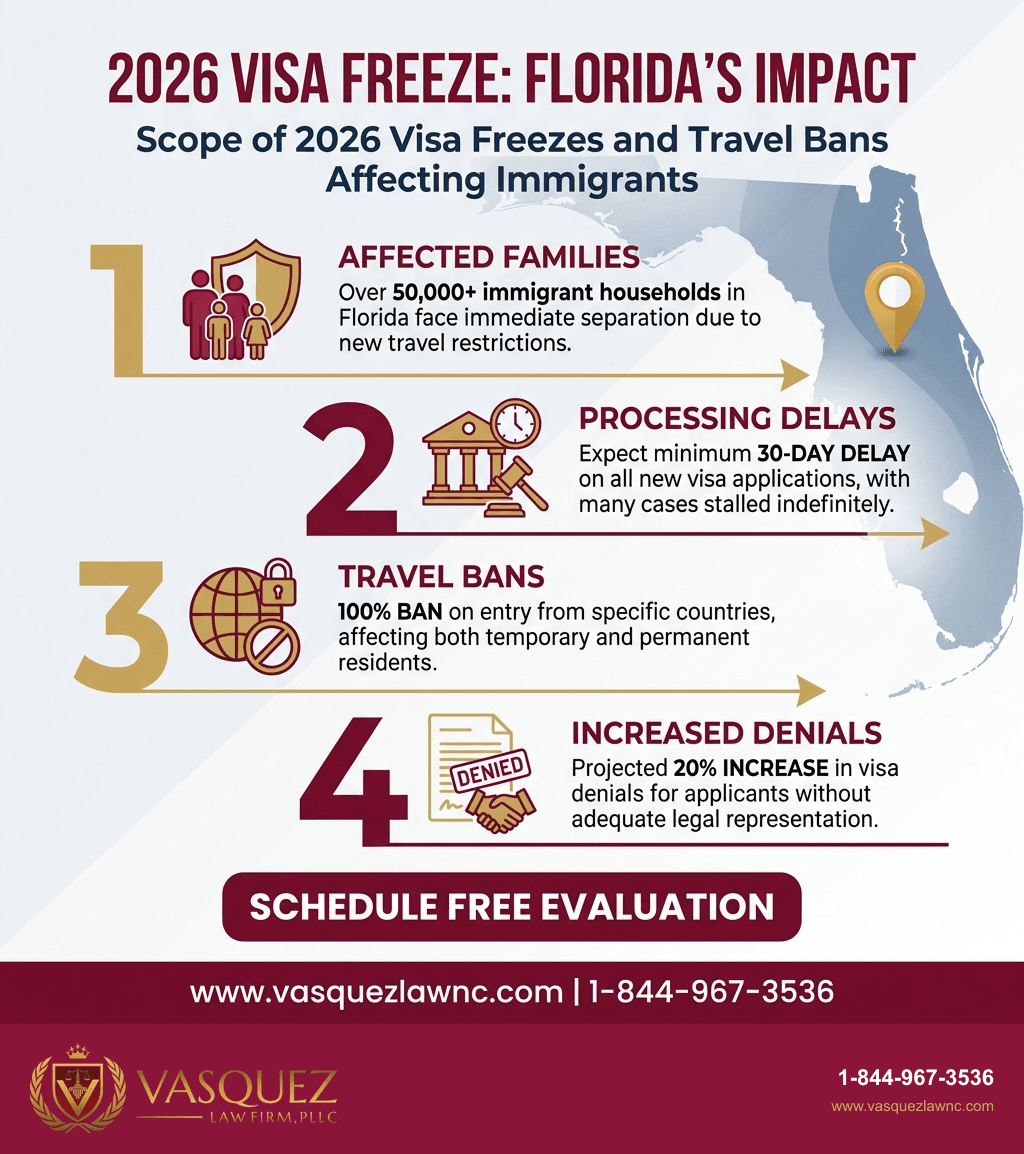
In 2026, visa sanctions remain a key tool the U.S. government uses to regulate immigration. For example, the suspension of visa issuance to nationals of 75 countries has created uncertainty for many immigrants and Dreamers living in Orlando who rely on immigrant visas for family reunification, employment, or protection. Visa sanctions are directives that restrict or halt visa applications from certain countries due to geopolitical or national security concerns.
The U.S. Department of State and U.S. Citizenship and Immigration Services (USCIS) enforce these sanctions. Recent sanctions updates often come as executive orders or policy changes aimed at controlling migration flow. Affected individuals may find their visa applications delayed, denied, or revoked, impacting their ability to legally enter or remain in the United States.
Visa sanctions can target immigrant visas, which allow permanent residency, or nonimmigrant visas for temporary stay such as student or work visas. Understanding what an immigrant visa is helps clarify these impacts. An immigrant visa grants lawful permanent resident status, enabling indefinite stay and work authorization for visa holders.
Because visa policy changes frequently, it is important to stay informed on USCIS updates and consult with immigration professionals. For residents and closetrusted community members in Orlando, Vasquez Law Firm provides guidance to navigate these sanctions and retain immigration benefits where possible.
Visa Restrictions by Countries
As of 2026, the U.S. has visa restrictions or bans on 75 countries, spanning several continents. These sanctions often relate to diplomatic relations or concerns over fraudulent documentation or security risks. Nationals from these countries may face lengthy visa suspensions or additional screening beyond typical immigration procedures.
Examples of sanctioned countries include some in the Middle East, Africa, and parts of Asia. Florida and North Carolina, with diverse immigrant populations, feel these impacts acutely. Visa applicants from these countries require careful legal review of their applications to reduce denial or revocation risks.
Why Visas Get Revoked or Suspended
Visa revocations under sanctions happen when the government determines risks such as national security threats or improper documentation. Suspensions delay visa issuance across categories, halting travel or immigration plans. The reasons behind these decisions often stem from political developments, terrorism concerns, or foreign policy shifts. For example, recent news has highlighted U.S. preparations for visa sanctions on specific countries related to migration policy enforcement.
Step-by-Step: How Visa Sanctions Affect Your Case
Facing visa sanctions can be confusing and stressful. Here is a step-by-step outline to understand how these sanctions impact your immigration case in Orlando and how to respond:
- Receive Notification: You will be informed by the U.S. Department of State or USCIS if your visa application is affected by sanctions or suspension.
- Review Visa Type: Identify if your visa is immigrant, work, student, or other; sanctions may affect categories differently.
- Legal Consultation: Contact an immigration attorney at Vasquez Law Firm to analyze how sanctions apply specifically to your case.
- Prepare Documentation: Collect evidence supporting your eligibility and good standing to challenge sanctions if possible.
- File Appeal or Waiver Requests: Where applicable, legal advocacy can request reconsideration or waivers to overcome suspensions or bans.
- Monitor Updates: Stay informed of changing visa rules by following official government channels and working with your attorney.
Don't wait to get the help you deserve. Call us now for immediate assistance.
Se Habla Español
Practical Tips for Orlando Residents
If you live in Orlando and face visa sanctions, act quickly to avoid missed deadlines. Focus on providing verifiable proof of ties to the U.S., such as employment, schooling, or family. Our immigration attorneys understand the local community's challenges and will guide you through each step.
Common Mistakes to Avoid with Visa Sanctions
- Ignoring Notifications: Failing to respond can forfeit your chance to appeal a sanction or suspension. Always seek legal help immediately.
- Incomplete Documentation: Submitting applications missing required proof increases likelihood of denial under sanctions.
- Misunderstanding Visa Categories: Confusing immigrant and nonimmigrant visas can delay effective responses.
- Failing to Stay Updated: Visa sanction policies change frequently; reliance on outdated info harms your case.
- Attempting Self-Representation: Complex sanctions require expertise to challenge effectively.
- Traveling Without Clearance: Attempting to enter the U.S. when visa sanctions apply can lead to removal or bans.
- Not Using Local Legal Resources: Orlando-based attorneys understand local immigrant demographics and federal rules better.
If you only remember one thing: Never delay contacting an experienced immigration attorney if you face visa sanctions in 2026.
Timeline: What to Expect During a Visa Suspension
- Weeks 1-2: Notification of visa suspension or revocation is usually issued by USCIS or U.S. Department of State.
- Weeks 3-4: Applicant must collect all relevant documents and prepare to respond or appeal.
- Month 2: Legal consultation is critical; attorneys help file motions or waivers.
- Months 3-6: USCIS or State Department reviews appeals and decides on reinstating or permanently suspending visas.
- Ongoing: Applicants should regularly check official sources for policy changes that may affect their case.
Costs and Fees: What Impacts the Price
- Attorney Fees: Cases involving visa sanctions require experienced legal counsel, which may cost more than standard visa applications.
- Filing Fees: Government fees apply for appeals, petitions, and waivers depending on visa category.
- Documentation Costs: Translations, notarizations, and expert reports add to overall expenses.
- Expedited Processing: May be requested at additional cost but is not guaranteed.
- Consultation Fees: Many firms, including Vasquez Law Firm, offer free initial consultations to evaluate your case.
NC, FL, and Nationwide Notes
North Carolina Notes
For North Carolina residents, visa sanctions are governed federally but may affect local immigrant families, students, and workers. Vasquez Law Firm’s Raleigh office specializes in federal immigration law and can advise North Carolina residents on sanctions impact.
Florida Notes
In Orlando and across Florida, visa sanctions influence many immigrant communities. The firm’s Orlando office offers bilingual legal support with expertise tailored to the diverse immigrant populations here impacted by these restrictions.
Nationwide Concepts
Visa sanctions follow federal law and are implemented nationwide. While local assistance varies, all applicants must adhere to U.S. Department of State and USCIS regulations. Nationwide changes in visa policy can quickly affect visa validity for immigrants in Florida, North Carolina, and beyond.
When to Call a Lawyer Now
- If you receive a visa denial or suspension notice
- If your immigrant visa application is unexpectedly delayed
- If your visa is revoked due to sanctions or security concerns
- If you need help filing appeals or waivers
- If you plan to travel internationally while under visa sanctions
- If you are uncertain about your immigration status due to recent policy changes
- If you require assistance understanding complex visa regulations for your country
- If you experience difficulties renewing or extending a visa
About Vasquez Law Firm
At Vasquez Law Firm, we combine compassion with aggressive representation. Our motto "Yo Peleo®" (I Fight) reflects our commitment to standing up for your rights.
- Bilingual Support: Se Habla Español — Spanish-speaking attorneys and staff available
- Service Areas: North Carolina, Florida, and nationwide immigration services
- Experience: Over 30 years helping clients navigate complex legal matters
- Results: Thousands of successful cases across multiple practice areas
Attorney Trust and Experience
William J. Vásquez is admitted to the North Carolina State Bar (2011) and to the U.S. Courts of Appeals for the 4th, 5th, and 11th Circuits. Florida-jurisdiction matters at the firm are handled by Florida Bar attorney Harold Estrada-Rodriguez (FL Bar No. 1041171). The firm has provided dedicated legal representation since 2011, with personalized attention to each client's case.
Don't wait to get the help you deserve. Call us now for immediate assistance.
Se Habla Español
Frequently Asked Questions
What is a visa sanction?
A visa sanction is a government action restricting or suspending visa issuance to nationals of certain countries. It limits or denies entry into the U.S. for security, political, or diplomatic reasons. Sanctions may affect immigrant visas (permanent residency) or nonimmigrant visas like student or work visas.
What 75 countries are on the visa ban?
As of 2026, the U.S. government has visa restrictions affecting nationals from about 75 countries. These countries usually face bans due to diplomatic disputes or security assessments. The list changes based on geopolitical climates. Applicants should consult USCIS or an immigration attorney for the most current list.
Do I have to pay $250 to enter the USA due to a visa sanction?
Visa sanctions themselves do not impose a fixed entry fee. However, applicants may have to pay standard visa application and processing fees. Specific fees vary by visa type and consulate. Always verify current fee schedules on the Department of State website or through your attorney.
Why are visas getting revoked in the USA?
Visas may be revoked if new information arises that affects eligibility or national security. Changes in policy, failure to meet legal requirements, or detection of fraud are common reasons for revocation. Visa sanctions increase the frequency of such revocations targeting specific country nationals or visa categories.
How can I check if my country is affected by visa sanctions?
You can visit the official U.S. Department of State website or USCIS page for the current list of countries subject to visa sanctions. Additionally, contacting an immigration attorney in Orlando can provide personalized advice based on your country of origin and visa type.
What should I do if my visa is suspended due to sanctions?
Immediately seek legal counsel to explore options such as appeals or waiver applications. Keep documentation updated and prepare to respond to government requests. Do not attempt international travel until your immigration status is clear.
Do visa sanctions affect my ability to work or study in the U.S.?
Yes, visa sanctions can impact work or student visa holders by suspending visa validity or preventing renewals. It's important to consult with an immigration attorney to understand how sanctions affect your specific visa status and employment or enrollment rights.
Can visa sanctions be lifted, and when?
Sanctions can be lifted if political or security concerns improve. However, the timeline is unpredictable and can take months or years. Staying informed through USCIS updates and legal counsel will help you understand if and when sanctions affecting your visa are removed.
Sources and References
- U.S. Citizenship and Immigration Services
- Executive Office for Immigration Review
- Legal Information Institute
Take the first step toward justice today. Our team is standing by to help.
Start Your Free Evaluation Now
Call us: 1-844-967-3536
Se Habla Español - Estamos aquí para ayudarle.
If you need legal assistance, learn more about our immigration law practice, or call us at 1-844-967-3536 for a free evaluation.
William Vasquez
Founder & CEO, Vasquez Law Firm, PLLC
William Vasquez is the founder and CEO of Vasquez Law Firm, PLLC, a results-driven firm specializing in immigration, criminal defense, personal injury, and workers' compensation. A U.S. Air Force veteran and recipient of the Joint Service Achievement Medal, William is dedicated to fiercely fighting for his clients' rights.
Related Legal Services
Need legal help? Learn more about our immigration law practice, or contact us for a free evaluation.
You can also visit our North Carolina immigration practice for more information.