Visa Bulletin April 2026: What Changed and What It Means for You
Monthly analysis of the April 2026 Visa Bulletin from the Department of State. See which priority dates advanced, retrogressed, or became current.
Published on March 18, 2026· Updated July 17, 2026
Talk to an immigration attorney
Free call. A clear plan for your case.
Free & confidential · Se habla espanol · 24/7

Have questions? Talk to an attorney - free evaluation.
Call 1-844-967-3536Free Tool
Check Your USCIS Case Status Now
Enter your receipt number - get the official USCIS status in English or Spanish. No registration.
Waiting on a priority date?
If your category just moved or stalled, our team can tell you what it means for your case in a 15-min call.
Each month, the U.S. Department of State releases the visa bulletin, which provides important updates on the availability of immigrant visa numbers. These numbers determine when applicants in various family-based and employment-based categories can move forward with their green card applications. In this post, we will break down the key changes in the April 2026 Visa Bulletin to help you understand what’s new and how it may impact your immigration journey.
Family-Based Changes
The April 2026 Visa Bulletin brings significant forward movement in many family-sponsored categories, particularly in the Final Action Dates (Chart A), which indicate when a green card can actually be approved. Notably, the F1 category for unmarried sons and daughters of U.S. citizens has advanced by about 174 days for applicants from the Rest of World, China, and India, moving the date from November 2016 to May 2027. Mexico and the Philippines also saw advances, although at a slower pace.
Similarly, the F2B category, for unmarried sons and daughters (21 years and older) of permanent residents, has advanced by roughly 172 days for most countries, including the Rest of World, China, and India. The Philippines category in F2B experienced an advance of over 100 days. Other family categories such as F3 (married sons and daughters of U.S. citizens) and F4 (brothers and sisters of adult U.S. citizens) have also seen progress, with advances ranging from about 100 to 150 days depending on the country. These advances mean that applicants in these categories are closer to receiving their green cards.
On the Dates for Filing chart (Chart B), which determines when you can submit your application, the F2A category for spouses and children of permanent residents has become current across all countries. This is positive news, as it allows many applicants to file their paperwork earlier. Other family-based categories continue to show steady forward movement, which reflects a generally optimistic outlook for family-sponsored immigration this month.
Employment-Based Changes
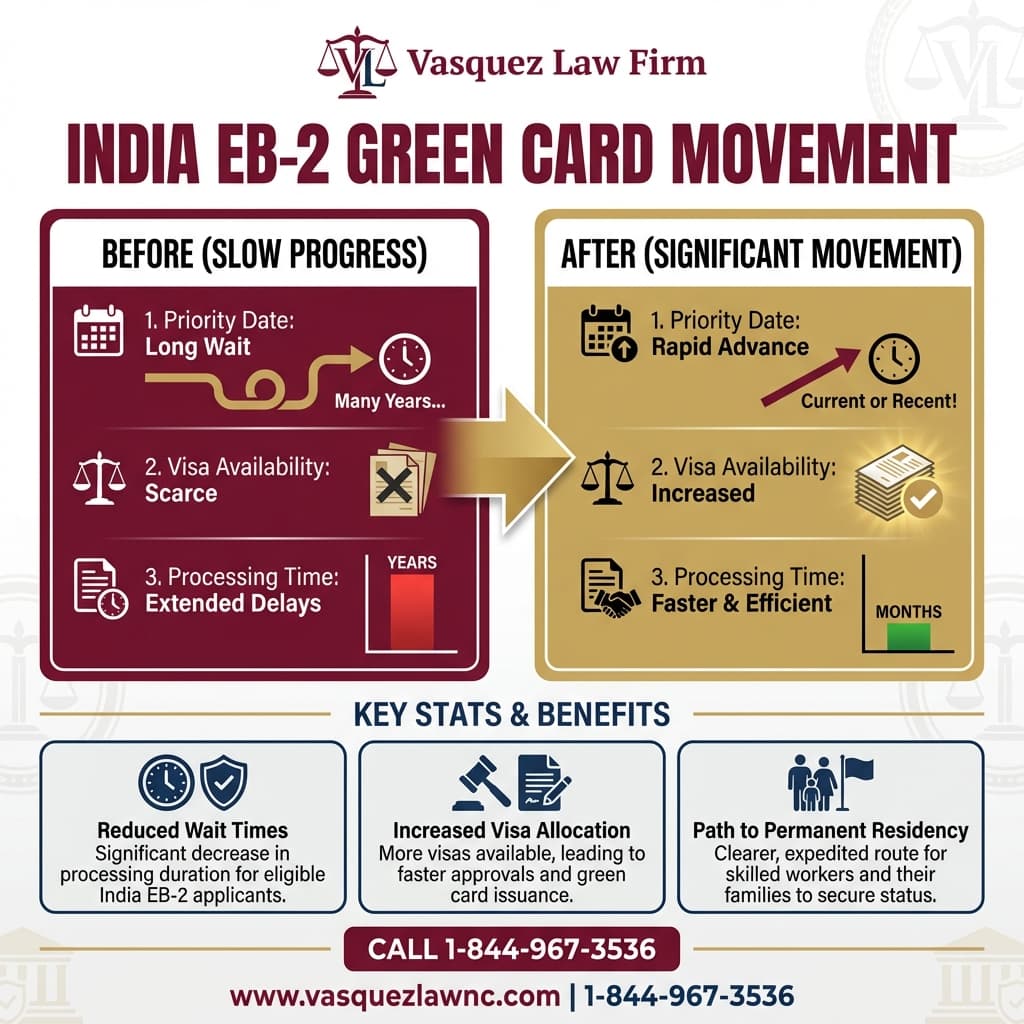
Employment-based categories also show promising progress in April 2026. A major highlight is the EB-2 category for professionals with advanced degrees from the Rest of World, Mexico, and the Philippines becoming current. This means there is no longer a waiting list for these applicants, and they can proceed with their green card applications immediately if their priority date is current. EB-2 India has advanced substantially by about 303 days, moving from September 2013 to July 2014, which is excellent news for Indian applicants.
The EB-3 category for skilled workers from the Rest of World and Mexico advanced by about 244 days, indicating a much faster processing timeline. EB-3 India and China also saw smaller but meaningful advances. Additionally, the EB-4 category, which includes certain special immigrants, advanced by a full year for all countries, including China, India, Mexico, and the Philippines. Religious workers under EB-4 also share this one-year advancement. The EB-5 investor visa for China moved forward by 17 days, a modest but positive change.
What's Your Immigration Situation?
Answer 3 questions - we'll tell you your options
Question 1 / 3
What best describes your situation?
Keep Reading
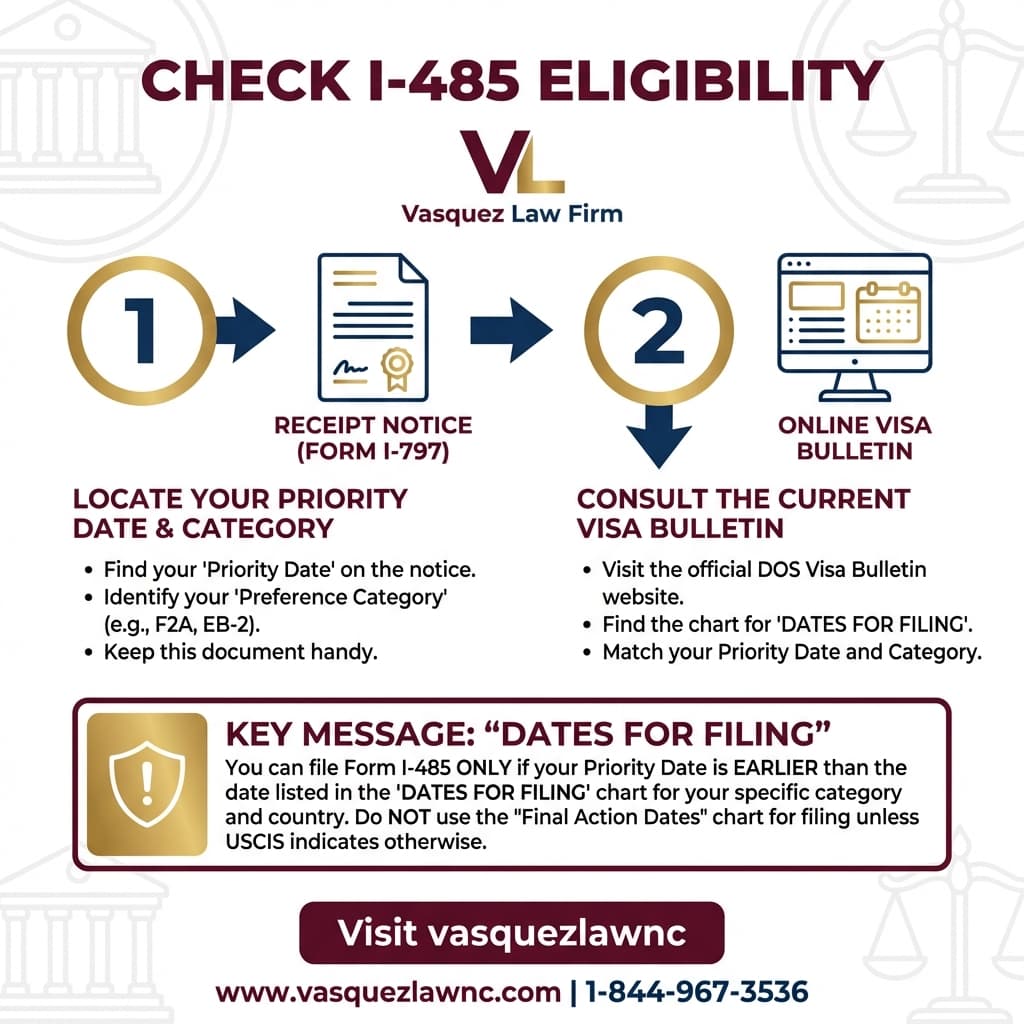
On the Dates for Filing chart, EB-3 for the Rest of World and Mexico has become current, allowing many skilled workers to file their green card applications sooner. EB-2 India and EB-3 India have also advanced, offering more opportunities for applicants to submit their paperwork. Overall, employment-based categories are showing strong forward momentum this month.
What This Means for You
If you are waiting in a family-based or employment-based category, the advances in Final Action Dates bring you closer to receiving your green card. When dates move forward, it means more visa numbers are available and USCIS can approve applications for those with priority dates earlier than the published cutoff. If your category became current, you may be able to file or finalize your green card application immediately, depending on which chart USCIS uses in your case.
Keep in mind that USCIS decides each month whether to use the Final Action Dates chart or the Dates for Filing chart to process applications. This choice can affect when you can submit your paperwork and how soon your case moves forward. If your priority date is close to or before the new cutoff dates, it is a good time to prepare your documents and stay in contact with your attorney to ensure you are ready to act when the window opens.
The visa bulletin can be confusing, and every case is different. If you’re unsure how this month’s changes affect your petition, our immigration attorneys are here to help. Call Vasquez Law Firm at 1-844-967-3536 or visit vasquezlawnc.com to schedule your free case evaluation. Se habla español.
Need immigration help? Our immigration attorneys can review your case.

William Vasquez
Founder & CEO, Vasquez Law Firm, PLLC
William Vasquez is the founder and CEO of Vasquez Law Firm, PLLC, a results-driven firm specializing in immigration, criminal defense, personal injury, and workers' compensation. A U.S. Air Force veteran and recipient of the Joint Service Achievement Medal, William is dedicated to fiercely fighting for his clients' rights.
Related Legal Services
Need legal help? Learn more about immigration lawyers in North Carolina, or contact us for a free evaluation.
You can also visit NC immigration legal help for more information.