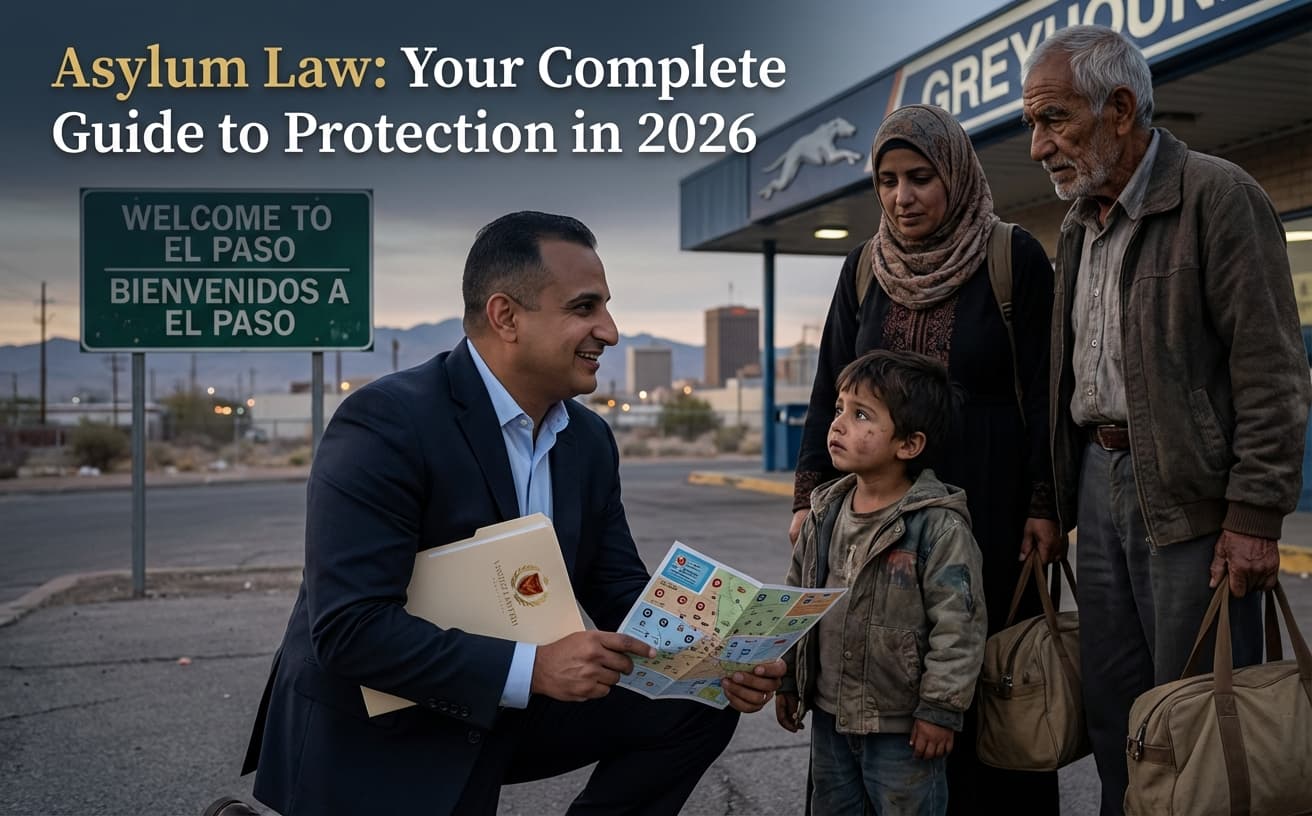
Your Complete Guide to Asylum Law and Protection in 2026
Understanding U.S. asylum law is crucial for protection. Learn who qualifies, the process, and your rights. Contact Vasquez Law for a free consultation today.
Published on February 22, 2026
Talk to an immigration attorney
Free call. A clear plan for your case.
Free & confidential · Se habla espanol · 24/7
Have questions? Talk to an attorney - free evaluation.
Call 1-844-967-3536Worried how the latest immigration news affects you?
Schedule a confidential case review with an immigration attorney - know exactly where you stand.
Your Complete Guide to Asylum Law and Protection in 2026
Navigating U.S. asylum law can be one of the most critical and challenging journeys for individuals seeking safety and a new life in the United States. Asylum offers protection to those who have fled their home countries due to persecution or a well-founded fear of persecution based on race, religion, nationality, membership in a particular social group, or political opinion. This comprehensive guide, updated for 2026, provides essential information on understanding asylum law, its requirements, the application process, and the rights of asylum seekers. Whether you are in North Carolina, Florida, or anywhere across the nation, securing legal guidance is paramount.
Need help with your asylum case? Our experienced immigration attorneys are ready to fight for you. Se Habla Español.
Schedule Your Free Case Evaluation
Or call us now: 1-844-967-3536
Quick Answer: What is Asylum Law?
Asylum law in the U.S. grants protection to individuals who are unable or unwilling to return to their home country due to past persecution or a well-founded fear of future persecution. This fear must be based on one of five protected grounds: race, religion, nationality, membership in a particular social group, or political opinion. The process involves either affirmative asylum with USCIS or defensive asylum in immigration court.
- Protection for those fleeing persecution based on specific grounds.
- Requires a well-founded fear of future harm or past persecution.
- Applications can be affirmative (USCIS) or defensive (EOIR).
- Strict deadlines, typically within one year of U.S. entry, apply.
- Legal representation is crucial for navigating complex requirements.
Understanding U.S. Asylum Law and Its Foundations
U.S. asylum law is rooted in both international and domestic legal frameworks, offering a critical safeguard for individuals facing danger in their home countries. The core principle is non-refoulement, meaning a country cannot return individuals to a place where they would face persecution. This protection is outlined in the Immigration and Nationality Act (INA) Section 208, 8 U.S.C. § 1158, and further clarified by regulations in 8 C.F.R. Part 208.
To qualify for asylum, an applicant must demonstrate that they meet the definition of a refugee. This means proving past persecution or a well-founded fear of future persecution on account of race, religion, nationality, membership in a particular social group, or political opinion. The burden of proof rests heavily on the applicant, making strong evidence and clear testimony essential for a successful claim. Understanding these foundational elements of asylum law is the first step in seeking protection.
The United States has a long history of providing refuge, but the legal landscape around asylum law is constantly evolving, especially in 2026. Recent policy changes and court decisions can significantly impact eligibility and processing times. This makes staying informed and seeking current legal advice vital for anyone considering an asylum application. Our firm, serving Orlando, North Carolina, and Florida, stays abreast of these changes to best assist our clients.
Who Qualifies for Asylum in the United States?
Qualifying for asylum involves meeting specific criteria set forth by U.S. immigration law. The primary requirement is demonstrating a well-founded fear of persecution or having suffered past persecution in your home country. This persecution must be connected to one of the five protected grounds: race, religion, nationality, membership in a particular social group, or political opinion. For example, individuals fleeing violence due to their sexual orientation or gender identity may qualify under "membership in a particular social group."
It is not enough to simply fear general violence or economic hardship. The fear must be specific, credible, and tied directly to one of the protected grounds. Additionally, the persecution must be by the government or by forces the government is unable or unwilling to control. Understanding these nuances is critical to building a strong asylum case and demonstrating eligibility under current asylum law standards.
Applicants must also typically apply for asylum within one year of their last arrival in the United States, although there are limited exceptions to this rule. Demonstrating an exception, such as changed circumstances or extraordinary circumstances related to the delay, requires compelling evidence. Consulting an attorney early can help determine if you meet the eligibility criteria and the one-year filing deadline.
The Process: How to Apply for Asylum in the U.S.
Applying for asylum in the U.S. involves a detailed process that can vary depending on whether you are seeking affirmative or defensive asylum. Both paths require meticulous preparation and adherence to strict guidelines. Navigating this process without legal assistance can lead to significant delays or even denial of your claim.
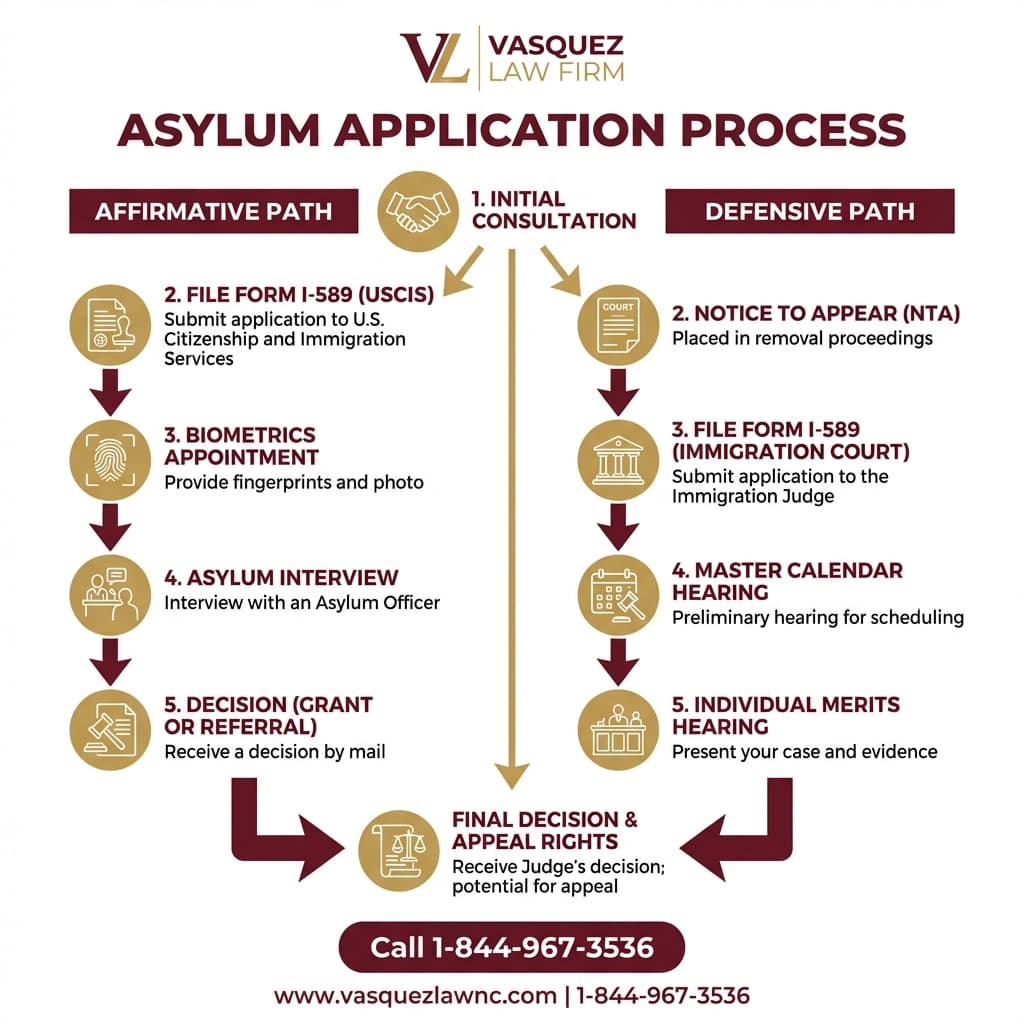
Affirmative Asylum: Applying with USCIS
The affirmative asylum process is for individuals who are not currently in removal proceedings. You apply directly to U.S. Citizenship and Immigration Services (USCIS) by filing Form I-589, Application for Asylum and for Withholding of Removal. This application must generally be filed within one year of your last arrival in the U.S.
After filing, you will undergo a fingerprint and background check, followed by an asylum interview with an asylum officer. If the officer determines you are eligible, and no bars to asylum apply, you may be granted asylum. If not, your case may be referred to an immigration judge for defensive asylum proceedings. This initial step under asylum law is often the most direct route.
Defensive Asylum: In Immigration Court (EOIR)
Defensive asylum applies to individuals who are already in removal (deportation) proceedings before an immigration judge at the Executive Office for Immigration Review (EOIR). This typically occurs if you were apprehended at the border, found to be unlawfully present, or referred from an affirmative asylum application.
In this scenario, you present your asylum claim as a defense against deportation. The immigration judge will hear your testimony, review your evidence, and make a decision. This process is often more adversarial and complex, highlighting the critical need for experienced legal counsel to navigate the court system and federal asylum law.
Essential Documents and Evidence for Your Asylum Claim
A strong asylum claim relies heavily on credible and comprehensive evidence. Gathering the right documents is paramount to proving your fear of persecution. Without sufficient documentation, even a legitimate claim can be weakened. This checklist covers the types of evidence generally required:
- Form I-589, Application for Asylum and for Withholding of Removal: This is the foundational document for your application. Ensure it is fully completed, accurate, and signed.
- Personal Declaration: A detailed, chronological statement describing your experiences of persecution or your well-founded fear. This is often the most crucial piece of evidence.
- Supporting Affidavits: Statements from witnesses who can corroborate your story, such as family members, friends, or colleagues.
- Identity Documents: Passport, birth certificate, national ID, or any other documents proving your identity and nationality.
- Evidence of Persecution: Police reports, medical records, photos of injuries, newspaper articles, court documents, letters, or any other tangible proof of past harm.
- Country Conditions Reports: Authoritative reports from human rights organizations, the U.S. Department of State, or academic institutions detailing the general conditions and persecution risks in your home country.
- Proof of Membership in a Protected Group: Documents or statements demonstrating your race, religion, nationality, political opinion, or membership in a specific social group.
- Translated Documents: All documents not in English must be accompanied by a certified English translation.
- Travel Documents: Any visas, entry stamps, or travel history records.
Organizing these documents systematically and ensuring their authenticity is a task best handled with legal guidance. An immigration attorney can help you identify crucial evidence and present it effectively under U.S. asylum law.
Timeline: What to Expect in the Asylum Process
The asylum process can be lengthy and unpredictable, varying significantly based on factors like the volume of applications, current immigration policies, and the complexity of individual cases. While there is no fixed timeline, understanding the general stages can help manage expectations.
- Filing Form I-589: Typically, within one year of your U.S. entry.
- Receipt Notice and Biometrics Appointment: Within a few weeks to a few months after filing. You'll receive a receipt and an appointment for fingerprinting.
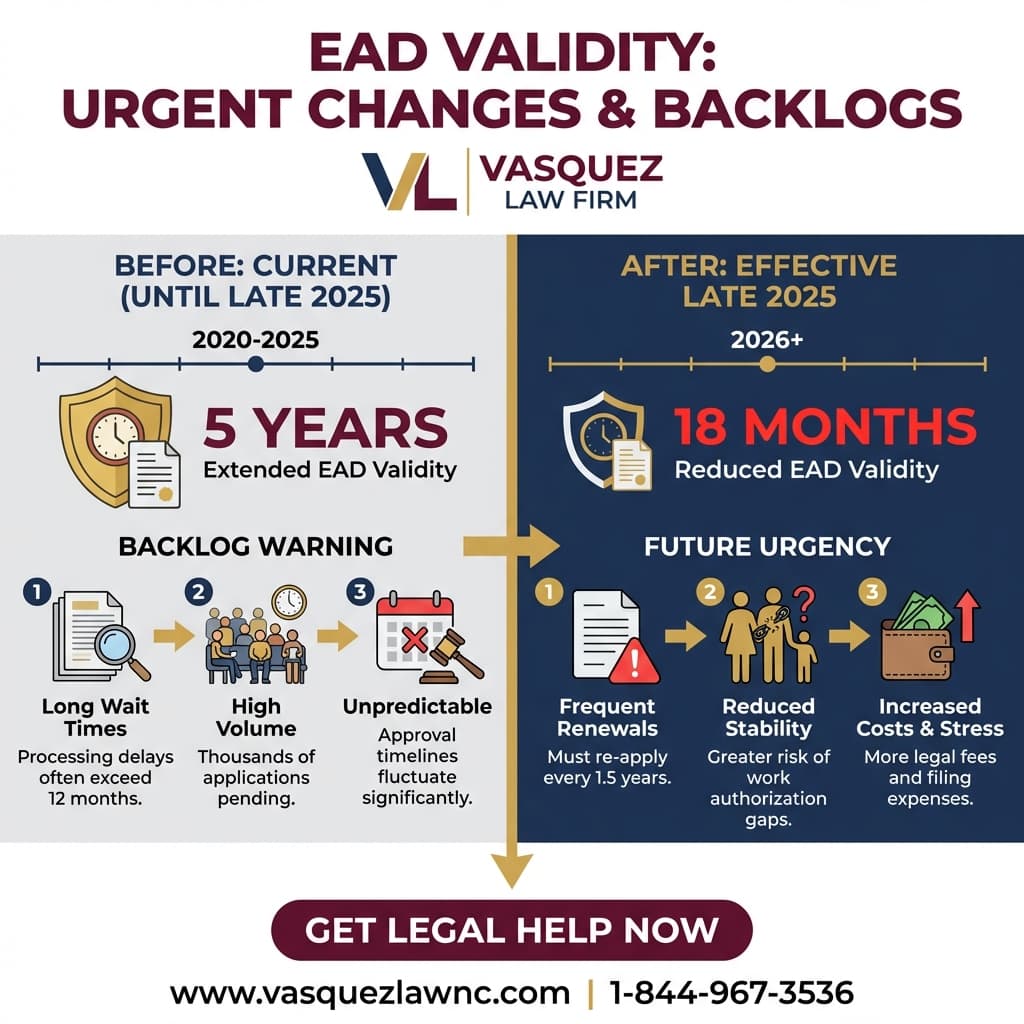
- Work Authorization (EAD) Eligibility: You can apply for work authorization (Form I-765) 150 days after filing your I-589 application, and it can be granted after 180 days, provided your application is still pending.
- Asylum Interview Scheduling: This is highly variable. Some interviews are scheduled within months, while others can take years, especially with the current backlog. USCIS aims to prioritize newer filings, but this is not always consistent.
- Interview Decision: An asylum officer usually provides a decision shortly after the interview, but sometimes it can take longer.
- Referral to Immigration Court (Defensive Asylum): If your affirmative asylum claim is not granted, your case will be referred to an immigration judge. This initiates removal proceedings, which can add years to the process.
- Immigration Court Hearings: These involve master calendar hearings and individual merits hearings, potentially spanning several years. Appeals to the Board of Immigration Appeals (BIA) and federal courts can extend the timeline further.
The waiting periods can be a source of stress, but it's important to remain patient and continue to gather any new evidence. Attorney Vasquez and our team can help you navigate these timelines, providing updates and guidance every step of the way, whether you are in Orlando, North Carolina, or elsewhere.
Costs and Fees: What Impacts the Price of an Asylum Case
When pursuing an asylum claim, understanding the potential costs involved is crucial for planning. While there is no government filing fee for the Form I-589, Application for Asylum and for Withholding of Removal, other expenses can arise. The primary costs are typically legal fees, which vary based on the complexity of the case, the attorney's experience, and the services required.
Legal Fees and Attorney Services
Legal fees constitute the most significant cost. These fees cover a range of services, including:
- Consultation: Many firms, like Vasquez Law Firm, offer free initial consultations to assess your case.
- Case Preparation: Assistance with drafting your personal declaration, gathering evidence, and completing Form I-589 accurately.
- Interview/Hearing Preparation: Coaching for your asylum interview or court hearings.
- Representation: Having an attorney present at your USCIS interview or representing you in immigration court.
- Appeals: If your initial claim is denied, legal fees for appeals to the BIA or federal courts will be additional.
The total cost will depend on whether your case is affirmative or defensive, if it involves complex legal issues, or if it requires extensive research and expert witness testimony. Some attorneys charge flat fees, while others bill hourly. It's essential to get a clear understanding of the fee structure upfront.
Other Potential Costs
Beyond legal fees, you might incur other expenses:
- Translation Services: If your documents are not in English, certified translations are required, incurring costs.
- Expert Witness Fees: In some complex cases, an expert witness may be needed to testify about country conditions or psychological impact.
- Medical Evaluations: If you have suffered physical or psychological harm, a medical or psychological evaluation may be necessary to support your claim.
- Travel Expenses: For attending interviews or court hearings, especially if you live far from the USCIS office or immigration court.
- Filing Fees for Related Applications: While Form I-589 is free, applying for work authorization (Form I-765) has a separate filing fee.
While the costs can seem daunting, investing in experienced legal representation often increases your chances of success and can save you significant time and stress in the long run. We offer transparent fee structures and work with clients to make legal assistance accessible for their asylum law needs.
Common Mistakes to Avoid in Asylum Cases
The asylum process is fraught with potential pitfalls that can jeopardize an otherwise strong case. Avoiding these common mistakes is crucial for a successful outcome. With the complexities of asylum law, even minor errors can have significant consequences.
- Missing the One-Year Filing Deadline: Unless you have extraordinary or changed circumstances, failing to file your I-589 within one year of your U.S. entry can lead to automatic denial. Track your entry date carefully.
- Inconsistent or Fabricated Testimony: Any inconsistencies in your story, either between your written application and oral testimony, or with other evidence, can severely damage your credibility. Always be truthful and consistent.
- Lack of Corroborating Evidence: While your testimony is vital, it must be supported by documents, reports, and witness statements. A claim based solely on uncorroborated testimony is much harder to win.
- Insufficient Detail in Personal Declaration: Your declaration should be a thorough, chronological account of your experiences and fears. Vague or generalized statements will not be compelling to an adjudicator.
- Failure to Address All Five Protected Grounds: Your persecution or fear must clearly link to race, religion, nationality, membership in a particular social group, or political opinion. Do not assume the connection is obvious.
- Not Disclosing All Relevant Information: Hiding criminal history, prior immigration applications, or other potentially negative information will almost certainly lead to denial if discovered. Transparency is key.
- Attempting to Handle the Case Alone: Asylum law is incredibly complex. Without legal guidance, many applicants misunderstand legal standards, miss deadlines, or fail to present their case effectively.
- Ignoring Country Conditions Evidence: While your personal story is central, providing evidence of general country conditions can strengthen your claim by showing a pattern of persecution against people like you.
If you only remember one thing: Do not attempt to navigate the complex U.S. asylum law system without qualified legal representation. The stakes are too high, and the nuances too intricate for self-representation.
Asylum Law: NC, FL, and Nationwide Considerations
Asylum law is primarily federal, meaning the core statutes and regulations apply uniformly across the United States. However, the practical application and processing can vary depending on your geographic location and the specific USCIS field office or immigration court handling your case. Whether you are in North Carolina, Florida, or another state, the foundational principles remain the same, but local procedures and judicial tendencies can influence outcomes.
Nationwide Concepts in Asylum Law
The fundamental requirements for asylum, as defined by the Immigration and Nationality Act (INA) Section 208, apply nationwide. This includes the one-year filing deadline, the five protected grounds for persecution, and the burden of proof. USCIS and the Executive Office for Immigration Review (EOIR) are federal agencies, and their policies and legal precedents are set at the national level. All asylum officers and immigration judges are bound by federal law and regulations, as well as decisions from the Board of Immigration Appeals (BIA) and federal circuit courts.
Asylum in North Carolina
For individuals in North Carolina, asylum cases are typically handled by the USCIS Asylum Office in Arlington, Virginia, or by immigration courts in Charlotte, North Carolina, or other nearby federal courts. The specific court or office will depend on your residence and whether your case is affirmative or defensive. Local legal aid organizations and private immigration attorneys in North Carolina are familiar with the practices of these specific offices and courts. Vasquez Law Firm has extensive experience representing clients in North Carolina for their asylum claims, understanding the local dynamics while applying federal asylum law.
Asylum in Florida
In Florida, asylum seekers may interact with the USCIS Asylum Office in Orlando or Miami, or with immigration courts located in Orlando, Miami, or other Florida cities. Each office and court may have its own procedural nuances and backlogs, impacting case timelines. For example, the Orlando immigration court handles a significant volume of cases. Our firm provides dedicated legal services for asylum cases throughout Florida, including Orlando, understanding the specific challenges and opportunities within the state's immigration system, and leveraging our experience with Florida's local courts and federal asylum law.
When to Call an Asylum Lawyer Now
Given the complexities and high stakes of asylum law, knowing when to seek legal counsel is crucial. Delays can have severe consequences for your case. If any of the following situations apply to you, it's time to contact an experienced immigration attorney immediately:
- You just arrived in the U.S. or are approaching your one-year entry anniversary: The one-year filing deadline is strict, and exceptions are difficult to prove.
- You are in removal (deportation) proceedings: This is a defensive asylum case, and you need immediate representation in immigration court.
- You have received a Notice to Appear (NTA): This signifies you are being placed in removal proceedings.
- You fear returning to your home country due to persecution: If you believe you meet any of the five protected grounds, an attorney can assess your eligibility.
- You have been denied asylum by USCIS: Your case may be referred to an immigration judge, requiring court representation.
- You have a complex case: This could involve past criminal convictions, previous immigration issues, or unusual circumstances surrounding your persecution.
- You need help gathering evidence or writing your declaration: An attorney can guide you in compiling and presenting compelling proof.
- You are unsure about your eligibility or the application process: A consultation can clarify your options and the steps involved.
- You need to apply for work authorization: An attorney can help you navigate the process for obtaining an Employment Authorization Document (EAD).
- You are a victim of human trafficking or other severe crimes: You may have other avenues for relief in addition to or instead of asylum.
Don't face these critical moments alone. Vasquez Law Firm is here to provide the aggressive and compassionate representation you need to protect your future under asylum law.
About Vasquez Law Firm
At Vasquez Law Firm, we combine compassion with aggressive representation. Our motto "Yo Peleo" (I Fight) reflects our commitment to standing up for your rights. We understand the immense challenges faced by individuals seeking asylum and are dedicated to providing comprehensive legal support.
- Bilingual Support: Se Habla Español - our team is fully bilingual, ensuring clear communication and understanding.
- Service Areas: We proudly serve clients across North Carolina, Florida, and provide nationwide immigration services.
- Experience: With over 15 years of dedicated legal experience, we have a proven track record in navigating complex immigration matters, including asylum law.
- Results: We are committed to achieving the best possible outcomes for our clients, fighting tirelessly for their protection and future.
Attorney Trust and Experience
Attorney Vasquez holds a Juris Doctor degree and is admitted to practice in both the North Carolina State Bar and Florida Bar. With over 15 years of dedicated legal experience, he has built a reputation for providing personalized attention and achieving favorable outcomes for his clients. His deep understanding of immigration law, including the intricacies of asylum law, ensures that every case is handled with the utmost care and strategic foresight. We are here to be your advocates, fighting for your rights with unwavering determination.
Don't face your legal challenges alone. Our team is here to help you every step of the way.
Call today: 1-844-967-3536 | Se Habla Español
Frequently Asked Questions About Asylum Law
What is the difference between asylum and refugee status?
Asylum and refugee status both offer protection to individuals fleeing persecution. The key difference lies in location. Refugee status is granted to individuals outside the U.S. who apply for protection before entering. Asylum is for those already present in the U.S. or at a port of entry, regardless of their manner of arrival. Both require demonstrating a well-founded fear of persecution based on protected grounds.
Can I apply for asylum if I entered the U.S. illegally?
Yes, you can apply for asylum even if you entered the U.S. without authorization or overstayed a visa. The manner of entry does not automatically bar you from seeking asylum. However, it may impact whether your case is affirmative (with USCIS) or defensive (in immigration court) and could affect other forms of relief. It's crucial to file within one year of arrival if possible.
What happens after an asylum interview?
After your asylum interview, the asylum officer will review your case and may issue a decision. If your case is granted, you will receive asylum status. If not, and you are not in lawful status, your case will typically be referred to an immigration judge for defensive asylum proceedings. You may also receive a Notice of Intent to Deny if the officer finds issues that need to be addressed.
Can my family members be included in my asylum application?
Yes, your spouse and unmarried children under 21 who are physically present in the U.S. can be included in your asylum application at the time of filing or at any time before a final decision on your case. If you are granted asylum, you can also petition for these family members to join you in the U.S. later through a separate process.
What is the one-year filing deadline for asylum?
U.S. asylum law generally requires you to file your asylum application (Form I-589) within one year of your last arrival in the United States. There are limited exceptions to this rule, such as changed circumstances (e.g., new country conditions) or extraordinary circumstances (e.g., severe illness). Proving an exception requires compelling evidence.
What are the protected grounds for asylum?
To qualify for asylum, the persecution you fear or have experienced must be based on one of five protected grounds: race, religion, nationality, membership in a particular social group, or political opinion. General violence, economic hardship, or natural disasters typically do not qualify as grounds for asylum under U.S. law.
Can I work while my asylum application is pending?
Yes, you can apply for work authorization (an Employment Authorization Document or EAD) 150 days after filing your Form I-589, provided your asylum application is still pending and has not been denied by an immigration judge. The EAD can typically be granted after 180 days. This allows asylum seekers to legally support themselves while awaiting a decision.
What if my asylum claim is denied?
If your affirmative asylum claim is denied by USCIS and you are not in lawful status, your case will typically be referred to an immigration judge for defensive asylum proceedings. If an immigration judge denies your claim, you may have the option to appeal to the Board of Immigration Appeals (BIA) and, in some cases, to a federal circuit court. Legal counsel is essential for appeals.
What is "withholding of removal" and how does it differ from asylum?
Withholding of removal is another form of protection often sought alongside asylum. It prevents removal to a country where an individual's life or freedom would be threatened based on one of the five protected grounds. Unlike asylum, it does not lead to permanent residency, cannot be extended to family members, and has a higher burden of proof, requiring a "clear probability" of persecution.
How long does it take to get a decision on an asylum case?
The time it takes to get an asylum decision varies widely. Affirmative asylum cases can take anywhere from several months to several years, depending on the USCIS office backlog. Defensive asylum cases in immigration court can take even longer, often spanning multiple years due to court schedules and potential appeals. Patience and consistent legal follow-up are necessary.
Sources and References
- U.S. Citizenship and Immigration Services (USCIS) - Asylum
- Executive Office for Immigration Review (EOIR)
- 8 U.S. Code § 1158 - Asylum - Cornell Law School
Need immigration help? Our immigration attorneys can review your case.
Ready to take the next step? Contact Vasquez Law Firm today for a free, confidential consultation. We're committed to fighting for your rights and achieving the best possible outcome for your case.
Start Your Free Case Evaluation Now
Call us: 1-844-967-3536
Se Habla Español - Estamos aquí para ayudarle.

William Vasquez
Founder & CEO, Vasquez Law Firm, PLLC
William Vasquez is the founder and CEO of Vasquez Law Firm, PLLC, a results-driven firm specializing in immigration, criminal defense, personal injury, and workers' compensation. A U.S. Air Force veteran and recipient of the Joint Service Achievement Medal, William is dedicated to fiercely fighting for his clients' rights.
Related Legal Services
Need legal help? Learn more about our immigration law practice, or contact us for a free evaluation.
You can also visit North Carolina immigration lawyers for more information.