A Complete Guide to Birthright Citizenship in the US in 2026
Understand birthright citizenship in the U.S. for 2026. Learn your rights and eligibility. Contact Vasquez Law Firm for a free immigration consultation.
Published on February 23, 2026
Talk to an immigration attorney
Free call. A clear plan for your case.
Free & confidential · Se habla espanol · 24/7
Have questions? Talk to an attorney - free evaluation.
Call 1-844-967-3536Free Tool
Check Your USCIS Case Status Now
Enter your receipt number - get the official USCIS status in English or Spanish. No registration.
A Complete Guide to Birthright Citizenship in the US in 2026
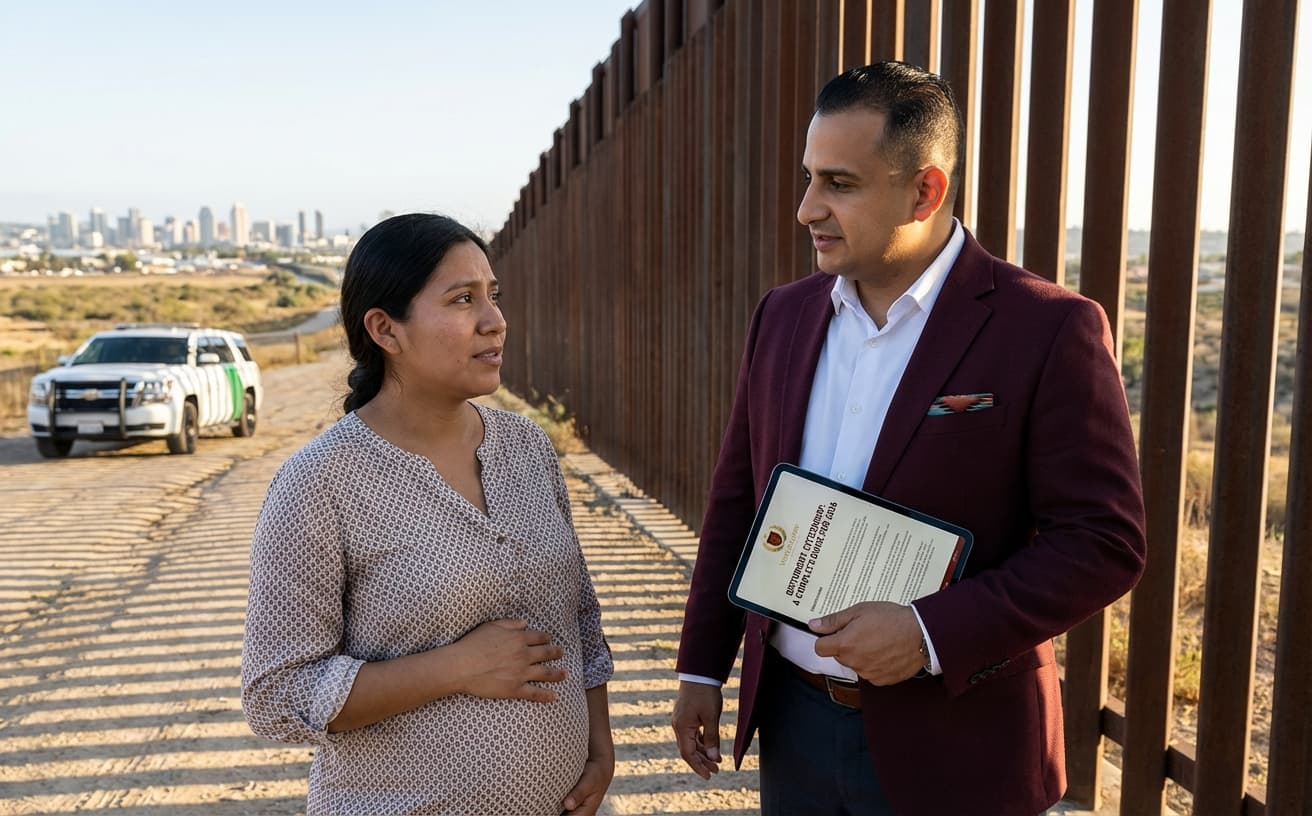
Birthright citizenship, often a topic of significant discussion, is a fundamental principle in U.S. immigration law that grants citizenship to nearly everyone born on American soil, regardless of their parents' immigration status. This concept, rooted in the 14th Amendment of the U.S. Constitution, ensures that individuals born within the territorial limits of the United States are automatically considered citizens from birth. Understanding the nuances of birthright citizenship is crucial for individuals and families navigating the complex landscape of immigration in 2026. Recent discussions, including potential Supreme Court reviews, highlight the ongoing importance of this constitutional provision. At Vasquez Law Firm, we are dedicated to providing clarity and aggressive representation for all your immigration needs.
Need help with your case? Our experienced attorneys are ready to fight for you. Se Habla Español.
Schedule Your Free Case Evaluation
Or call us now: 1-844-967-3536
Quick Answer
Birthright citizenship in the U.S. grants automatic citizenship to nearly all individuals born within U.S. territory, irrespective of their parents' immigration status. This principle is established by the 14th Amendment and has been consistently upheld by the Supreme Court. It applies to those born in any of the 50 states, the District of Columbia, and most U.S. territories.
- Based on the 14th Amendment, Section 1.
- Applies to children born in the 50 states and D.C.
- Also includes most U.S. territories like Puerto Rico.
- Parents' immigration status does not affect eligibility.
- Does not apply to children of foreign diplomats.
Understanding Birthright Citizenship and its Origin
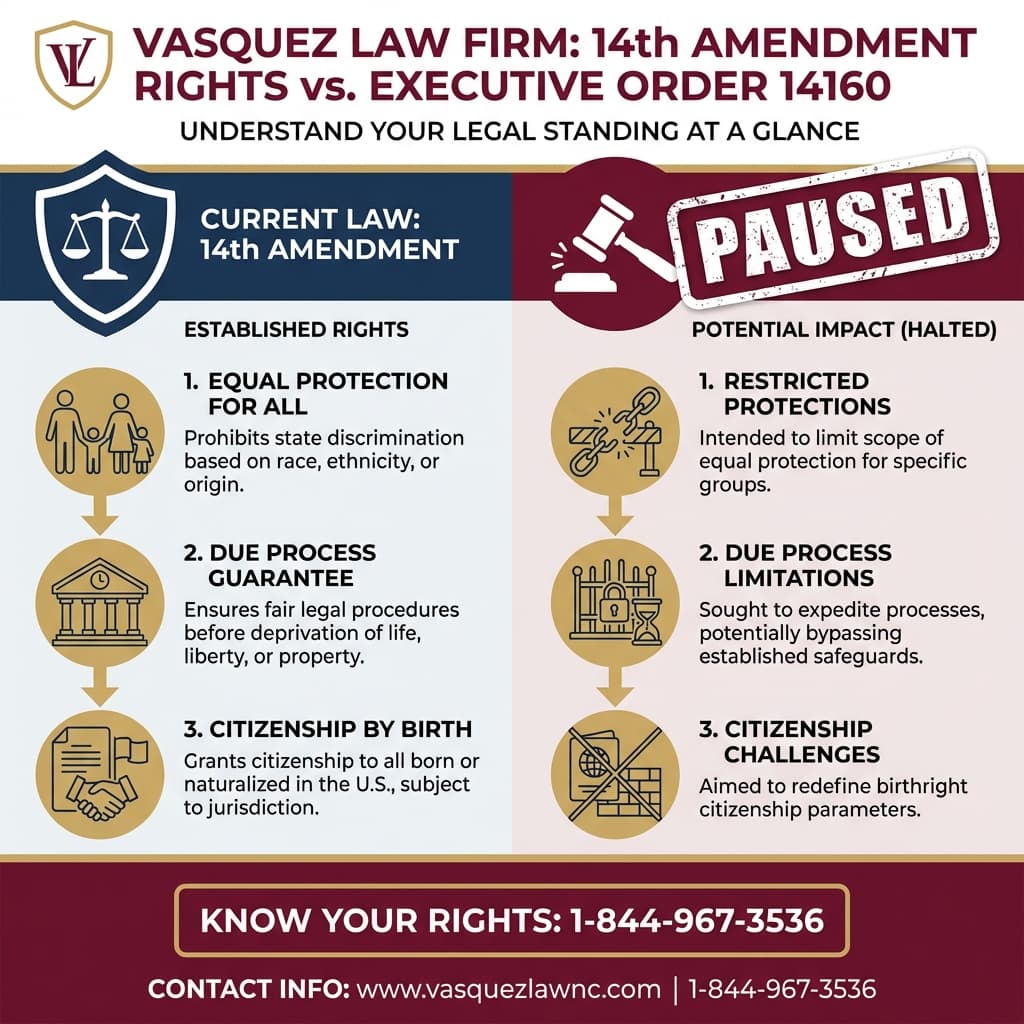
Birthright citizenship is a cornerstone of American identity and law, primarily derived from the first sentence of the 14th Amendment to the U.S. Constitution, ratified in 1868. This amendment states, "All persons born or naturalized in the United States, and subject to the jurisdiction thereof, are citizens of the United States and of the State wherein they reside." This powerful statement was originally intended to grant citizenship to formerly enslaved people after the Civil War, overturning the Dred Scott v. Sandford decision.
Over time, the Supreme Court case United States v. Wong Kim Ark (1898) affirmed that this clause applies to nearly all individuals born on U.S. soil, including children of non-citizens. This ruling solidified the concept of birthright citizenship as we know it today. The only significant exceptions are children born to foreign diplomats, who are not considered "subject to the jurisdiction" of the United States in the same way as others, and children born on foreign public vessels.
The meaning of birthright citizenship continues to be a subject of public debate and legal discussion in 2026, with some advocating for changes to this constitutional interpretation. However, any alteration would require either a constitutional amendment or a Supreme Court ruling overturning over a century of precedent, which is a formidable legal challenge. For now, the established legal framework remains firmly in place, ensuring that those born in the U.S. are indeed U.S. citizens.
How Birthright Citizenship Works: Key Principles
The principle of birthright citizenship is relatively straightforward in practice, though its implications are vast. When a child is born within the physical boundaries of the United States, they are automatically granted U.S. citizenship. This includes births in any of the 50 states, the District of Columbia, Puerto Rico, Guam, the U.S. Virgin Islands, and the Northern Mariana Islands. The process is largely automatic, requiring no special application or petition from the parents for the child to obtain citizenship.
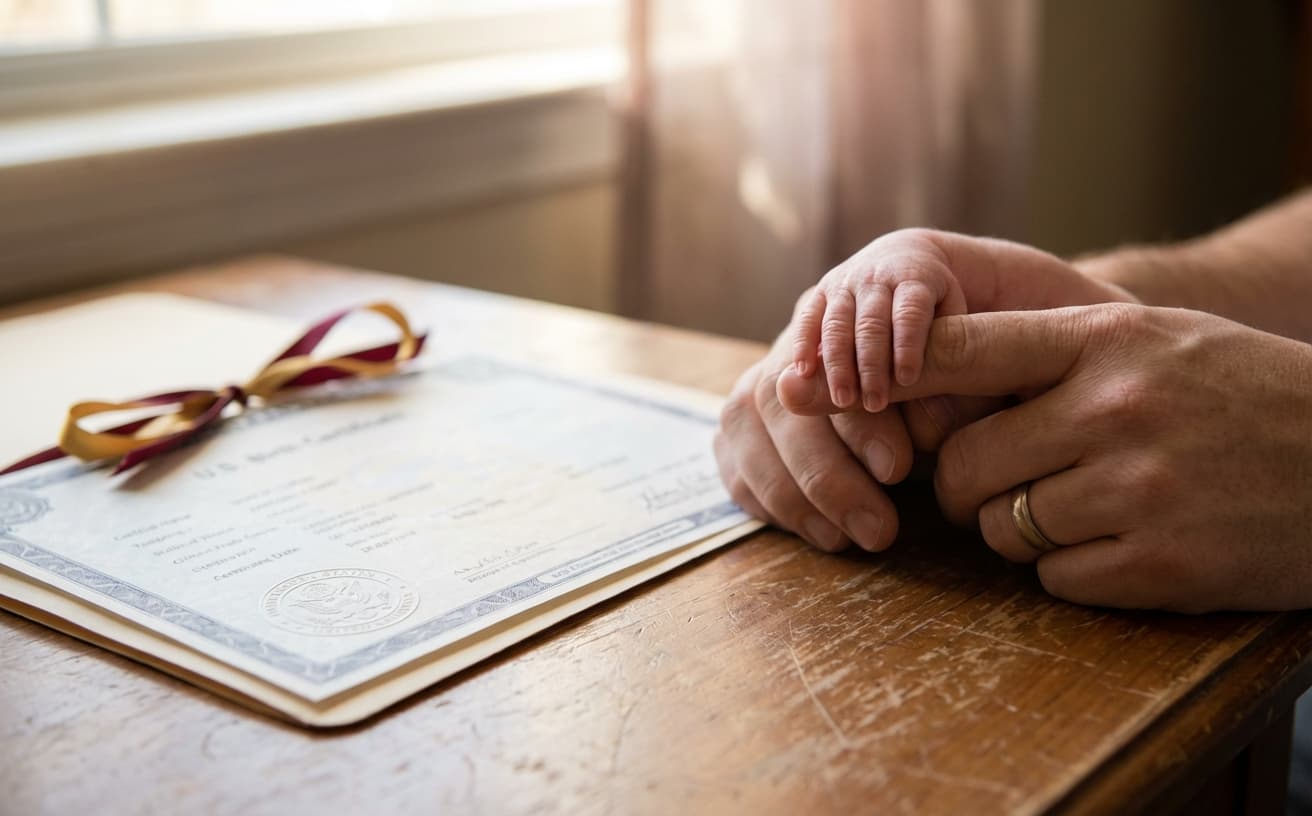
Upon birth, a birth certificate is issued by the state or territory where the birth occurred. This document serves as primary proof of U.S. citizenship. This is a critical distinction from naturalized citizens, who undergo an application process to become citizens. A birthright citizen does not need to apply; they are simply a citizen from day one. This simplifies many future processes for the child, such as obtaining a U.S. passport, voting, and accessing federal benefits, without the hurdles faced by immigrants.
Challenges to birthright citizenship often arise in political discourse, but the legal foundation remains strong. The Supreme Court has consistently upheld the 14th Amendment's application, meaning any change would be a monumental legal shift. For families in Charlotte, North Carolina, or anywhere in Florida, understanding these rights is essential when planning for the future. Our firm can help clarify any questions about immigration status and the rights of birthright citizens.
Birthright vs. Naturalized Citizen: Understanding the Distinctions
While both birthright citizens and naturalized citizens enjoy the full rights and privileges of U.S. citizenship, their paths to obtaining it differ significantly. A birthright citizen acquires citizenship automatically by being born on U.S. soil, as discussed. This status is conferred at birth and typically requires only a birth certificate as proof. There is no application process, no waiting period, and no specific requirements related to their parents' background, beyond the few exceptions mentioned.
In contrast, a naturalized citizen is an individual who was born outside the United States and later applies to become a U.S. citizen. The naturalization process involves meeting specific eligibility requirements, such as a period of continuous residence, demonstrating good moral character, passing English and civics tests, and taking an Oath of Allegiance. This is a deliberate and often lengthy process overseen by U.S. Citizenship and Immigration Services (USCIS).
Once naturalized, an individual holds almost all the same rights as a birthright citizen, with one notable exception: naturalized citizens cannot become President or Vice President of the United States. This distinction is enshrined in Article II, Section 1 of the U.S. Constitution. For all other purposes, including voting, holding public office (other than the presidency), and enjoying federal benefits, the rights are identical. Vasquez Law Firm assists many clients in North Carolina and Florida with their naturalization applications, helping them navigate the complex requirements.
Common Scenarios and Implications of Birthright Citizenship
Birthright citizenship has various practical implications for families across the United States. Consider a scenario where parents are undocumented immigrants living in Charlotte, NC, and their child is born in a local hospital. That child is a U.S. citizen from birth, regardless of the parents' status. This means the child has access to public education, healthcare, and other services available to citizens. This status can also, in some cases, provide a pathway for parents or other family members to adjust their immigration status later on, through processes like family-based petitions, once the child reaches adulthood.
Another common scenario involves parents who are in the U.S. on temporary visas, such as student visas or work visas, and have a child while residing here. Their child would also be a birthright citizen, even if the parents themselves are not pursuing permanent residency. This can create complex situations where children are citizens, but their parents remain non-citizens, potentially facing different legal statuses and pathways. Such families often seek legal guidance to understand their rights and options for future immigration.
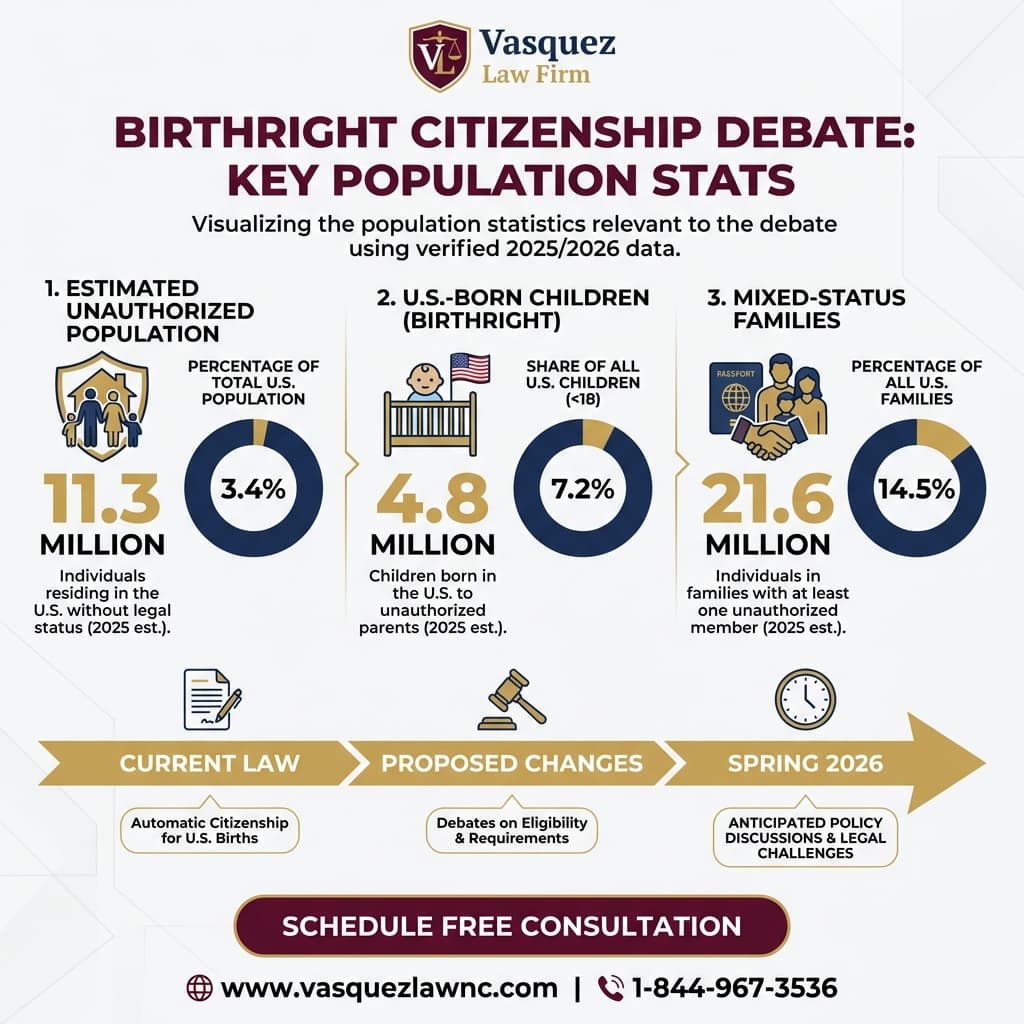
The implications extend beyond individual families. Birthright citizenship impacts demographics, social services, and political debates. It guarantees that a significant portion of the U.S. population has a clear, unquestionable claim to citizenship, fostering stability and integration for many. However, it also fuels ongoing discussions about immigration policy and national sovereignty. For specific guidance on how birthright citizenship might impact your family's unique situation in North Carolina or Florida, consulting with an experienced immigration attorney is highly recommended.
Don't face your legal challenges alone. Our team is here to help you every step of the way.
Call today: 1-844-967-3536 | Se Habla Español
Challenges and Debates Surrounding Birthright Citizenship
Despite its long-standing constitutional basis, birthright citizenship remains a contentious issue, particularly in 2026. Critics often argue that it incentivizes illegal immigration, leading to what they term "anchor babies" or "birth tourism." They contend that the original intent of the 14th Amendment was not to grant citizenship to children of undocumented immigrants, but rather to ensure the rights of formerly enslaved people. These arguments often call for a reinterpretation of the "subject to the jurisdiction thereof" clause, suggesting it should exclude children born to parents who are not legal residents.
Proponents of birthright citizenship, on the other hand, emphasize its historical context and its role in preventing the creation of a permanent underclass of stateless individuals. They argue that changing this fundamental principle would be unconstitutional, requiring a complex amendment process, and would lead to significant social and legal instability. They point to the stability and integration that birthright citizenship has provided throughout American history, ensuring that children born here are fully integrated into society.
The debate has seen renewed vigor, with discussions about potential executive actions or legislative efforts to challenge birthright citizenship. While such efforts face significant legal hurdles, they underscore the ongoing political tension surrounding immigration policy. The Supreme Court has been mentioned in recent news as potentially revisiting the issue, which could have profound implications. Navigating these discussions requires a deep understanding of constitutional law and immigration policy, something our firm offers to clients nationwide, including those in North Carolina and Florida.
Legal Protections and Rights for Birthright Citizens
A birthright citizen is entitled to all the rights, privileges, and protections afforded to any U.S. citizen. This includes the right to vote, the right to hold public office (with the exception of President/VP), freedom of speech, religion, and assembly, and protection under the due process and equal protection clauses of the 14th Amendment. They are eligible for federal student aid, social security benefits, and other government programs, provided they meet the specific eligibility criteria for those programs.
Furthermore, birthright citizens cannot be deported from the United States. This is a critical distinction from non-citizen residents, even those with legal status, who may face deportation under certain circumstances. This protection provides immense security and stability to individuals born in the U.S. Their citizenship is generally unquestionable, offering a solid foundation for their lives in America.
Understanding these rights is vital for young birthright citizens and their families, especially those who may have non-citizen parents. While the child's citizenship is secure, their parents' immigration status may still be precarious. It is important to consult with an immigration attorney to understand how a child's birthright citizenship might impact family immigration pathways and to ensure all legal protections are understood and utilized effectively. Vasquez Law Firm is committed to helping families in Charlotte and across Florida secure their future.
When to Call a Lawyer Now About Birthright Citizenship
While birthright citizenship is largely automatic, there are several situations where immediate legal consultation can be crucial. If you are a non-citizen parent of a U.S. citizen child and you are facing deportation proceedings, an attorney can explore how your child's citizenship might impact your case, potentially offering avenues for relief. Similarly, if you are attempting to petition for a family member based on your child's citizenship, especially when the child is approaching 21 years old, timely legal advice is essential to navigate the complex immigration system.
You should also contact a lawyer if you encounter any challenges proving your child's birthright citizenship, such as issues with birth certificates or passport applications, or if there are doubts about the validity of the birth certificate. Furthermore, if you are concerned about the evolving political or legal landscape surrounding birthright citizenship, an attorney can provide updated information and guidance on potential impacts. Any situation involving a U.S. citizen child and a non-citizen parent where immigration status is at risk warrants professional legal insight.
- You are a non-citizen parent of a U.S. citizen child and facing deportation.
- You want to petition for a family member based on your child's citizenship.
- There are issues with your child's birth certificate or passport application.
- You have questions about your child's rights as a U.S. citizen.
- You are concerned about recent news or potential changes to birthright citizenship laws.
- You need to understand the immigration pathways available for your family.
- Your child was born in a U.S. territory and you have questions about their status.
- You believe you or your child's birthright citizenship is being challenged.
About Vasquez Law Firm
At Vasquez Law Firm, we combine compassion with aggressive representation. Our motto "Yo Peleo" (I Fight) reflects our commitment to standing up for your rights. We understand the anxieties and challenges that come with immigration matters, and we are dedicated to providing personalized and effective legal solutions. Our firm is founded on the principles of urgency, dedication, and a deep understanding of the law, ensuring that every client receives the focused attention they deserve.
- Bilingual Support: Se Habla Español - our team is fully bilingual and ready to assist clients in both English and Spanish, ensuring clear communication and understanding.
- Service Areas: We proudly serve clients across North Carolina, including Charlotte, and throughout Florida, as well as providing nationwide immigration services.
- Experience: With over 15 years of dedicated experience, Attorney Vasquez has a proven track record of helping clients navigate complex legal matters and achieve favorable outcomes.
- Results: We have successfully handled thousands of cases across various practice areas, earning a reputation for tenacious advocacy and client satisfaction.
Attorney Trust and Experience
Attorney Vasquez holds a Juris Doctor degree and is admitted to practice in both the North Carolina State Bar and Florida Bar. With over 15 years of dedicated legal experience, he has built a reputation for providing personalized attention and achieving favorable outcomes for his clients. His commitment to justice and his aggressive approach to legal representation ensure that your case is in capable hands. He understands the profound impact immigration issues have on families and fights tirelessly to protect their interests.
Frequently Asked Questions
What is the meaning of birthright citizenship?
Birthright citizenship means that anyone born within the geographical boundaries of a country is automatically a citizen of that country from birth. In the United States, this principle is enshrined in the 14th Amendment of the Constitution, granting citizenship to nearly all individuals born on U.S. soil, regardless of their parents' immigration status. This ensures no child born in the U.S. is stateless.
What's the difference between a naturalized citizen and a birthright citizen?
A birthright citizen gains citizenship automatically by being born in the U.S., requiring no application process. A naturalized citizen, conversely, is born outside the U.S. and later undergoes a formal application process, including residency requirements, tests, and an oath, to become a citizen. Both enjoy most rights, but only birthright citizens can be President.
Can a baby born in the U.S. get citizenship?
Yes, absolutely. Under the 14th Amendment of the U.S. Constitution, any baby born within the territorial limits of the United States, including the 50 states, the District of Columbia, and most U.S. territories, automatically acquires U.S. citizenship at birth. This applies regardless of the parents' immigration status, with very limited exceptions for children of foreign diplomats.
What are the potential drawbacks of birthright citizenship in the United States?
Critics argue that birthright citizenship may encourage illegal immigration, sometimes referred to as "birth tourism," and could strain social services. They also contend that it may not align with the original intent of the 14th Amendment, advocating for a reinterpretation that excludes children of non-legal residents. However, proponents emphasize its role in preventing a stateless underclass.
Is birthright citizenship being challenged in 2026?
Yes, birthright citizenship continues to be a subject of political and legal debate in 2026. There are ongoing discussions about potential executive actions or legislative changes, and the Supreme Court has been mentioned in news reports as potentially revisiting the issue. Any changes would face significant constitutional hurdles and require overturning established precedent.
Does birthright citizenship apply in U.S. territories like Puerto Rico?
Yes, birthright citizenship generally applies to individuals born in most U.S. territories, including Puerto Rico, Guam, the U.S. Virgin Islands, and the Northern Mariana Islands. This means that individuals born in these territories are considered U.S. citizens from birth, just like those born in any of the 50 states, ensuring consistent application of the 14th Amendment.
What proof is needed for birthright citizenship?
The primary proof of birthright citizenship is typically a certified copy of the individual's birth certificate issued by the state or territory where they were born. This document is sufficient for obtaining a U.S. passport, social security card, and other forms of identification. No additional application or petition is usually required to establish this status.
Can a birthright citizen help their undocumented parents obtain legal status?
Yes, a U.S. citizen child can potentially petition for their undocumented parents to obtain legal status, but only after the child turns 21 years old. This process, known as a family-based petition, can be complex and may require a waiver if the parents have certain immigration violations. Consulting an immigration attorney is crucial for navigating these pathways effectively.
Sources and References
- U.S. Citizenship and Immigration Services (USCIS)
- U.S. Department of State
- Executive Office for Immigration Review (EOIR)
Need immigration help? Our immigration attorneys can review your case.
Ready to take the next step? Contact Vasquez Law Firm today for a free, confidential consultation. We're committed to fighting for your rights and achieving the best possible outcome for your case.
Start Your Free Case Evaluation Now
Call us: 1-844-967-3536
Se Habla Español - Estamos aquí para ayudarle.
William Vasquez
Founder & CEO, Vasquez Law Firm, PLLC
William Vasquez is the founder and CEO of Vasquez Law Firm, PLLC, a results-driven firm specializing in immigration, criminal defense, personal injury, and workers' compensation. A U.S. Air Force veteran and recipient of the Joint Service Achievement Medal, William is dedicated to fiercely fighting for his clients' rights.
Related Legal Services
Need legal help? Learn more about immigration lawyers in North Carolina, or contact us for a free evaluation.
You can also visit immigration legal services throughout NC for more information.