A Complete Guide to Child Custody in North Carolina in 2026
Navigating child custody in North Carolina can be complex. Get a complete guide to NC child custody laws in 2026 and protect your rights. Contact Vasquez Law for a free consultation today.
Vasquez Law Firm
Published on February 23, 2026

Have questions? Talk to an attorney — free evaluation.
Call 1-844-967-3536A Complete Guide to Child Custody in North Carolina in 2026
Understanding child custody laws in North Carolina is crucial for any parent facing separation or divorce. The legal process can be emotionally challenging and complex, involving critical decisions about your child's future. This comprehensive guide, updated for 2026, aims to demystify child custody in NC, providing clear insights into the types of custody, the factors courts consider, and the steps involved in securing a favorable outcome. Vasquez Law Firm is dedicated to helping families in Charlotte and across North Carolina navigate these sensitive matters with expert legal guidance.
Need help with your child custody case? Our experienced attorneys are ready to fight for you. Se Habla Español.
Family law issue in NC?
Divorce, custody, and DV cases need fast strategy. 15-min call — confidential — to walk through your situation.
Schedule Your Free Consultation
Or call us now: 1-844-967-3536
Quick Answer
Child custody in NC involves legal and physical arrangements for a child's care and upbringing. North Carolina courts prioritize the child's best interests when determining custody, considering various factors such as parental fitness, the child's wishes (if mature enough), and the child's relationship with each parent. Parents can seek sole or joint custody, and the process typically involves mediation or court proceedings.
- North Carolina courts focus on the child's best interests.
- Custody can be legal (decision-making) or physical (residence).
- Options include sole custody, joint legal custody, or joint physical custody.
- Mediation is often required before a court hearing.
- An attorney can help navigate the complex legal requirements and represent your interests effectively.
Infographic: Key Factors in NC Child Custody Decisions
This infographic illustrates the primary considerations North Carolina courts weigh when making child custody determinations, focusing on the child's well-being and stability.
Understanding Child Custody in North Carolina
Child custody in North Carolina is a complex area of family law designed to ensure the well-being and stability of children when their parents separate or divorce. The state's legal framework prioritizes the child's best interests above all else. This means that judges will look at a wide range of factors to determine what living arrangements and decision-making responsibilities will best serve the child's physical, emotional, and developmental needs.
In NC, child custody is typically divided into two main components: legal custody and physical custody. Legal custody refers to a parent's right to make major decisions about the child's upbringing, including education, healthcare, religious training, and extracurricular activities. Physical custody, on the other hand, dictates where the child lives and which parent is responsible for their daily care. Understanding these distinctions is fundamental to navigating the child custody process successfully in 2026.
Parents can seek various arrangements, from sole custody, where one parent has primary decision-making and/or physical care, to joint custody, where responsibilities are shared. The court's goal is always to create a stable environment that fosters the child's growth. Consulting with a knowledgeable family law attorney in Charlotte, North Carolina, can provide invaluable clarity and strategic guidance from the outset of your child custody case.
Types of Child Custody in NC
North Carolina recognizes several forms of child custody, each with distinct implications for parents and children. These arrangements are tailored to meet the unique circumstances of each family, always with the child's best interest as the guiding principle.
- Sole Legal Custody: One parent has the exclusive right to make major decisions regarding the child's upbringing.
- Joint Legal Custody: Both parents share the responsibility for making significant decisions about the child's welfare. This is a common arrangement, even if physical custody is not equally split.
- Sole Physical Custody: The child primarily resides with one parent, and that parent is responsible for their day-to-day care. The other parent typically has visitation rights.
- Joint Physical Custody: The child spends significant time living with both parents. This does not necessarily mean an exact 50/50 split, but rather a schedule that allows for frequent and continuing contact with both parents.
- Primary Physical Custody: One parent is designated as the primary physical custodian, meaning the child lives with them for the majority of the time. The other parent has secondary physical custody and visitation rights.
The specific terms of a child custody order will outline the visitation schedule, holiday arrangements, and how decisions are to be made. These orders are legally binding and can be modified if there is a substantial change in circumstances.
Factors Determining Child Custody in NC
When North Carolina courts make child custody determinations, they are guided by the paramount principle of the "best interests of the child." This is not a single factor but a comprehensive evaluation of various aspects of the child's life and the parents' capabilities. Judges consider a broad spectrum of evidence and testimony to render a decision that promotes the child's overall well-being and development. This includes the child's physical and emotional health, safety, and need for stability.
The court will assess each parent's ability to provide a safe, stable, and nurturing environment. This includes their capacity to meet the child's daily needs, their involvement in the child's education and healthcare, and their willingness to facilitate a relationship between the child and the other parent. Any history of domestic violence, substance abuse, or neglect will be heavily scrutinized and can significantly impact custody decisions.
In some cases, if the child is mature enough to express a reasoned preference, their wishes may be considered, though this is not a determining factor on its own. The court also looks at the child's relationship with each parent, siblings, and other significant individuals in their life. The goal is to create a custody arrangement that fosters the child's growth and minimizes disruption to their routine. For a detailed understanding of these considerations, it is wise to consult with an attorney specializing in North Carolina family law, such as those at Vasquez Law Firm.
The "Best Interests of the Child" Standard
North Carolina General Statute § 50-13.2 outlines the factors courts consider when determining the best interests of the child. These factors are comprehensive and allow judges significant discretion. The court considers all relevant factors, including:
- The child's age, mental, and physical health.
- The parents' mental and physical health.
- Each parent's ability to provide a safe home and proper care.
- The child's relationship with each parent, siblings, and other family members.
- The child's adjustment to their home, school, and community.
- Any history of domestic violence or abuse by either parent.
- The child's preference, if the child is of sufficient age and maturity.
- The parents' willingness to cooperate and foster a relationship with the other parent.
These factors are not exhaustive, and the court may consider any other relevant circumstances. The judge's decision will ultimately reflect what they believe is most beneficial for the child's future.
How to File for Child Custody in NC: Step-by-Step
Filing for child custody in North Carolina can seem daunting, but understanding the process can help alleviate some of the stress. The journey typically begins by filing a complaint with the appropriate court, followed by a series of legal procedures designed to reach a custody order. While it's possible to attempt to file for child custody in NC without a lawyer, it's highly recommended to seek legal counsel to ensure all paperwork is correctly completed and your rights are fully protected. Vasquez Law Firm in Charlotte can guide you through each step, ensuring your case is presented effectively.
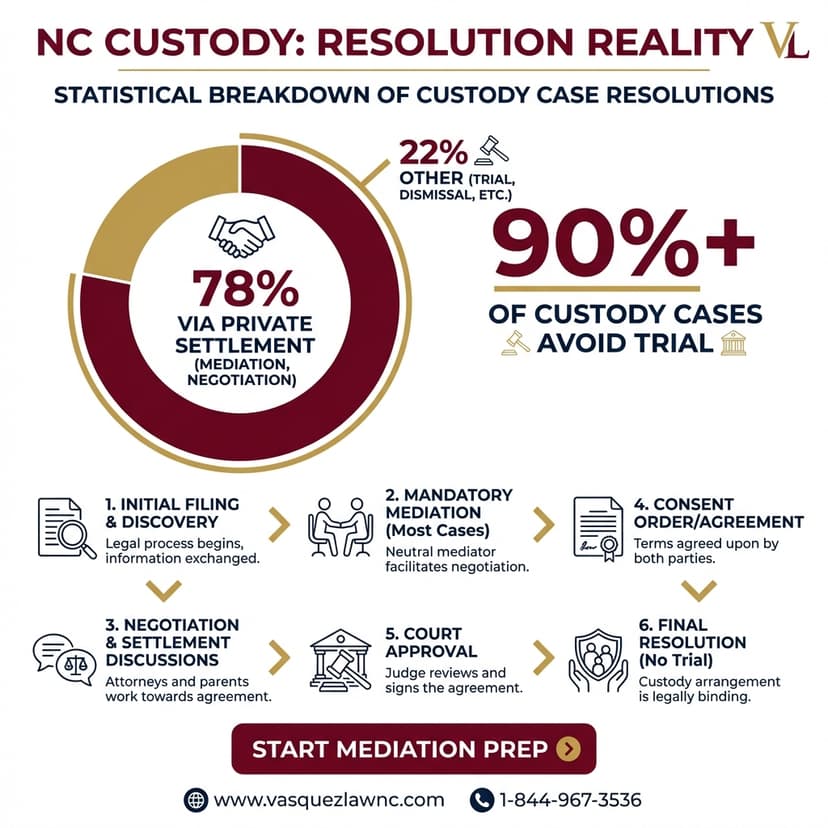
The initial complaint will formally ask the court to establish a custody arrangement. This document outlines the parties involved, the children's details, and the requested custody terms. After filing, the other parent must be properly served with the legal documents. This ensures they are aware of the proceedings and have an opportunity to respond. Failure to properly serve the other party can lead to significant delays or even dismissal of your case. Following service, the court often mandates mediation to encourage parents to reach an amicable agreement outside of court, which can be less adversarial and more tailored to the family's specific needs. If mediation is unsuccessful, the case will proceed to trial where a judge will make the final determination.
Key Steps to Filing Child Custody in NC
- File a Complaint: Begin by filing a Complaint for Child Custody with the Clerk of Superior Court in the county where the child resides. This document initiates the legal process and states your requested custody arrangement.
- Serve the Other Parent: The other parent must be legally served with the complaint and summons. This ensures they are officially notified of the lawsuit.
- Response from Other Parent: The other parent has 30 days to file an Answer to the Complaint.
- Attend Mediation: North Carolina courts typically require parents to attend a mandatory custody mediation session. A neutral mediator helps parents try to reach a mutually agreeable custody schedule.
- Discovery: If mediation fails, both parties may engage in discovery, exchanging information and documents relevant to the case.
- Temporary Orders: The court may issue temporary custody orders to establish a schedule while the case is pending.
- Trial: If no agreement is reached, the case proceeds to trial where a judge hears evidence and makes a final custody decision based on the child's best interests.
- Custody Order: The judge issues a legally binding Child Custody Order outlining legal and physical custody, visitation, and other relevant terms.
Child Custody for Unmarried Parents in NC
For unmarried parents in North Carolina, establishing child custody requires a formal court order, just as it does for married parents. Without a court order, both parents generally have equal rights to the child, which can lead to disputes and uncertainty regarding decision-making and living arrangements. It's critical for unmarried parents to proactively seek a child custody order to define parental responsibilities and ensure the child's stability. Vasquez Law Firm frequently assists unmarried parents in Charlotte and surrounding areas with navigating these specific legal challenges, ensuring their rights and their child's best interests are protected.
When unmarried parents seek child custody, the court still applies the "best interests of the child" standard. This means the same factors considered in cases involving married parents, such as parental fitness, the child's environment, and the ability of each parent to provide care, will be evaluated. Paternity must be legally established before a custody order can be issued. If paternity is not already acknowledged or legally determined, this will be an initial step in the process, often resolved through a DNA test.
Once paternity is established, the court will proceed to determine legal and physical custody. It is not uncommon for unmarried parents to seek joint legal custody, allowing both to participate in major decisions, while physical custody may be sole or joint depending on the circumstances. Having a clear and legally binding child custody order helps prevent future disagreements and provides a stable framework for the child's upbringing. An attorney can help unmarried parents understand their rights and responsibilities, and advocate for an arrangement that best serves their family.
Don't face your legal challenges alone. Our team is here to help you every step of the way.
Call today: 1-844-967-3536 | Se Habla Español
Common Mistakes in Child Custody Cases and How to Avoid Them
Navigating a child custody case can be emotionally charged, and it's easy to make mistakes that could negatively impact your case. Awareness of these pitfalls is the first step toward avoiding them and protecting your child's best interests. Many parents, driven by emotion or misinformation, inadvertently harm their chances of securing a favorable child custody arrangement. It is vital to approach these proceedings with a clear strategy and professional legal guidance. At Vasquez Law Firm, we help clients in Charlotte avoid these common errors, ensuring a stronger position in court.
One of the most significant mistakes is failing to prioritize the child's best interests above personal feelings. Courts are focused on the child's welfare, not parental grievances. Another common error is failing to adhere strictly to court orders, even temporary ones. Violating an order, no matter how minor it seems, can be viewed unfavorably by a judge. Similarly, using social media to vent frustrations or disparage the other parent can provide damaging evidence against you. Every action and statement can be scrutinized during custody proceedings, making discretion and careful conduct paramount.
Attempting to self-represent without understanding the nuances of North Carolina family law is another frequent mistake. The legal system is complex, and an experienced attorney can provide invaluable insight and advocacy. Additionally, failing to gather and present compelling evidence to support your case, such as school records, medical reports, or character references, can weaken your position. By understanding and actively avoiding these common missteps, you significantly improve your chances of achieving a positive outcome in your child custody battle.
Child Custody Mistakes Checklist
- Badmouthing the Other Parent: Never speak negatively about the other parent in front of the child or on social media. Courts frown upon parental alienation efforts.
- Failing to Follow Court Orders: Always adhere strictly to any temporary custody or visitation orders, even if you disagree with them. Non-compliance can severely harm your case.
- Neglecting Your Child's Needs: Ensure you are actively involved in your child's education, healthcare, and daily life. Document your involvement.
- Lack of Documentation: Keep detailed records of communication with the other parent, school reports, medical appointments, and any incidents that may be relevant to custody.
- Using Social Media Improperly: Avoid posting anything negative about your case, the other parent, or engaging in behavior that could be seen as irresponsible.
- Withholding Visitation: Unless there's a court order or immediate danger, do not prevent the other parent from seeing the child. This can be viewed as contempt of court.
- Failing to Seek Legal Counsel: Navigating child custody laws in NC is complex. An experienced attorney can provide strategic advice and representation.
- Making Unrealistic Demands: Be prepared to compromise. Courts often favor arrangements that promote co-parenting and frequent contact with both parents.
If you only remember one thing: Always prioritize the child's best interests and maintain a respectful, cooperative attitude, even when faced with conflict. Your actions will be scrutinized by the court.
Infographic: North Carolina Child Custody Process Timeline
This infographic outlines the typical stages and estimated timeline for a child custody case in North Carolina, from filing the complaint to obtaining a final order.
Modifying Child Custody Orders in NC
Life circumstances change, and what was once a suitable child custody arrangement may no longer serve the child's best interests. In North Carolina, existing child custody orders are not set in stone; they can be modified if certain legal criteria are met. However, modifying a child custody order is not a simple process and requires demonstrating a significant change in circumstances. This protects the child from frequent, unnecessary disruptions to their routine and ensures stability.
To petition the court for a modification, the parent seeking the change must prove that there has been a "substantial change in circumstances" affecting the child's welfare since the last custody order was issued. This change must be significant enough to warrant a review of the current arrangement. Examples of substantial changes can include a parent's relocation, a significant change in a parent's living situation or employment, a change in the child's needs, or evidence of abuse or neglect. It's important to note that a mere disagreement over the current schedule is usually not enough to justify a modification.
Once a substantial change is proven, the court will then re-evaluate the child custody arrangement using the "best interests of the child" standard, just as it did in the initial custody determination. This means the judge will consider all relevant factors to determine if a new custody order is necessary to promote the child's welfare. Attempting to modify an order without legal counsel can be challenging, as the burden of proof rests on the petitioner. An attorney from Vasquez Law Firm can help you assess if your situation meets the legal threshold for modification and represent your interests throughout the modification process in Charlotte and beyond.
When to Call a Lawyer Now for Child Custody in NC
Navigating child custody issues can be one of the most stressful experiences a parent can face. The decisions made during these proceedings will have a lasting impact on your child's life and your relationship with them. While some parents might consider handling their case alone, the complexities of North Carolina family law often make legal representation not just beneficial, but essential. Knowing when to call a lawyer immediately can significantly influence the outcome of your child custody case.
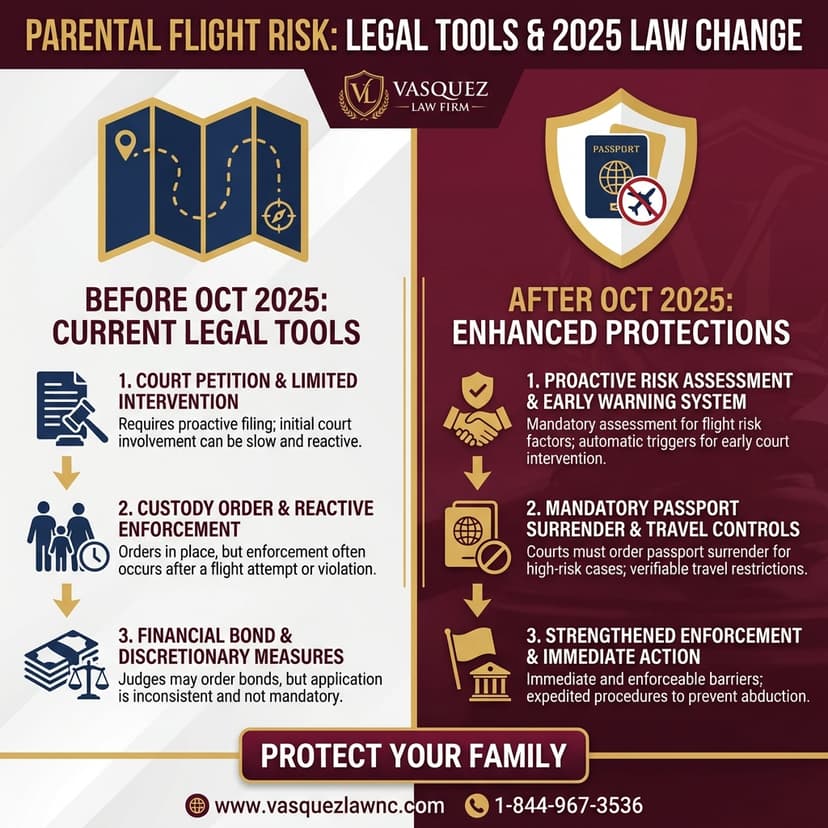
You should consider contacting a child custody lawyer if you are facing any of the following situations. If the other parent is threatening to move out of state with your child, immediate legal action is often required to prevent parental kidnapping. If there are allegations of abuse or neglect against you or the other parent, these serious claims demand expert legal defense and protection for your child. Similarly, if you suspect the other parent is engaging in substance abuse or has mental health issues that could endanger your child, a lawyer can help you gather evidence and present a compelling case to the court.
Furthermore, if you are struggling to reach an agreement with the other parent through mediation, or if the court process is becoming overwhelming, a lawyer can provide the advocacy and guidance you need. Even if you simply want to ensure your proposed custody agreement is legally sound and protects your rights, consulting with an attorney from Vasquez Law Firm is a wise decision. Our team in Charlotte is ready to provide the aggressive yet compassionate representation you need to fight for your child's best interests.
- The other parent is threatening to move out of state with your child.
- There are allegations of abuse or neglect, either against you or the other parent.
- You suspect the other parent has substance abuse issues or severe mental health problems.
- You have been served with child custody papers.
- Mediation has failed, and your case is heading to court.
- You want to modify an existing child custody order due to changed circumstances.
- You are an unmarried parent seeking to establish legal paternity and custody rights.
- You need to enforce an existing child custody order that the other parent is violating.
- You feel overwhelmed by the legal process and need expert guidance.
About Vasquez Law Firm
At Vasquez Law Firm, we combine compassion with aggressive representation. Our motto "Yo Peleo" (I Fight) reflects our commitment to standing up for your rights and the best interests of your family. With a deep understanding of North Carolina family law, we strive to provide personalized and effective legal solutions to our clients in Charlotte and across the state.
- Bilingual Support: Se Habla Español - our team is fully bilingual, ensuring clear communication and understanding for all our clients.
- Service Areas: While our primary focus for family law is North Carolina, we also handle immigration cases across North Carolina, Florida, and nationwide.
- Experience: With over 15 years of dedicated legal experience, Attorney Vasquez has a proven track record of helping clients navigate complex legal matters, including child custody, personal injury, workers' compensation, and criminal defense.
- Results: We are committed to achieving favorable outcomes, having successfully handled thousands of cases across our practice areas.
Attorney Trust and Experience
Attorney Vasquez holds a Juris Doctor degree and is admitted to practice in both the North Carolina State Bar and Florida Bar. With over 15 years of dedicated legal experience, he has built a reputation for providing personalized attention and achieving favorable outcomes for his clients. He understands the emotional toll legal battles can take and is committed to being a steadfast advocate for those he represents. You can learn more about our team and commitment to justice on our attorneys page.
Don't face your legal challenges alone. Our team is here to help you every step of the way.
What Are My Options in Family Court?
Answer 3 questions to understand your rights
Question 1 / 3
What family legal issue are you facing?
Keep Reading
Frequently Asked Questions
Who is most likely to win custody of a child in NC?
North Carolina courts do not favor mothers or fathers. Instead, they prioritize the "best interests of the child." This means the parent who can demonstrate a more stable environment, better parenting skills, and a greater ability to meet the child's needs is most likely to be awarded custody. Factors like the child's preferences, parental fitness, and a history of caregiving are all considered.
How does child custody work in NC?
In NC, child custody involves legal and physical custody. Legal custody grants decision-making rights, while physical custody determines where the child lives. Parents can agree on an arrangement, or the court will decide based on the child's best interests. This often involves mediation, and if no agreement is reached, a judge will issue a custody order after a trial. Both married and unmarried parents must obtain a court order.
What is the biggest mistake in a custody battle?
The biggest mistake in a custody battle is often prioritizing personal grievances over the child's best interests. This can manifest as badmouthing the other parent, failing to follow court orders, or using the child as a pawn. Such actions can significantly harm your standing with the court, which always seeks to ensure the child's welfare and a stable co-parenting environment.
Can unmarried parents get child custody in NC?
Yes, unmarried parents in North Carolina can absolutely get child custody. The process is similar to that for married parents, focusing on the child's best interests. However, paternity must first be legally established, if not already done, before a custody order can be issued. Both parents have equal rights until a court order specifies otherwise, making a formal order essential.
How long does a child custody case take in NC?
The duration of a child custody case in North Carolina varies widely depending on the complexity of the issues, the court's caseload, and the parents' willingness to cooperate. While some cases can be resolved through mediation in a few months, others that proceed to trial can take a year or more. Temporary orders are often put in place to provide stability during the process.
What is the difference between legal and physical custody?
Legal custody refers to the right and responsibility to make major decisions about a child's upbringing, such as education, healthcare, and religious training. Physical custody, on the other hand, determines where the child primarily lives and which parent provides daily care. Parents can have joint legal custody even if one parent has sole physical custody.
Can a child choose which parent to live with in NC?
In North Carolina, a child's preference is one factor a court may consider in a custody determination, but it is not solely determinative. The court will assess the child's age, maturity, and reasoning behind their preference. Generally, older, more mature children's wishes carry more weight, but the ultimate decision rests on the judge's assessment of the child's best interests.
What evidence is important in an NC child custody case?
Important evidence in an NC child custody case includes school records, medical records, character references, testimony from teachers or doctors, photographs, communication records between parents, and any documentation of a parent's living situation or involvement in the child's life. Evidence of domestic violence, substance abuse, or neglect is also highly relevant and can significantly impact the court's decision.
How can I modify an existing child custody order in NC?
To modify an existing child custody order in NC, you must demonstrate to the court that there has been a "substantial change in circumstances" affecting the child's welfare since the last order was issued. This change must be significant enough to warrant a review of the current arrangement. If proven, the court will then re-evaluate the custody using the "best interests of the child" standard to determine a new order.
Do I need a lawyer for child custody in NC?
While you can file for child custody in NC without a lawyer, it is highly recommended to seek legal counsel. Child custody laws are complex, and an experienced attorney can ensure all paperwork is correctly filed, represent your interests effectively in mediation and court, and help you navigate the nuances of the legal system to protect your rights and your child's best interests.
Sources and References
- North Carolina Courts - Child Custody Help Topic
- North Carolina General Statutes - Chapter 50. Divorce and Alimony
- Legal Information Institute, Cornell Law School - Child Custody
Ready to take the next step? Contact Vasquez Law Firm today for a free, confidential consultation. We're committed to fighting for your rights and achieving the best possible outcome for your case.
Start Your Free Consultation Now
Call us: 1-844-967-3536
Se Habla Español - Estamos aquí para ayudarle.
Vasquez Law Firm
Legal Team
Our experienced attorneys at Vasquez Law Firm have been serving clients in North Carolina and Florida since 2011, with 70+ years of combined attorney experience. We specialize in immigration, personal injury, criminal defense, workers compensation, and family law.
Related Legal Services
Need legal help? Learn more about experienced family law attorneys in Charlotte, or contact us for a free evaluation.
You can also visit family law attorneys across North Carolina for more information.