What Iranians in the US Need to Know About Deportation in 2026
Facing deportation from Iran? Understand U.S. immigration laws, asylum options, and how to fight your case in 2026. Contact Vasquez Law for a free consultation.
Published on February 22, 2026
Talk to an immigration attorney
Free call. A clear plan for your case.
Free & confidential · Se habla espanol · 24/7

Have questions? Talk to an attorney - free evaluation.
Call 1-844-967-3536Check your case status now
Look up your immigration case below, then talk to an attorney about what it means — free.
Questions about your result?
Talk to an attorney about your case — free, no obligation.
What Iranians in the US Need to Know About Deportation in 2026
For individuals from Iran residing in the United States, the threat of deportation can be a deeply unsettling and complex issue. Understanding the nuances of U.S. immigration law, particularly concerning deportation Iran related cases, is critical for protecting your rights and future. This comprehensive guide, updated for 2026, aims to demystify the process, highlight common triggers for removal proceedings, and outline the available legal defenses. Whether you are seeking asylum, facing visa issues, or concerned about family members, knowing your options and acting swiftly is paramount. Vasquez Law Firm is dedicated to providing robust legal support for the Iranian community in North Carolina, Florida, and nationwide, ensuring that every individual receives the aggressive and compassionate representation they deserve.
Need help with your case? Our experienced attorneys are ready to fight for you. Se Habla Español.
Schedule Your Free Case Evaluation
Or call us now: 1-844-967-3536
Quick Answer
Deportation from the U.S. for individuals from Iran typically involves removal proceedings initiated by immigration authorities due to various violations, such as overstaying a visa, criminal convictions, or asylum denials. Defenses may include asylum, withholding of removal, CAT relief, or cancellation of removal. Seeking immediate legal counsel is crucial to navigate these complex cases and protect your rights.
- Identify the specific grounds for deportation.
- Explore all available forms of relief and waivers.
- Gather compelling evidence to support your case.
- Never miss an immigration court hearing.
- Consult an experienced immigration attorney promptly.
Understanding Deportation Iran: The Basics for Iranian Nationals
The landscape of U.S. immigration law can be particularly challenging for Iranian nationals, especially when facing potential deportation Iran related actions. These proceedings, also known as removal proceedings, are formal legal processes where the U.S. government seeks to expel a non-citizen from the country. The reasons for initiating deportation can vary widely, from minor immigration violations to serious criminal offenses. It is essential for anyone from Iran in the U.S. to understand these grounds and their potential impact.
Common triggers for deportation include overstaying a visa, unauthorized employment, certain criminal convictions, or even misrepresentation on immigration forms. For individuals seeking asylum from Iran, a denial of their asylum claim can also lead directly to removal proceedings. The U.S. government's stance on immigration, particularly for certain nationalities, has seen shifts, making it vital to stay informed about current policies as of 2026. Understanding the basic principles of these proceedings is the first step in building a strong defense and safeguarding your future in the United States.
Navigating the complex legal framework requires not only knowledge of federal statutes like the Immigration and Nationality Act (INA) but also an awareness of how these laws are applied in practice. Many Iranians may find themselves caught in the system due to circumstances beyond their control or misunderstandings of legal requirements. Vasquez Law Firm specializes in these intricate cases, offering a beacon of hope and aggressive advocacy for those facing the daunting prospect of deportation from Iran.
Grounds for Removal: Common Triggers for Iranian Citizens
Deportation proceedings against Iranian citizens can be initiated for numerous reasons, each carrying significant legal implications. It is crucial to identify the specific grounds for removal to formulate an effective defense strategy. One of the most common grounds is overstaying a visa. If you enter the U.S. on a non-immigrant visa, such as a student or tourist visa, and remain beyond the authorized period, you become subject to removal. This is a straightforward violation that often leads to deportation proceedings, making it critical for individuals to meticulously track their authorized stay.
Another significant trigger involves criminal convictions. Certain crimes, particularly those classified as aggravated felonies or crimes involving moral turpitude, can lead to mandatory detention and deportation, regardless of one's immigration status. Even minor offenses, depending on state and federal classification, can have severe immigration consequences. Additionally, immigration fraud, such as misrepresenting facts on a visa application or marriage fraud, is a serious offense that almost always results in removal proceedings and bars future immigration benefits. Learn more about immigration fraud.
Furthermore, individuals who enter the U.S. without inspection or violate the terms of their admission, such as working without authorization, are also at risk. For asylum seekers, a denied claim, especially if it's deemed frivolous, can directly lead to an order of removal. Understanding these specific grounds is the first step in assessing your vulnerability and preparing a defense against deportation Iran. Our firm understands the unique challenges faced by Iranian nationals and provides tailored legal strategies.
Legal Defenses and Relief Options for Iranian Nationals
When facing deportation Iran, several legal defenses and forms of relief may be available, depending on the specifics of your case. It is vital to explore every possible avenue with an experienced immigration attorney. Asylum is a primary defense for those who fear persecution in Iran due to their race, religion, nationality, political opinion, or membership in a particular social group. If granted, asylum allows you to remain in the U.S. and eventually apply for a Green Card.
Withholding of Removal is another form of protection, similar to asylum, but with a higher burden of proof and fewer benefits. It prevents deportation to a country where your life or freedom would be threatened, but it does not lead to a Green Card. Protection under the Convention Against Torture (CAT) offers relief for individuals who fear they would be tortured if returned to Iran. This form of relief is available regardless of whether the torture is at the hands of government officials or private individuals, provided the government acquiesces to it.
Cancellation of Removal is a discretionary form of relief for certain long-term residents. For non-lawful permanent residents, it requires ten years of continuous physical presence, good moral character, and proof that your removal would cause exceptional and extremely unusual hardship to a U.S. citizen or lawful permanent resident spouse, parent, or child. Lawful permanent residents may also qualify for cancellation of removal if they have resided in the U.S. for at least five years, have been a lawful permanent resident for seven years, and have not committed certain serious crimes. These defenses are complex and require meticulous preparation and presentation in immigration court. Vasquez Law Firm has a proven track record of successfully representing clients in these challenging cases, fighting for their right to remain in the U.S.
The Deportation Process: What to Expect for Iranian Citizens
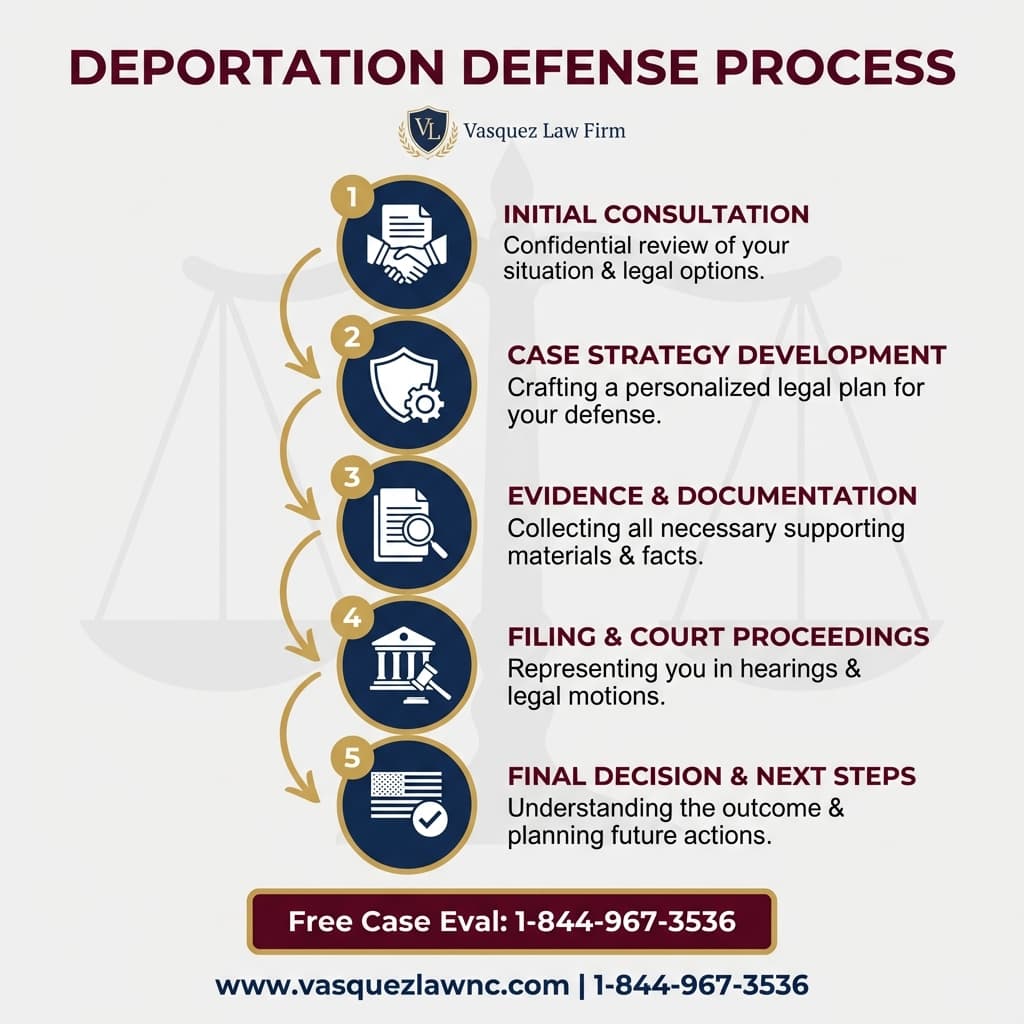
The deportation Iran process can be lengthy and emotionally taxing, often involving multiple stages. Understanding what to expect can help you prepare and reduce anxiety. The process typically begins when U.S. Immigration and Customs Enforcement (ICE) issues a Notice to Appear (NTA), which formally charges you with being removable and schedules your first hearing before an immigration judge. This initial hearing, known as a Master Calendar Hearing, is largely procedural. The judge will confirm your identity, ensure you have received the NTA, and ask you to admit or deny the allegations and state your relief from removal. Understand DHS order of detention.
Following the Master Calendar Hearing, if you deny the charges or seek relief, the judge will schedule Individual Hearings. These are more extensive proceedings where you present evidence, call witnesses, and argue your case for relief from deportation. This stage requires significant preparation, including gathering documents, securing expert testimony, and preparing your testimony. An immigration judge will then make a decision based on the evidence presented and legal arguments. If the judge orders your deportation, you generally have the right to appeal the decision to the Board of Immigration Appeals (BIA), and sometimes further to a federal circuit court.
Throughout this process, it is common for individuals to be detained by ICE. Detention facilities can be challenging environments, making legal representation even more critical. If you or a loved one is detained, securing legal counsel quickly is paramount to ensure your rights are protected and that all avenues for release, such as bond hearings, are pursued. The entire process, from NTA to final appeal, can take months or even years, underscoring the need for consistent and expert legal guidance. Vasquez Law Firm is here to guide you through every step, fighting tirelessly on your behalf.
Timeline: What to Expect
- Initial Contact/Arrest: ICE may apprehend individuals and issue a Notice to Appear (NTA). This can happen suddenly.
- Master Calendar Hearing (Weeks to Months): Your first appearance before an immigration judge to state your case and schedule future hearings.
- Bond Hearing (Days to Weeks, if detained): An opportunity to request release from detention on bond.
- Individual Hearing (Months to Years): The main hearing where evidence and testimony are presented. This is the core of your defense.
- Decision by Immigration Judge (Immediately or Weeks): The judge issues a ruling on your removability and any requested relief.
- Appeals (Months to Years): If denied, you can appeal to the Board of Immigration Appeals (BIA) and potentially federal courts.
- Final Order of Removal/Deportation: If all appeals are exhausted, the order becomes final, leading to physical removal.
Common Mistakes to Avoid in Deportation Cases
Navigating deportation Iran cases is fraught with potential pitfalls that can severely jeopardize your chances of success. Avoiding these common mistakes is as crucial as understanding your legal rights. One of the most significant errors is failing to appear at scheduled court hearings. Missing a Master Calendar or Individual Hearing can result in an automatic order of removal, often without any opportunity to reopen your case. Always confirm dates and times and ensure you have reliable transportation.
- Missing Court Hearings: Always attend all scheduled court dates. Failure to appear can lead to an automatic deportation order in absentia.
- Providing False Information: Never lie or provide misleading information to immigration officials or in court. This can lead to charges of immigration fraud and permanent bars to future relief.
- Delaying Legal Counsel: Waiting too long to consult an attorney can limit your options, as deadlines for filing applications and appeals are strict.
- Not Gathering Sufficient Evidence: A strong case relies on comprehensive documentation. Failing to collect all necessary evidence, such as proof of persecution, ties to the U.S., or hardship, can weaken your defense.
- Failing to Understand Charges: Do not proceed without fully understanding the grounds for your deportation. An attorney can explain the Notice to Appear (NTA) and help you respond appropriately.
- Traveling Internationally During Proceedings: Leaving the U.S. while in removal proceedings can be seen as self-deportation and may prevent you from re-entering.
- Underestimating the Complexity: Immigration law is incredibly complex. Trying to navigate the system without professional legal help is a significant risk.
If you only remember one thing: Never face immigration court alone. The complexities of deportation Iran cases demand the expertise of a seasoned immigration attorney.
Jurisdiction Notes: NC, FL, and Nationwide Immigration
Immigration law in the United States is primarily federal, meaning the statutes and regulations apply nationwide. However, the practical application and experience of individuals facing deportation Iran can vary significantly based on their location within the U.S., including North Carolina and Florida. Vasquez Law Firm serves clients across both states and nationwide for immigration matters, understanding these regional nuances.
North Carolina Notes
In North Carolina, immigration courts are located in cities like Charlotte. The local context can influence court dockets, the availability of legal aid, and specific ICE enforcement priorities. For Iranian nationals in North Carolina, understanding how the local immigration court operates and the tendencies of specific immigration judges can be advantageous. Our Charlotte-based team has extensive experience representing clients in NC's immigration courts, providing localized insight and strategic defense tailored to the regional environment.
Florida Notes
Florida also has a significant immigrant population and multiple immigration courts, including in Miami and Orlando. Due to its unique geographic position and diverse communities, Florida often sees a high volume of immigration cases, including those involving individuals from Iran. The legal strategies employed in Florida courts may need to account for specific BIA precedents or local court rules that differ slightly from other jurisdictions. Vasquez Law Firm has a strong presence and deep understanding of Florida's immigration landscape, offering robust defense for clients throughout the state.
Nationwide Concepts (General only, rules vary)
While local factors can influence the procedural aspects of deportation Iran cases, the core immigration laws, such as the Immigration and Nationality Act (INA), are federal. This means that forms of relief like asylum, withholding of removal, and cancellation of removal are available across the country, subject to federal eligibility criteria. However, enforcement priorities of ICE and U.S. Customs and Border Protection (CBP) can shift nationally, impacting who is targeted for removal. Our firm’s nationwide immigration practice ensures that clients, regardless of their physical location, benefit from comprehensive knowledge of federal immigration law and consistent, high-quality legal representation.
When to Call a Lawyer Now: Immediate Legal Help for Deportation Iran Cases
The stakes in deportation Iran cases are incredibly high, and timing is often critical. Knowing when to seek immediate legal counsel can make the difference between remaining in the U.S. and being forced to return to a dangerous situation. If you receive a Notice to Appear (NTA) from ICE or USCIS, this is an urgent signal to contact an attorney. An NTA initiates formal removal proceedings, and you have limited time to prepare a defense.
- You receive a Notice to Appear (NTA): This is the official start of deportation proceedings. Do not delay in contacting an attorney.
- You are detained by ICE: Immediate legal intervention is often necessary to secure release on bond or protect your rights while in custody.
- Your visa or authorized stay is about to expire or has already expired: Proactive legal advice can explore options before removal proceedings begin.
- You have a past criminal conviction: Even minor offenses can trigger deportation. An attorney can assess the immigration consequences and potential waivers.
- You fear returning to Iran: If you believe you will face persecution or torture, an attorney can help you apply for asylum or other protections.
- You are confused about your immigration status: Any uncertainty about your legal standing warrants a consultation to avoid future problems.
- You have been denied an immigration benefit: A denial can often lead to removal proceedings.
- You are considering traveling outside the U.S. during immigration proceedings: This can have severe consequences, including self-deportation.
Don't face your legal challenges alone. Our team is here to help you every step of the way.
Call today: 1-844-967-3536 | Se Habla Español
About Vasquez Law Firm
At Vasquez Law Firm, we combine compassion with aggressive representation. Our motto "Yo Peleo" (I Fight) reflects our commitment to standing up for your rights. We understand the unique challenges faced by immigrant communities, especially those from Iran, and we are dedicated to providing personalized and effective legal strategies. Our team is fully bilingual, ensuring that you can communicate your concerns and understand your options clearly, whether in English or Spanish.
- Bilingual Support: Se Habla Español - our team is fully bilingual and ready to assist you.
- Service Areas: We proudly serve clients in North Carolina, Florida, and provide nationwide immigration services.
- Experience: With over 15 years of dedicated legal experience, we have a deep understanding of complex immigration laws.
- Results: Our firm has a strong track record of successful outcomes in a wide range of immigration, personal injury, and criminal defense cases.
Attorney Trust and Experience
Attorney Vasquez holds a Juris Doctor degree and is admitted to practice in both the North Carolina State Bar and Florida Bar. With over 15 years of dedicated legal experience, he has built a reputation for providing personalized attention and achieving favorable outcomes for his clients. He leads a team committed to fighting for justice, especially for those facing the daunting prospect of deportation Iran. Our firm's approach is rooted in a deep understanding of both the legal system and the human impact of immigration challenges, ensuring that every client receives not just legal representation, but also empathy and unwavering support. Vasquez Law Firm is your trusted advocate, ready to fight for your future.
Frequently Asked Questions
Can I be deported if I have a Green Card?
Yes, even Green Card holders, or lawful permanent residents, can face deportation under certain circumstances. This typically occurs if they commit certain criminal offenses, such as aggravated felonies or crimes involving moral turpitude, or if they are found to have committed immigration fraud. The specific grounds for removal for lawful permanent residents are outlined in the Immigration and Nationality Act. It is crucial to consult an attorney if you are a Green Card holder facing criminal charges or allegations of immigration violations to protect your status.
What is the difference between deportation and removal?
Historically, "deportation" referred to the expulsion of non-citizens already in the U.S., while "exclusion" referred to preventing entry at the border. The term "removal" was introduced by the 1996 immigration laws to encompass both concepts, unifying the process. Today, "removal proceedings" is the official legal term used by immigration courts and agencies like ICE and USCIS. While "deportation" is still commonly used by the public, legally, they refer to the same process of expelling a non-citizen from the United States. Our firm uses both terms for clarity.
Can I appeal a deportation order?
Yes, in most cases, you have the right to appeal an immigration judge's decision to the Board of Immigration Appeals (BIA). This appeal must typically be filed within 30 days of the judge's decision. If the BIA denies your appeal, you may, in some situations, be able to appeal further to a federal Circuit Court of Appeals. The appeals process is complex and requires strict adherence to deadlines and legal procedures. An experienced immigration attorney is essential to navigate these appeals successfully and present compelling arguments.
What happens if I miss my immigration court hearing?
Missing an immigration court hearing, whether a Master Calendar Hearing or an Individual Hearing, can have severe consequences. The immigration judge may issue an "in absentia" order of removal, meaning you are ordered deported without your presence. It can be extremely difficult to reopen such a case, requiring strong legal arguments and proof of exceptional circumstances for your absence. Always attend your hearings or have your attorney appear on your behalf if permitted, to avoid an automatic deportation order.
How long does the deportation process take for someone from Iran?
The duration of a deportation Iran case can vary significantly, ranging from a few months to several years. Factors influencing the timeline include the complexity of the case, the specific grounds for removal, the type of relief sought, the backlog in immigration courts, and whether appeals are filed. Cases involving asylum claims or complex criminal issues often take longer. An attorney can provide a more accurate estimate based on the specifics of your situation and the current court dockets.
Can I get a work permit while my deportation case is pending?
In certain circumstances, individuals in removal proceedings may be eligible to apply for an Employment Authorization Document (EAD), also known as a work permit. Eligibility often depends on the type of relief you have applied for, such as asylum or cancellation of removal, and the stage of your proceedings. For example, asylum seekers can usually apply for an EAD 150 days after filing their asylum application. An immigration attorney can assess your eligibility and help you file the necessary forms.
What is the role of ICE in deportation cases?
U.S. Immigration and Customs Enforcement (ICE) is the primary federal agency responsible for enforcing immigration laws within the United States. Their role in deportation cases includes apprehending non-citizens, issuing Notices to Appear (NTAs) to initiate removal proceedings, detaining individuals, and carrying out final orders of removal. ICE officers also conduct investigations and manage the detention and removal of individuals deemed removable. Having legal representation can help you understand your rights when interacting with ICE. Learn more about ICE operations.
Are there specific protections for Iranian asylum seekers?
Iranian asylum seekers often present strong cases due to documented human rights abuses and political instability in Iran. While there are no specific blanket protections solely for Iranian nationals, individuals can seek asylum based on a well-founded fear of persecution due to their political opinion, religion, or membership in a particular social group (e.g., LGBTQ+ individuals, converts to Christianity). Each case is evaluated individually based on the evidence presented. It is vital to articulate your fear and provide strong supporting evidence. USCIS provides guidelines on asylum.
Can a U.S. citizen spouse or child prevent deportation?
A U.S. citizen spouse or child can be a crucial factor in preventing deportation, particularly through applications for Cancellation of Removal for Non-Permanent Residents or waivers of inadmissibility. To qualify for Cancellation of Removal, you typically need to show that your removal would cause "exceptional and extremely unusual hardship" to your U.S. citizen or lawful permanent resident spouse, parent, or child. This is a high legal standard. An attorney can help demonstrate this hardship and navigate the complex requirements for such relief.
What if I am a Dreamer facing deportation?
Dreamers, typically referring to individuals who came to the U.S. as children, face unique challenges. While programs like DACA (Deferred Action for Childhood Arrivals) offer temporary protection from deportation and work authorization, DACA recipients can still be placed in removal proceedings if their DACA status is revoked or expires, or if they commit certain crimes. It is critical for Dreamers to understand their rights and available pathways to permanent status. Consulting an immigration attorney is essential to explore all possible forms of relief and protect your future in the U.S.
Sources and References
- U.S. Citizenship and Immigration Services (USCIS)
- U.S. Department of State - Bureau of Consular Affairs
- Executive Office for Immigration Review (EOIR)
- 8 U.S. Code § 1229a - Removal proceedings
Ready to take the next step? Contact Vasquez Law Firm today for a free, confidential consultation. We're committed to fighting for your rights and achieving the best possible outcome for your case.
Start Your Free Case Evaluation Now
Call us: 1-844-967-3536
Se Habla Español - Estamos aquí para ayudarle.



William Vasquez
Founder & CEO, Vasquez Law Firm, PLLC
William Vasquez is the founder and CEO of Vasquez Law Firm, PLLC, a results-driven firm specializing in immigration, criminal defense, personal injury, and workers' compensation. A U.S. Air Force veteran and recipient of the Joint Service Achievement Medal, William is dedicated to fiercely fighting for his clients' rights.
Related Legal Services
Need legal help? Learn more about immigration lawyers in North Carolina, or contact us for a free evaluation.
You can also visit NC immigration legal help for more information.