7 Facts You Need to Know About DUI Checkpoints in Fresno in 2026
Facing a DUI checkpoint in Fresno? Understand your rights and what to expect in 2026. Get critical facts and legal guidance. Contact Vasquez Law Firm today for a free consultation.
Vasquez Law Firm
Published on February 21, 2026
Have questions? Talk to an attorney — free evaluation.
Call 1-844-967-35367 Facts You Need to Know About DUI Checkpoints in Fresno in 2026
Navigating a DUI checkpoint in Fresno can be a confusing and intimidating experience. Whether you're a local resident or just passing through, understanding your rights and the legal procedures is essential. This comprehensive guide, updated for 2026, provides critical facts about DUI checkpoints in Fresno, including what to expect, your legal obligations, and how to protect your rights. Knowing these details can make a significant difference in how you handle an encounter with law enforcement and safeguard your future. If you face a DUI charge after a checkpoint, immediate legal counsel is vital.
Need help with your case? Our experienced attorneys are ready to fight for you. Se Habla Español.
Got a Traffic Ticket?
Don't let points pile up. Our traffic attorneys can help protect your license.
Schedule Your Free Consultation
Or call us now: 1-844-967-3536
Quick Answer
When encountering a DUI checkpoint in Fresno, you must stop and provide your driver's license and registration. You have the right to refuse certain field sobriety tests and preliminary alcohol screening (PAS) tests, though refusal may lead to license suspension. Remaining polite, calm, and contacting a lawyer immediately after an arrest is crucial to protect your legal rights.
- Always stop at a designated checkpoint.
- Provide required documents: license, registration, proof of insurance.
- You can refuse field sobriety tests (FSTs) and PAS tests.
- Refusal of chemical tests (blood/breath) after arrest can lead to penalties.
- Do not argue or resist; remain courteous.
- Contact a DUI defense lawyer immediately if arrested.
- Be aware of your rights, but cooperate with legal obligations.
Understanding DUI Checkpoints in Fresno
DUI checkpoints, also known as sobriety checkpoints, are a common law enforcement tool used to deter impaired driving and apprehend drivers under the influence of alcohol or drugs. In Fresno, these checkpoints are typically announced in advance, though specific locations and times may vary. The primary goal is public safety, aiming to reduce traffic accidents and fatalities caused by impaired drivers. Authorities like the Fresno Police Department and California Highway Patrol regularly conduct these operations throughout 2026, especially during holiday weekends and periods known for increased social gatherings.
While the constitutionality of DUI checkpoints has been challenged, the U.S. Supreme Court, in Michigan Dept. of State Police v. Sitz, upheld their legality, provided they meet certain guidelines. These guidelines include neutral formulae for stopping vehicles, visible signs, and a supervisory officer present. Knowing these operational details can help you understand the context of a DUI checkpoint in Fresno and how it might impact your encounter. It's important to remember that even if you believe a checkpoint is improperly conducted, it is not the time to argue with law enforcement.
Your best approach at a DUI checkpoint in Fresno is to be prepared and understand your rights and obligations. This includes knowing which tests you can refuse and the potential consequences of such refusals. An experienced traffic violations attorney can provide comprehensive guidance on specific situations you might face, offering insight into local procedures and legal nuances that are unique to Fresno and California law.
Your Rights at a Fresno DUI Checkpoint
When you encounter a DUI checkpoint in Fresno, it's vital to remember that you still have constitutional rights, even though the stop itself is considered a brief detention. You are generally required to stop your vehicle and provide your driver's license, vehicle registration, and proof of insurance. This is a basic legal obligation for all drivers. Beyond these initial requirements, your rights become more nuanced, especially concerning sobriety tests. Understanding these distinctions is crucial for protecting yourself from potential self-incrimination.
You have the right to refuse Field Sobriety Tests (FSTs), such as walking a straight line or standing on one leg. These tests are voluntary and designed to gather evidence of impairment. Similarly, you can refuse a Preliminary Alcohol Screening (PAS) test, which is a handheld breathalyzer used before an arrest. Refusing these pre-arrest tests generally does not carry direct legal penalties, unlike refusing a chemical test after a lawful arrest. However, officers may still use your refusal as part of their probable cause to make an arrest if they suspect impairment based on other observations.
After a lawful arrest for DUI, California's implied consent law comes into effect. This means that by driving on California roads, you have implicitly consented to a chemical test (blood or breath) if arrested on suspicion of DUI. Refusing a chemical test after arrest can lead to severe penalties, including automatic license suspension and enhanced DUI penalties, even if you are later found not guilty of the DUI charge. It is critical to understand this distinction and consult with a North Carolina traffic ticket lawyer or a California DUI attorney if you have questions about your specific situation.
Can I Turn Around Before a DUI Checkpoint?
Many drivers wonder if they can legally turn around or avoid a DUI checkpoint in Fresno if they see it ahead. Generally, yes, you can legally turn around or take an alternate route to avoid a DUI checkpoint, as long as you do so safely and legally. This means following all traffic laws, using your turn signals, and not committing any traffic infractions. Law enforcement officers cannot pull you over simply for avoiding a checkpoint unless they observe you breaking a traffic law or have an independent reasonable suspicion of criminal activity.
However, officers may be vigilant for drivers making sudden or illegal maneuvers to avoid a checkpoint. For example, making an illegal U-turn, running a stop sign, or driving erratically could give officers probable cause to pull you over, even if their initial reason was your attempt to avoid the checkpoint. This is why it's crucial to always drive safely and legally, regardless of whether you are approaching a checkpoint or not. If you are pulled over after avoiding a checkpoint, remember your rights and be polite.
What to Expect at a DUI Checkpoint in Fresno
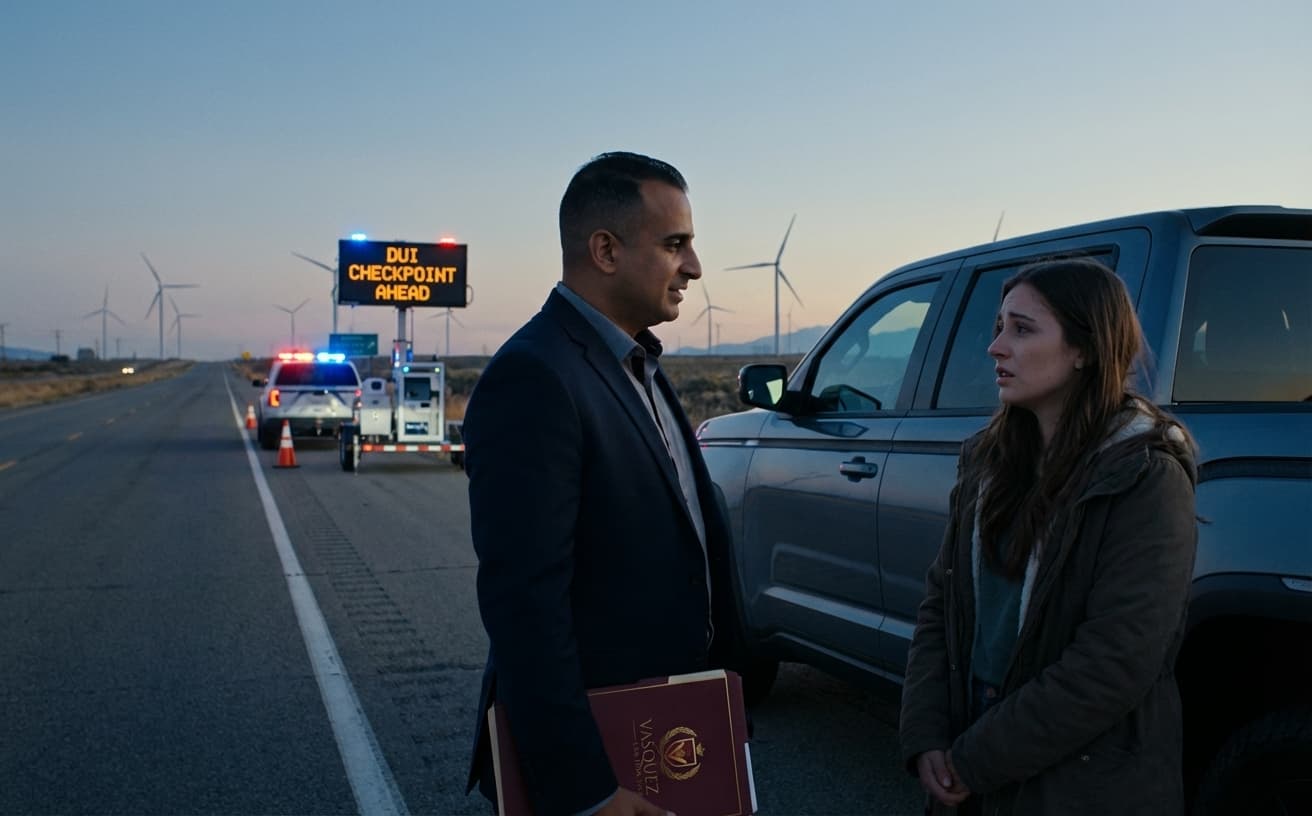
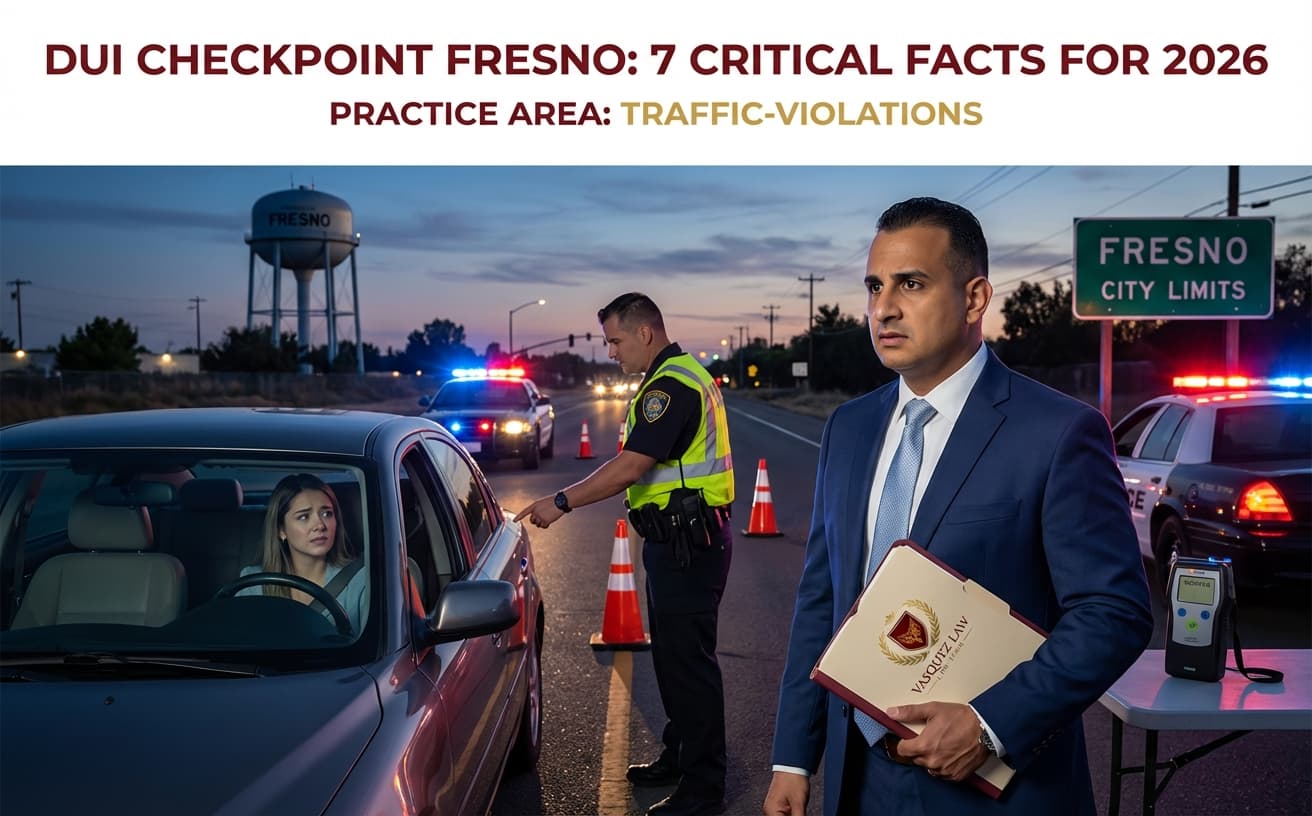
When you approach a DUI checkpoint in Fresno, you will typically see clear signage and flashing lights indicating a law enforcement operation ahead. Vehicles are usually directed into a lane where an officer will briefly interact with each driver. The initial interaction is generally short, with the officer observing your demeanor, looking for signs of impairment such as slurred speech, bloodshot eyes, or the odor of alcohol. They will also ask for your driver's license, vehicle registration, and proof of insurance.
If the officer does not observe any signs of impairment, you will likely be allowed to proceed quickly. However, if they have reasonable suspicion that you are impaired, they may direct you to a secondary screening area. In this area, officers may ask you to perform Field Sobriety Tests (FSTs) or take a Preliminary Alcohol Screening (PAS) test. Remember, you have the right to refuse these pre-arrest tests, but your refusal may still contribute to an officer's probable cause for arrest if combined with other observations. It is important to stay calm and follow instructions.
Should an officer determine they have probable cause to believe you are driving under the influence, they will arrest you. At this point, you will be informed of your rights, including your right to remain silent and your right to an attorney. After arrest, you will be required to submit to a chemical test (blood or breath) under California's implied consent law. Refusal after arrest carries significant penalties. Seeking legal counsel from a firm like Vasquez Law Firm immediately after an arrest is vital to protect your rights and explore your defense options for a DUI checkpoint Fresno charge.
Timeline and Immediate Steps After a DUI Arrest
A DUI arrest at a Fresno checkpoint initiates a complex legal process that moves quickly. Understanding the timeline and taking immediate steps can significantly impact the outcome of your case. The moments directly following an arrest are critical for preserving your rights and building a strong defense. It is not uncommon for individuals to feel overwhelmed and unsure of what to do next, which is why prompt action is essential. Delaying legal consultation can lead to missed deadlines and lost opportunities for defense.
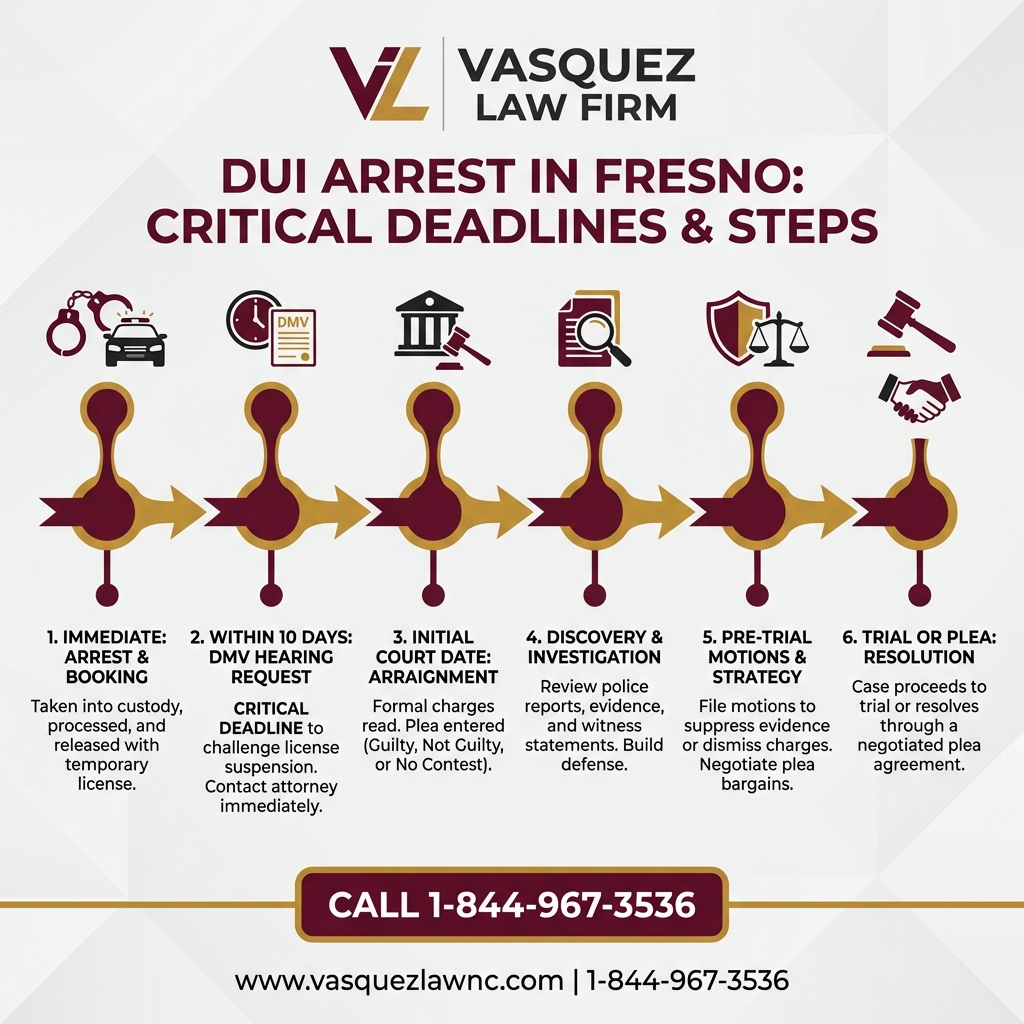
Post-Arrest Timeline: What to Expect
- Within Minutes/Hours: Booking and processing at the police station. This includes fingerprinting, mugshot, and potentially a chemical test (blood or breath). You will also be read your Miranda Rights.
- Within 12 Hours (typically): Release from custody, either on bail or on your own recognizance, depending on the severity of the charge and your criminal history.
- Within 10 Days: You must contact the California Department of Motor Vehicles (DMV) to request an Administrative Per Se (APS) hearing. Failure to do so will result in an automatic license suspension 30 days after your arrest. This hearing is separate from your criminal court case.
- Within Weeks: Your first court appearance, known as an arraignment, will be scheduled. Here, you will formally enter a plea (guilty, not guilty, or no contest) and the judge will set future court dates.
- Over Several Months: Pre-trial motions, negotiations with the prosecutor, and potentially a trial. This phase can be lengthy and requires careful legal strategy.
The most crucial step in this timeline is contacting an experienced DUI attorney immediately after your arrest. A lawyer can help you navigate the DMV hearing request, understand your charges, and begin building a defense strategy. For North Carolina residents facing traffic violations, our firm offers dedicated support. While this article focuses on Fresno, the principles of seeking prompt legal counsel after an arrest remain universal. Learn more about traffic ticket defense by visiting our traffic violations practice area page.
Common Mistakes at DUI Checkpoints and How to Avoid Them
Encountering a DUI checkpoint can be stressful, leading many individuals to make common mistakes that can jeopardize their case. Being aware of these pitfalls and knowing how to avoid them is a key component of protecting your rights and minimizing potential legal repercussions. Preparation and a clear understanding of legal boundaries are your best defense against unintended self-incrimination. These mistakes can turn a routine stop into a serious legal challenge, impacting your driving privileges and personal record.
- Failure to stop: Attempting to drive through a checkpoint or ignoring officer commands is illegal and will lead to immediate pursuit and arrest, escalating the situation significantly. Always stop when directed.
- Being argumentative or uncooperative: While you have rights, being belligerent or refusing to provide required documents (license, registration, insurance) can lead to additional charges or heighten an officer's suspicion. Remain polite and cooperative with lawful requests.
- Admitting guilt or making incriminating statements: You have the right to remain silent. Do not volunteer information or answer questions beyond providing your identification. Anything you say can be used against you.
- Refusing a post-arrest chemical test: After a lawful arrest, California's implied consent law makes refusal of a blood or breath test subject to immediate license suspension and enhanced penalties. Understand the difference between pre-arrest and post-arrest tests.
- Failing to contact the DMV within 10 days: This is a critical administrative deadline in California. Missing it results in automatic license suspension. An attorney can help you request your APS hearing.
- Driving under the influence: The most obvious mistake is driving while impaired. Always arrange for a designated driver, use ride-sharing services, or stay home if you plan to consume alcohol or drugs.
- Not consulting with an attorney immediately: Delaying legal counsel can lead to missed opportunities for defense and critical mistakes in navigating the legal process. Contact a lawyer as soon as possible after a DUI arrest.
If you only remember one thing: Always remain calm, polite, and assert your right to remain silent by stating you wish to speak with an attorney. Do not make any statements or perform voluntary tests without legal advice.
NC, FL, and Nationwide Notes on Traffic Violations
While this article focuses on the specific context of a DUI checkpoint in Fresno, California, it's important to understand how traffic laws and DUI regulations can vary significantly across states. Vasquez Law Firm primarily serves clients in North Carolina and Florida for traffic violations, including DUI/DWI cases. Although the fundamental principles of due process and individual rights apply nationwide, the specifics of implied consent laws, penalties, and defense strategies are state-specific. For example, North Carolina has strict DWI laws that differ from California's DUI statutes, particularly regarding refusal penalties and court procedures.
North Carolina Traffic Violations and DWI Laws
In North Carolina, driving while impaired (DWI) laws are rigorously enforced. Unlike California, North Carolina does not typically employ widespread DUI checkpoints as a primary enforcement method, though they are legally permissible under certain conditions. Instead, law enforcement often relies on probable cause stops based on observed traffic infractions or erratic driving. North Carolina's implied consent law is similar to California's: refusing a chemical test after a lawful arrest for DWI can lead to immediate license revocation for one year, even if you are not ultimately convicted of DWI. Penalties for DWI in North Carolina are structured into different levels based on aggravating and mitigating factors. If you are facing a DWI charge in Charlotte or anywhere in North Carolina, it is crucial to seek legal representation. Learn more about 2026 DUI penalties in North Carolina.
Florida DUI Laws and Enforcement
Florida also has strict DUI laws, and sobriety checkpoints are permitted and regularly conducted by law enforcement agencies across the state. Similar to California and North Carolina, Florida's implied consent law means that refusing a breath, blood, or urine test after a lawful DUI arrest can result in an automatic suspension of your driver's license. Florida's penalties for DUI include fines, jail time, probation, vehicle impoundment, and mandatory DUI school. Repeat offenses carry significantly harsher penalties. The legal limit for blood alcohol content (BAC) is 0.08% for most drivers, and 0.02% for drivers under 21. If you are facing a DUI charge in Florida, understanding the specific state laws and your rights is paramount. Our firm serves clients across Florida for immigration matters, and while we focus on NC for traffic, we can provide general guidance or refer you to a local Florida DUI attorney if needed.
Nationwide Concepts for DUI/DWI Defense
Across the United States, the core concept of driving under the influence (DUI) or driving while intoxicated (DWI) involves operating a motor vehicle with a blood alcohol content (BAC) at or above the legal limit (typically 0.08%) or while impaired by drugs. All states have implied consent laws, meaning that by accepting a driver's license, you agree to chemical testing if arrested on suspicion of impaired driving. However, the specific procedures for checkpoints, the exact penalties for refusal, and the nuances of defense strategies vary. It is always best to consult with a lawyer who is licensed and experienced in the state where the incident occurred. For North Carolina traffic violations, including DWI, Vasquez Law Firm offers dedicated legal assistance.
Don't face your legal challenges alone. Our team is here to help you every step of the way.
Call today: 1-844-967-3536 | Se Habla Español
When to Call a Lawyer Now After a DUI Checkpoint Encounter
The aftermath of a DUI checkpoint encounter, particularly if it leads to an arrest, is a time-sensitive situation where immediate legal counsel is not just advisable, but often critical. The decisions you make in the hours and days following an incident can profoundly affect the outcome of your case. Knowing when to contact an attorney can help you avoid common pitfalls and ensure that your rights are fully protected from the outset. Early intervention by a skilled lawyer can often lead to better results, from negotiating charges to challenging evidence.
- If you were arrested for DUI: This is the most urgent trigger. An arrest means formal charges are pending, and a lawyer can immediately begin building your defense.
- If you refused a chemical test after arrest: Your license is likely facing automatic suspension. A lawyer can help you request a DMV hearing within the strict 10-day deadline to challenge this suspension.
- If you believe your rights were violated: If you feel you were illegally stopped, searched, or coerced into tests, an attorney can investigate potential constitutional violations.
- If you were involved in an accident: A DUI charge coupled with an accident complicates your case significantly, potentially leading to felony charges.
- If you have prior DUI convictions: Repeat offenses carry much harsher penalties, making legal representation even more crucial to mitigate severe consequences.
- If you are unsure of your next steps: The legal system is complex. If you have any doubts about how to proceed, a consultation with a lawyer can provide clarity and direction.
- If you are an out-of-state driver: Facing a DUI in a state where you don't reside adds layers of complexity, including managing court appearances and license implications across state lines.
Don't delay. The sooner you speak with an experienced attorney, the better your chances of a favorable outcome. Attorney Vasquez and the team at Vasquez Law Firm are dedicated to fighting for your rights, offering compassionate yet aggressive representation. We understand the stress and uncertainty you're facing and are here to provide the robust defense you deserve. Contact us today for a free consultation to discuss your specific situation.
About Vasquez Law Firm
At Vasquez Law Firm, we combine compassion with aggressive representation. Our motto "Yo Peleo" (I Fight) reflects our commitment to standing up for your rights. We understand that facing legal challenges can be daunting, and our team is dedicated to providing personalized attention and unwavering support to every client. Our veteran-founded leadership brings a unique discipline and strategic approach to every case, ensuring that your legal needs are met with the highest standards of excellence.
- Bilingual Support: Se Habla Español - our team is fully bilingual, ensuring clear communication and understanding for our diverse clientele.
- Service Areas: We proudly serve clients across North Carolina and Florida, with comprehensive immigration services extending nationwide.
- Experience: With over 15 years of dedicated legal experience, Attorney Vasquez has a proven track record of helping clients navigate complex legal matters in various practice areas.
- Results: Our firm has successfully handled thousands of cases, consistently striving for the best possible outcomes for our clients in personal injury, workers' compensation, criminal defense, family law, traffic violations, and immigration.
Attorney Trust and Experience
Attorney Vasquez holds a Juris Doctor degree and is admitted to practice in both the North Carolina State Bar and Florida Bar. With over 15 years of dedicated legal experience, he has built a reputation for providing personalized attention and achieving favorable outcomes for his clients. His commitment to justice and client advocacy is unwavering, making Vasquez Law Firm a trusted name in legal representation. Our team operates with an urgency mindset, knowing that timely and decisive action is often key to success in legal matters. You can learn more about our legal team and their qualifications by visiting our attorneys page.
Frequently Asked Questions
Can I turn around before a DUI checkpoint in Fresno?
Yes, generally you can legally turn around or take an alternate route to avoid a DUI checkpoint in Fresno, provided you do so safely and legally. Officers cannot stop you solely for avoiding a checkpoint, but if you commit a traffic infraction while doing so (e.g., an illegal U-turn), they may have probable cause to pull you over. Always prioritize safe driving practices.
What happens if I get a DUI in Fresno?
If you get a DUI in Fresno, you will face both criminal charges in court and administrative penalties from the California DMV. Penalties can include fines, jail time, license suspension, mandatory DUI classes, and probation. The severity depends on factors like prior offenses and your BAC. Immediate legal counsel is crucial to navigate these complex proceedings effectively.
What is the 2-hour rule for DUI blood tests?
The 2-hour rule in DUI cases typically refers to the preference for chemical tests (blood or breath) to be administered within two hours of driving to ensure the most accurate reflection of BAC at the time of driving. While not a strict legal cutoff for admissibility, tests taken outside this window might be challenged by a defense attorney regarding their evidentiary weight in court.
Should I Fight My Traffic Ticket?
Find out if it's worth fighting
Question 1 / 3
What were you cited for?
Keep Reading
Can I refuse a DUI checkpoint in California?
You cannot refuse to stop at a DUI checkpoint in California. You must provide your driver's license, registration, and proof of insurance. However, you can refuse pre-arrest Field Sobriety Tests (FSTs) and Preliminary Alcohol Screening (PAS) tests. Refusal of a chemical test (blood/breath) after a lawful arrest is subject to implied consent laws and carries separate penalties, including license suspension.
Are DUI checkpoints legal in California in 2026?
Yes, DUI checkpoints remain legal in California as of 2026. Their legality has been upheld by the U.S. Supreme Court, provided they adhere to specific guidelines. These guidelines include neutral selection of vehicles, visible signage, and a supervisory officer present. Law enforcement agencies in Fresno and across California continue to conduct them to enhance public safety.
What documents should I have ready at a DUI checkpoint?
At a DUI checkpoint, you should always have your valid driver's license, vehicle registration, and proof of automobile insurance readily available. These are standard documents required by law when operating a vehicle. Having them organized and accessible can help expedite the interaction with law enforcement and demonstrate your compliance with basic traffic regulations.
What are the penalties for refusing a chemical test after a DUI arrest?
Refusing a chemical test (blood or breath) after a lawful DUI arrest in California in 2026 results in an automatic one-year driver's license suspension by the DMV, regardless of the outcome of your criminal case. This suspension is longer for subsequent refusals. Additionally, refusal can lead to enhanced penalties if you are convicted of the DUI charge, including increased fines and jail time.
How can a lawyer help after a DUI checkpoint arrest in Fresno?
A lawyer can provide critical assistance after a DUI checkpoint arrest in Fresno by challenging the legality of the stop, the probable cause for arrest, and the accuracy of sobriety tests. They can represent you at your DMV hearing to fight license suspension and negotiate with prosecutors to reduce or dismiss charges. An attorney protects your rights throughout the entire legal process, aiming for the best possible outcome.
Does Vasquez Law Firm handle DUI cases in Fresno?
While Vasquez Law Firm primarily focuses on traffic violations and criminal defense within North Carolina, we can provide general guidance on DUI matters and, if needed, refer clients to qualified legal professionals specializing in California DUI defense, including those handling cases originating from a DUI checkpoint in Fresno. Our firm is dedicated to ensuring clients receive appropriate legal support.
What is the legal BAC limit for DUI in California?
In California, the legal blood alcohol content (BAC) limit for most drivers aged 21 and over is 0.08%. For commercial drivers, the limit is 0.04%, and for drivers under 21, it is 0.01%. Driving with a BAC at or above these limits constitutes a DUI, even if you do not appear visibly impaired. These limits are strictly enforced at DUI checkpoints in Fresno and across the state.
Sources and References
- North Carolina Department of Motor Vehicles (NCDMV)
- California Department of Motor Vehicles (DMV) - Driving Under the Influence
- Michigan Dept. of State Police v. Sitz, 496 U.S. 444 (1990)
Ready to take the next step? Contact Vasquez Law Firm today for a free, confidential consultation. We're committed to fighting for your rights and achieving the best possible outcome for your case.
Start Your Free Consultation Now
Call us: 1-844-967-3536
Se Habla Español - Estamos aquí para ayudarle.
Vasquez Law Firm
Legal Team
Our experienced attorneys at Vasquez Law Firm have been serving clients in North Carolina and Florida for over 30 years. We specialize in immigration, personal injury, criminal defense, workers compensation, and family law.
Related Legal Services
Need legal help? Learn more about experienced traffic lawyers in Charlotte, or contact us for a free evaluation.
You can also visit NC traffic ticket legal help for more information.