How Immigration Law Shapes Your Case in Raleigh in 2026
Discover how immigration law impacts your case in 2026. Learn consequences, processes, and protections. Contact Vasquez Law Firm for a free evaluation.
Published on May 19, 2026
Talk to an immigration attorney
Free call. A clear plan for your case.
Free & confidential · Se habla espanol · 24/7
Have questions? Talk to an attorney - free evaluation.
Call 1-844-967-3536Worried how the latest immigration news affects you?
Schedule a confidential case review with an immigration attorney - know exactly where you stand.
How Immigration Law Shapes Your Case in Raleigh in 2026
Immigration law affects thousands of people in Raleigh each year, from visa renewals to removal proceedings. In 2026, understanding the current immigration laws, consequences of violations, and your rights is more critical than ever. This guide covers essential topics about immigration law in the United States, focusing on Raleigh, NC, and Orlando, FL. Whether you need help with family petitions, deportation defense, or work authorization, knowing the immigration law statutes and procedures will help you take the right steps and avoid costly mistakes. Vasquez Law Firm offers compassionate, experienced legal assistance to guide you through your immigration journey.
Need help with your case? Our experienced attorneys are ready to fight for you. Se Habla Español.
Or call us now: 1-844-967-3536
Quick Answer
Immigration law in 2026 dictates who may enter, stay, or be removed from the U.S., including Raleigh and Orlando residents. Violations can lead to removal and legal penalties. Timely legal help is essential to understand your rights, navigate paperwork, and explore relief options.
- Immigration law governs visas, green cards, and deportation
- Violating laws can lead to removal and bans
- USCIS and immigration courts enforce these laws
- Local offices in Raleigh and Orlando handle many applications
- Legal assistance increases chances of success and protection
Overview of Immigration Law USA
Imagine arriving at a U.S. port of entry in Raleigh and the customs officer asks for your visa details. Immigration law defines the rules officials follow to admit or deny entry, and what rights non-citizens have while in the U.S.
The Immigration and Nationality Act (INA) is the foundational federal statute outlining legal immigration processes, visa categories, grounds for inadmissibility, deportation procedures, and eligibility for relief. For instance, INA § 240A(b) allows cancellation of removal under certain conditions. These laws apply nationwide but are enforced locally by agencies including USCIS and ICE.
North Carolina and Florida residents often start immigration cases through local USCIS offices in Raleigh or Orlando, where they may file applications for permanent residency, asylum, or work authorization. Knowing current immigration law statutes and rules prevents delays and denials.
Common immigration laws include:
- The INA governing visas and deportation (8 U.S.C. § 1101 et seq.)
- Definitions of deportable aliens (8 U.S.C. § 1227)
- Adjustment of Status procedures (8 U.S.C. § 1255)
- Non-immigrant visa rules (8 C.F.R. §§ 214 and 248)
Keep updated by consulting official sources like the U.S. Citizenship and Immigration Services website, which also publishes current processing times.
Key Steps to Take in Immigration Cases
Consider Maria, a Raleigh resident who entered the U.S. on a student visa and now wants to apply for a work visa. Understanding the required forms, documents, and timing is crucial.
Basic steps in most immigration cases include:
- Consult a qualified immigration lawyer. Early legal advice helps avoid mistakes and clarifies options.
- Gather required documentation. This includes passports, birth certificates, financial documents, previous immigration paperwork, and criminal records if any.
- File the correct forms. For example, Form I-485 to adjust status, or Form I-130 for family petitions. USCIS form instructions are detailed and must be followed precisely.
- Attend biometric appointments and interviews. USCIS requires fingerprinting and often interviews to verify eligibility.
- Respond promptly to Requests for Evidence (RFEs). Ignoring USCIS requests can cause denials.
- Stay informed about timelines and keep legal counsel updated. Processing times vary; for example, adjustment of status may take 8 to 14 months according to USCIS processing times in 2026.
Our immigration legal services team in Raleigh and Orlando helps clients navigate these steps efficiently.
Common Scenarios
- A spouse petitioning for a green card
- An applicant renewing deferred action status
- A worker applying for H-1B visa through employer sponsorship (handled virtually)
- A permanent resident facing removal proceedings
Common Mistakes to Avoid in Immigration
Wrong filings or missing deadlines can cause serious setbacks. John, another Raleigh resident, mistakenly submitted incomplete paperwork for his visa renewal, leading to delays and added stress.
- Submitting incorrect or incomplete forms — Always review instructions carefully or consult a lawyer.
- Missing deadlines and appointments — Mark all USCIS dates on your calendar promptly.
- Failing to disclose criminal history — Omissions can cause denials or deportation.
- Ignoring Requests for Evidence (RFEs) — Respond within the deadline with all requested documentation.
- Unauthorized employment — Working without authorization risks removal.
- Relying on outdated legal information — Immigration law is complex and changes frequently.
- Not hiring a knowledgeable immigration lawyer — Professional help guides you through the process.
If you only remember one thing: Early consultation with a qualified immigration lawyer improves your chances of success and helps avoid costly errors.
Timeline and What to Expect
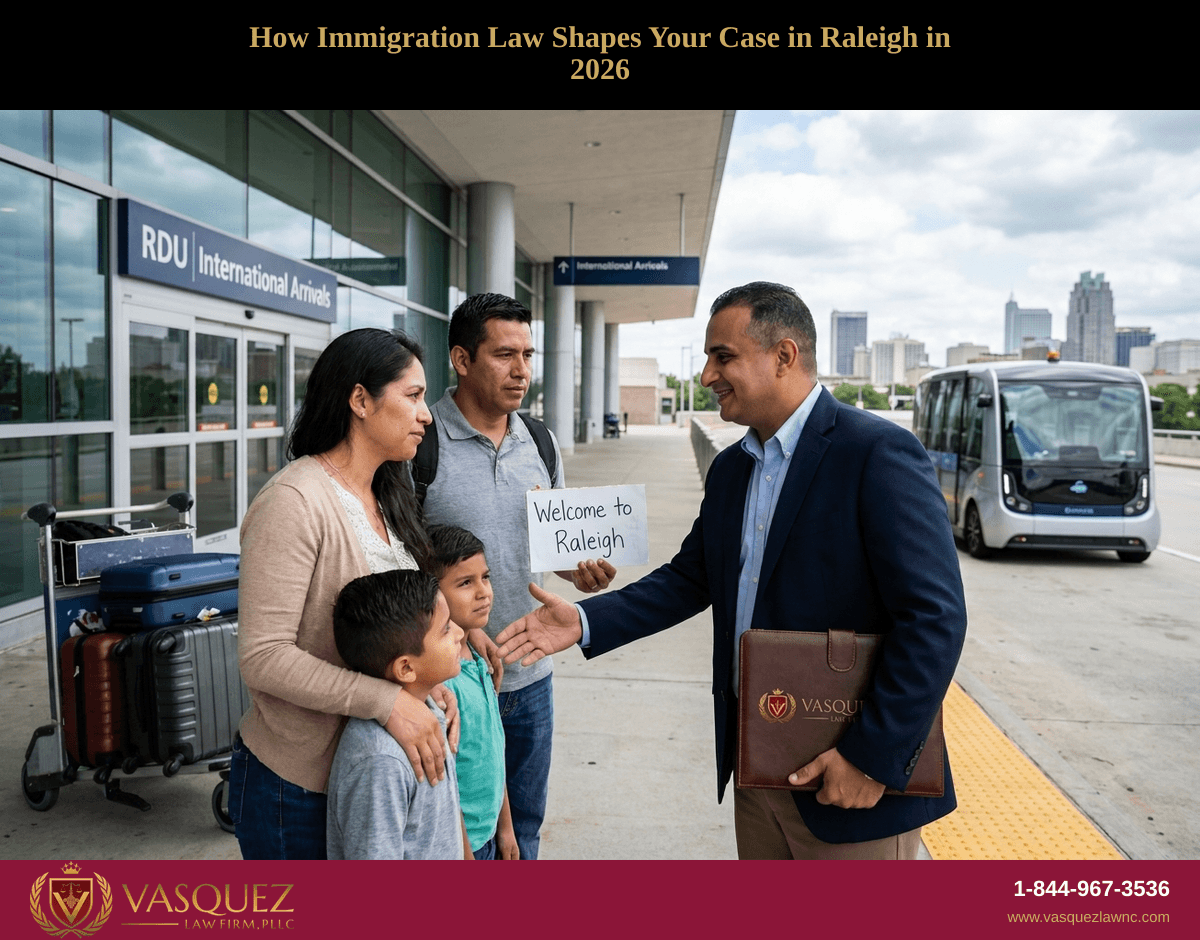
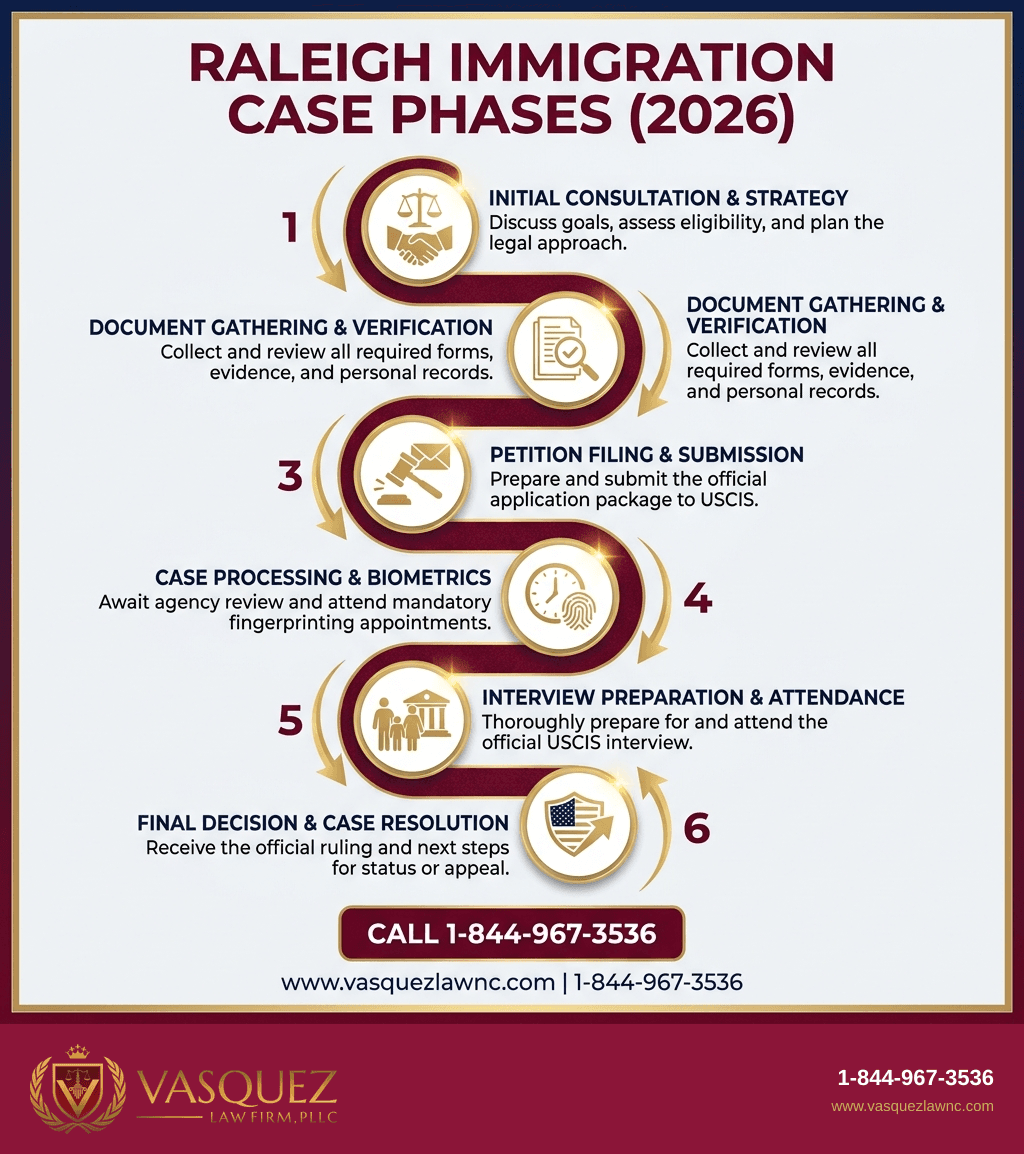
Timelines depend on the type of immigration benefit sought. For a typical adjustment of status (green card) case in Raleigh, processing may take 8-14 months in 2026.
- Week 1-4: Filing and receipt of your application by USCIS.
- Week 6-12: Biometric appointment notification and fingerprinting.
- Month 3-6: Possible USCIS interview appointment notice.
- Month 7-12: Interview at local USCIS office in Raleigh (or Orlando).
- Month 8-14: Final decision mailed; approval or denial.
Backlogs and RFEs can extend these times. USCIS updates these timelines at USCIS Processing Times. Planning accordingly and consulting your lawyer are important.
Jurisdiction Notes: Raleigh, Orlando, and Nationwide
North Carolina Notes
Raleigh-based applicants work with local USCIS offices for interviews and biometrics. Immigration courts in Charlotte and Raleigh handle removal cases. Local legal resources are vital due to regional processing variations.
Florida Notes
Orlando serves as a regional hub for USCIS interviews and immigration services. Business immigration consultations, such as H-1B or L-1 visas, are handled virtually by Vasquez Law Firm, reflecting modern practice trends.
Nationwide Concepts (General Only)
Federal immigration laws apply to all states, but local USCIS offices and immigration courts process cases at regional levels. National policies may change following federal administration shifts, impacting enforcement and relief options across the U.S.
When to Call an Immigration Lawyer Now
- Receiving a Notice to Appear for deportation proceedings
- Being charged with a crime while on a visa or permanent residency
- Denied visa or green card application
- Facing delays or suspicious Request for Evidence from USCIS
- Overstaying a visa or unauthorized employment
- Needing help with asylum or refugee status
- Receiving an ICE enforcement notification
- Applying for business visas remotely and seeking legal review
- Navigating family-based immigration petitions
- Renewing Deferred Action for Childhood Arrivals (DACA) protections
About Vasquez Law Firm
At Vasquez Law Firm, we combine compassion with aggressive representation. Our motto "Yo Peleo®" (I Fight) reflects our commitment to standing up for your rights.
- Bilingual Support: Se Habla Español — Spanish-speaking attorneys and staff available
- Service Areas: North Carolina, Florida, and nationwide immigration services
- Experience: Over 30 years helping clients navigate complex legal matters
- Results: Thousands of successful cases across multiple practice areas
Attorney Trust and Experience
William J. Vásquez is admitted to the North Carolina State Bar (2011) and to the U.S. Courts of Appeals for the 4th, 5th, and 11th Circuits. Florida-jurisdiction matters at the firm are handled by Florida Bar attorney Harold Estrada-Rodriguez (FL Bar No. 1041171). The firm has provided dedicated legal representation since 2011, with personalized attention to each client's case.
Don't wait to get the help you deserve. Call us now for immediate assistance.
Frequently Asked Questions
What are the main immigration laws in the United States?
The United States immigration laws are primarily governed by the Immigration and Nationality Act (INA). This federal law outlines visa categories, removal procedures, and eligibility requirements for various immigration benefits. Important statutes include 8 U.S.C. § 1255 on adjustment of status and 8 U.S.C. § 1227 detailing deportation grounds. These laws regulate who can enter, remain, or be removed from the U.S.
What happens if someone is caught violating immigration laws?
Violating immigration laws can lead to consequences such as removal proceedings, detention, and bars to future entry. The Executive Office for Immigration Review may order deportation for those found to have violated visa terms or entered unlawfully. Penalties vary depending on the violation, but can include permanent bans for unauthorized reentry. Timely legal assistance is crucial to protect your rights and explore relief options.
Can permanent residents be deported by ICE?
Yes, permanent residents may be deported by ICE under certain circumstances, especially if convicted of serious crimes or if they commit immigration violations. However, there are legal protections and relief that an immigration lawyer can pursue to prevent or delay removal. Understanding the grounds for deportation under INA § 237 is essential for permanent residents to protect their status.
What are the current illegal immigration laws in the U.S.?
Current laws define illegal immigration mainly as entering or remaining in the U.S. without authorization in violation of INA §§ 212 and 237. Enforcement has varied but generally includes removal proceedings, detention, and criminal penalties for some acts. Policies change often, so staying informed through reliable sources and legal advice is necessary in 2026.
How long does the immigration process typically take in 2026?
Processing times vary by case type and service center. For example, family-based adjustment of status applications (Form I-485) can take 8 to 14 months. USCIS publishes current times regularly; checking their official page helps applicants anticipate wait periods. Certain categories or backlogs can extend timelines significantly.
What documents are essential when applying for immigration benefits?
Important documents typically include valid passports, birth certificates, proof of lawful status, marriage certificates, and any prior immigration approvals. Evidence showing eligibility for the requested benefit and any history of legal issues must be submitted. Accurate paperwork helps avoid delays and adjudication denials.
How can an immigration lawyer in Raleigh or Orlando assist clients?
An immigration lawyer helps clients understand complex immigration laws, prepare accurate applications, respond to government requests, and represent them in court. They advise on eligibility, consequences of violations, and advocate for relief options. Local lawyers in Raleigh and Orlando also understand the nuances of regional immigration offices and courts.
What should I do if faced with deportation proceedings?
If notified of deportation proceedings, you should immediately contact an experienced immigration lawyer. They can assess your case, help gather evidence, and explore defenses or relief like cancellation of removal under INA § 240A(b). Acting quickly is critical to preserve your rights and avoid removal.
Sources and References
- U.S. Citizenship and Immigration Services (USCIS)
- Executive Office for Immigration Review
- Legal Information Institute
Take the first step toward justice today. Our team is standing by to help.
Start Your Free Evaluation Now
Call us: 1-844-967-3536
Se Habla Español - Estamos aquí para ayudarle.

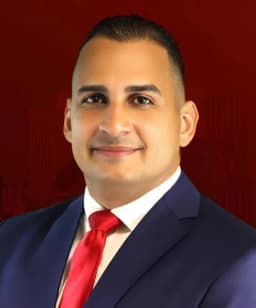
William Vasquez
Founder & CEO, Vasquez Law Firm, PLLC
William Vasquez is the founder and CEO of Vasquez Law Firm, PLLC, a results-driven firm specializing in immigration, criminal defense, personal injury, and workers' compensation. A U.S. Air Force veteran and recipient of the Joint Service Achievement Medal, William is dedicated to fiercely fighting for his clients' rights.
Related Legal Services
Need legal help? Learn more about immigration lawyers in North Carolina, or contact us for a free evaluation.
You can also visit NC immigration legal help for more information.
![Senator Gallego Plans Key DACA Amendments [2026]](/_next/image?url=https%3A%2F%2Fvuuyorlsmhunqektprqy.supabase.co%2Fstorage%2Fv1%2Fobject%2Fpublic%2Fblogs%2Fimmigration-header-1782501330049.png&w=1920&q=75)