What You Need to Know About the New Visa Program in 2026
Explore the latest updates on any new visa program in 2026. Understand eligibility, application steps, and key changes. Contact Vasquez Law for a free consultation today.
Published on February 22, 2026
Talk to an immigration attorney
Free call. A clear plan for your case.
Free & confidential · Se habla espanol · 24/7
Have questions? Talk to an attorney - free evaluation.
Call 1-844-967-3536Worried how the latest immigration news affects you?
Schedule a confidential case review with an immigration attorney - know exactly where you stand.
What You Need to Know About the New Visa Program in 2026
Navigating the complex landscape of U.S. immigration can be challenging, especially with potential changes to a new visa program or existing pathways. As of 2026, understanding the latest developments and requirements is crucial for anyone seeking to live, work, or study in the United States. This comprehensive guide from Vasquez Law Firm will help you understand potential new visa program initiatives, eligibility criteria, and the application process, ensuring you are well-prepared for any upcoming opportunities or modifications to immigration law. We are committed to providing up-to-date information and dedicated legal support.
Need help with your case? Our experienced attorneys are ready to fight for you. Se Habla Español.
Schedule Your Free Case Evaluation
Or call us now: 1-844-967-3536
Quick Answer
While no single, overarching new visa program has been fully enacted and implemented across all categories as of early 2026, the U.S. immigration system sees continuous adjustments and proposed legislation. Key areas of focus include:
- Potential expansions or modifications to existing visa categories (e.g., H-2B, Diversity Visa).
- Legislative proposals aimed at addressing specific labor shortages or humanitarian concerns.
- Ongoing updates to application procedures and digital processing requirements.
- The importance of staying informed through official government sources like USCIS and the Department of State.
Understanding the U.S. Immigration Landscape in 2026
The United States immigration system is dynamic, often influenced by economic needs, legislative priorities, and global events. In 2026, while there isn't one singular, massive new visa program that has completely reshaped the entire system, there are constant discussions and adjustments. These changes can range from temporary increases in specific visa caps, like the H-2B nonimmigrant visas mentioned in recent news, to potential long-term legislative efforts to create new pathways for certain workers or address undocumented populations. Staying informed about these nuances is paramount for anyone considering immigration.
For individuals and families across North Carolina and Florida, these changes directly impact their ability to pursue new opportunities. Vasquez Law Firm closely monitors all legislative and regulatory developments to provide our clients with the most accurate and timely advice. We understand that even minor adjustments to a new visa program or existing policies can have significant implications for your future in the U.S., which is why our proactive approach is so vital. Our goal is to demystify these complex legal processes for you.
Recent Legislative Proposals and Discussions
In 2026, the U.S. Congress continues to debate various immigration reforms. One notable area of discussion involves bipartisan efforts to create new visa program options, particularly for sectors facing labor shortages, such as home building and agriculture. These proposals often aim to streamline processes for temporary workers and provide more predictable legal pathways. While the legislative process can be slow and outcomes uncertain, these discussions highlight the ongoing recognition of the need for an adaptable immigration system.
Such proposals, if enacted, could introduce entirely new visa categories or significantly alter the eligibility and application processes for existing ones. For instance, a new visa program might focus on essential workers, offering a path to legal status for those critical to specific industries. Understanding the intent behind these legislative pushes helps applicants anticipate future opportunities and prepare accordingly. Vasquez Law Firm can help assess how any proposed legislation might affect your immigration goals.
Key Visa Categories and Potential Changes for 2026
While a brand new visa program might be on the horizon, many applicants will still interact with established visa categories that may see important adjustments. These categories include employment-based visas (H-1B, H-2B, O-1), family-sponsored visas, and the Diversity Visa (DV) lottery program. Each of these can undergo annual modifications in terms of quotas, eligibility, and application procedures, making expert guidance invaluable.
For example, the H-2B visa program, which allows U.S. employers to bring foreign nationals to the U.S. to fill temporary non-agricultural jobs, recently saw a temporary increase in its cap for Fiscal Year 2026. This type of adjustment, though not a completely new visa program, significantly expands opportunities for certain workers and employers. Similarly, the Electronic Diversity Visa program for 2027 (DV Lottery 2027) will open for registration in late 2026, providing a chance for individuals from countries with historically low rates of immigration to the U.S. to obtain a green card. Staying current on these specific program updates is essential.
Diversity Visa Program 2027: What to Know
The Diversity Immigrant Visa Program, often called the DV Lottery, is a crucial pathway for many aspiring immigrants. The registration period for the DV Lottery 2027 is expected to open in Fall 2026. This program makes up to 55,000 immigrant visas available annually for natives of countries with historically low rates of immigration to the United States. Eligibility requirements are strict and include specific educational or work experience criteria.
Applicants must carefully complete the DV lottery 2027 registration form online through the U.S. Department of State's website. Common mistakes include submitting multiple entries or providing incorrect information, which can lead to disqualification. Vasquez Law Firm can provide guidance on how to apply for DV Lottery 2027 correctly, ensuring all requirements are met. It is vital to follow all instructions precisely to maximize your chances in this highly competitive program.
Applying for a New Visa Program or Existing Visas: A Step-by-Step Guide
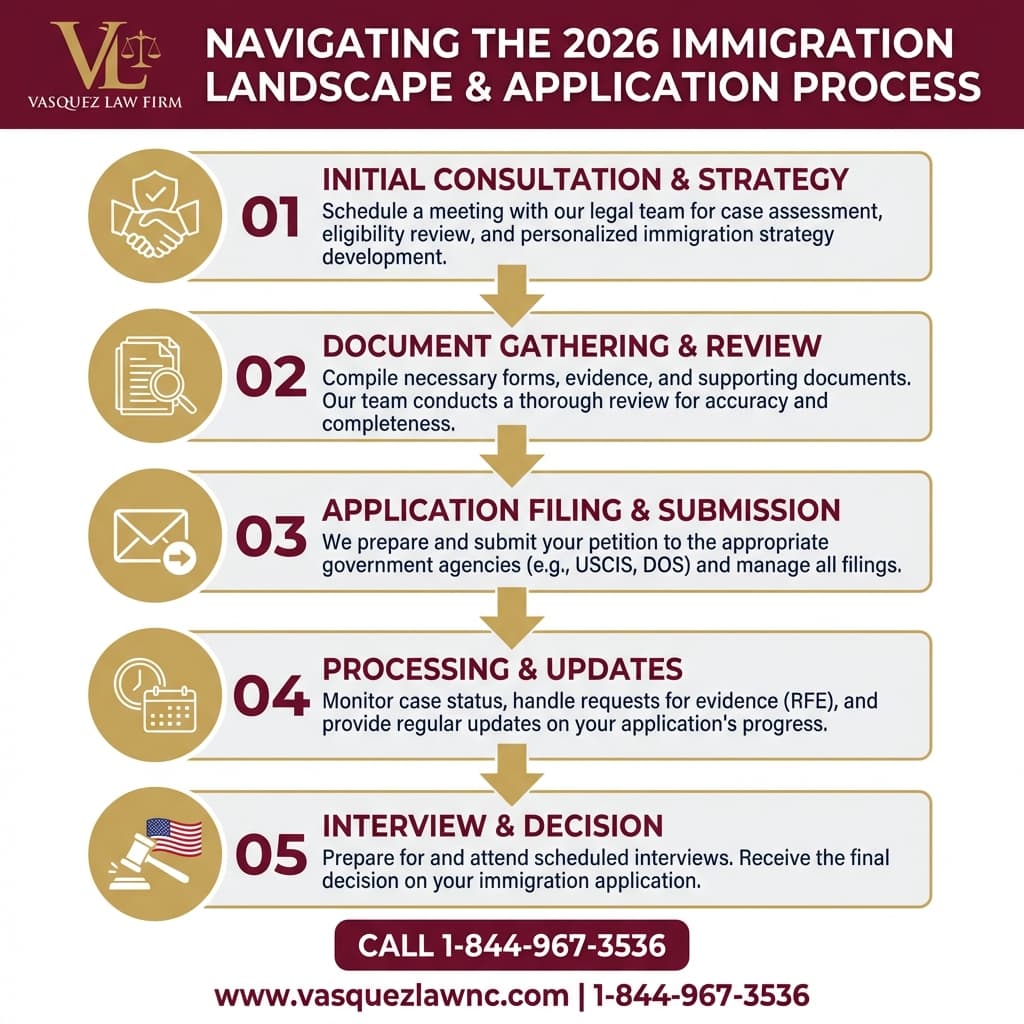
Whether you are pursuing a potentially new visa program or an established pathway, the application process demands meticulous attention to detail. Understanding each step is crucial to avoid delays or rejections. The general process often involves several key stages, from determining eligibility to attending interviews, each requiring careful preparation and adherence to specific guidelines set by USCIS and the U.S. Department of State.
For clients in Raleigh, North Carolina, or across Florida, our firm offers personalized assistance through every phase. We help compile necessary documentation, prepare forms, and provide representation, ensuring your application is robust and compliant. This proactive support is especially valuable when navigating any new visa program, as initial guidelines can be complex or subject to rapid updates. Our experience ensures you have the best possible chance for a successful outcome.
Step-by-Step Application Process
- Determine Eligibility: Research the specific visa category or new visa program to ensure you meet all criteria, including education, work experience, country of origin, and financial stability.
- Gather Required Documents: Collect all necessary paperwork, such as passports, birth certificates, marriage certificates, educational transcripts, employment letters, and financial records.
- Complete Application Forms: Fill out the appropriate forms accurately and completely. This might include forms like DS-260 for immigrant visas or DS-160 for nonimmigrant visas.
- Pay Fees: Pay all required application and processing fees to USCIS or the Department of State. Keep receipts for your records.
- Submit Petition/Application: File your application with the relevant government agency. For many immigrant visas, an employer or family member may need to file a petition on your behalf first.
- Attend Biometrics Appointment: If required, attend a biometrics appointment to provide fingerprints, photos, and signatures.
- Attend Interview: Prepare for and attend an interview at a U.S. embassy or consulate abroad, or a USCIS office in the U.S.
- Receive Decision: Await the decision on your visa application.
Essential Documents Checklist for Visa Applications
A successful visa application hinges on submitting a complete and accurate set of documents. Missing or incorrect information is a leading cause of delays and denials. This checklist provides a general overview, but specific requirements can vary greatly depending on the visa type and any new visa program guidelines. Always refer to the official instructions provided by USCIS or the Department of State for your specific application.
- Valid Passport (with at least six months validity beyond your intended period of stay).
- Birth Certificate (original or certified copy).
- Marriage Certificate (if applicable, original or certified copy).
- Previous Visa/Immigration Documents (e.g., I-94, previous visa stamps).
- Educational Transcripts and Diplomas (translated if not in English).
- Employment Letters or Contracts (detailing job duties, salary, and duration).
- Financial Statements (bank statements, tax returns, proof of assets).
- Police Certificates/Criminal Records (from all countries resided in for a certain period).
- Medical Examination Results (from an authorized physician).
- Photographs (meeting U.S. visa photo requirements).
- Affidavit of Support (Form I-864, if family-sponsored).
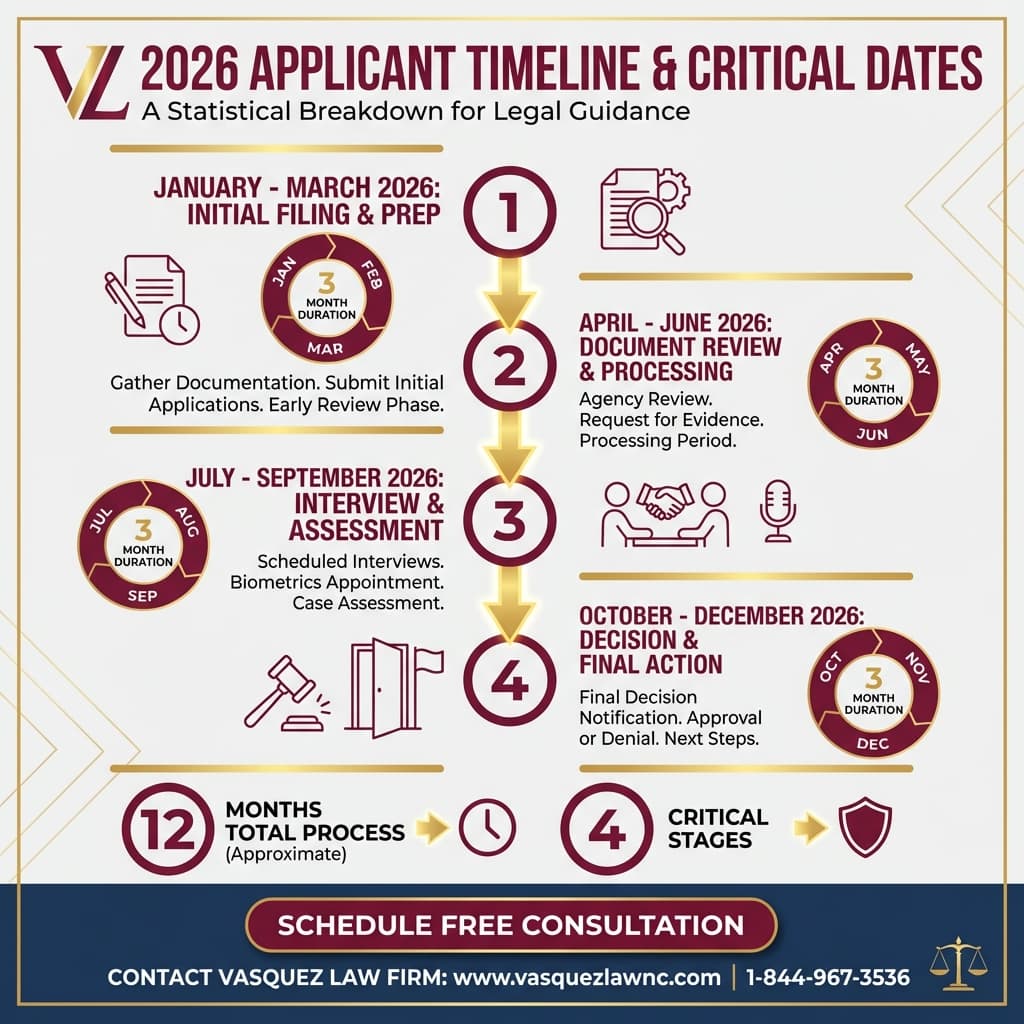
Timeline: What to Expect with Visa Processing
The processing time for any visa application, including those under a potential new visa program, can vary significantly. Factors such as the type of visa, the volume of applications, the specific USCIS service center or embassy handling your case, and the complexity of your situation all play a role. It's crucial to manage expectations and understand that patience is often required throughout the immigration journey.
- Initial Filing (1-3 months): After submitting your application, you typically receive a receipt notice.
- Biometrics Appointment (2-6 months): If required, you will be scheduled for a biometrics appointment.
- Request for Evidence (RFE) (Variable): If USCIS needs more information, they will send an RFE, which can extend the timeline. Responding promptly is critical.
- Interview Scheduling (6-18 months, or longer): Depending on the visa category and backlog, it can take many months for an interview to be scheduled.
- Final Decision (Variable): A decision is usually made shortly after the interview, but sometimes further review is needed.
- Visa Issuance (Weeks): Once approved, the visa is typically issued within a few weeks.
Costs and Fees: What Impacts the Price of a Visa Application
Applying for a U.S. visa involves various fees, which can add up considerably. These costs are subject to change and depend on the specific visa category, whether you are applying from within the U.S. or abroad, and if you require any waivers or additional services. Understanding these financial aspects upfront is crucial for proper planning, especially when considering a new visa program that might introduce its own fee structures.
Typical fees include filing fees for petitions and applications, biometrics fees, medical examination fees, and visa issuance fees. For some employment-based visas, employers may also incur premium processing fees to expedite review. Legal fees for attorney assistance are separate but often a wise investment to ensure accuracy and compliance. Vasquez Law Firm provides transparent information on all expected costs, helping you budget effectively.
Common Mistakes and How to Avoid Them
Even a small error in a visa application can lead to significant delays or even denial. With the complexity of immigration law and the potential for a new visa program to introduce new rules, avoiding common pitfalls is more important than ever. Many mistakes stem from a lack of understanding of specific requirements or insufficient preparation. Our firm frequently helps clients correct these errors, but prevention is always the best approach.
- Incomplete Forms: Always double-check that every required field on every form is filled out. Use N/A for fields that do not apply, rather than leaving them blank.
- Incorrect Information: Ensure all data, dates, and names match exactly across all submitted documents. Discrepancies can raise red flags.
- Missing Supporting Documents: Attach all required evidence and supporting documents. Use a checklist and organize your submission clearly.
- Failure to Translate Documents: Any document not in English must be accompanied by a certified English translation.
- Missing Deadlines: Pay close attention to submission deadlines, especially for programs like the Diversity Visa Lottery.
- Not Disclosing Criminal History: Always be truthful about any past arrests or convictions, even if expunged. Failure to disclose can lead to permanent bars.
- Providing False Information: Intentionally providing false information is immigration fraud and can result in severe penalties, including deportation and permanent inadmissibility.
- Ignoring RFEs: Respond to Requests for Evidence (RFEs) promptly and thoroughly. Failure to do so can lead to denial.
- Not Seeking Legal Counsel: Navigating complex immigration laws, especially with a new visa program, without legal guidance can lead to costly mistakes.
If you only remember one thing: Always be truthful and thorough in your application. Consult with an experienced immigration attorney to review your case before submission.
Immigration Law: Nationwide, North Carolina, and Florida
Immigration law in the United States is primarily federal, meaning that the core statutes and regulations, such as the Immigration and Nationality Act (INA) and those enforced by USCIS, apply uniformly across all states. This federal framework governs eligibility for any new visa program, existing visa categories, green cards, and citizenship. Therefore, the general principles discussed in this guide are applicable whether you are in North Carolina, Florida, or any other state.
North Carolina Specifics for Immigrants
While federal law dictates immigration status, state-specific policies in North Carolina can affect immigrants' daily lives. For instance, state laws govern driver's license eligibility, access to certain public benefits, and local law enforcement's interaction with federal immigration authorities. Our Raleigh office frequently assists clients across North Carolina, understanding the local nuances and how they intersect with federal immigration processes. We ensure that our advice considers both federal requirements and local implications for residents of cities like Raleigh and Charlotte.
Florida Specifics for Immigrants
Florida, with its significant immigrant population, also has state laws that impact non-citizens. These can include regulations regarding professional licenses, state-funded programs, and local government cooperation with federal immigration enforcement. Vasquez Law Firm has a strong presence in Florida, providing comprehensive immigration services and advocating for clients throughout the state. We are well-versed in navigating the specific challenges and opportunities that arise from Florida's unique legal and demographic landscape, ensuring effective representation for those seeking a new visa program or other immigration benefits.
Nationwide Concepts for Immigration
The federal nature of immigration law ensures that the fundamental criteria for a new visa program or any immigration benefit are consistent nationwide. Agencies like USCIS, Customs and Border Protection (CBP), and Immigration and Customs Enforcement (ICE) operate under federal mandates. This means that an approval for a visa or green card holds validity across all U.S. states. However, practical procedures, processing times, and resource availability can vary slightly between different federal offices and ports of entry across the country. Understanding this federal consistency, combined with local variations, is key to successful immigration.
When to Call an Immigration Lawyer Now
Navigating the intricacies of immigration law, especially with the potential for a new visa program or policy changes, can be overwhelming. While some cases might seem straightforward, the consequences of errors are severe. It is always wise to consult with an experienced immigration attorney, particularly if you encounter any of the following situations:
- You are unsure about your eligibility for a specific visa or a new visa program.
- You have a criminal record, even a minor one, which could affect your admissibility.
- You have previously been denied a visa or had an immigration petition rejected.
- You have received a Request for Evidence (RFE) or Notice of Intent to Deny (NOID) from USCIS.
- You are facing deportation or removal proceedings.
- You suspect you are a victim of immigration fraud or a scam.
- You have complex family situations or unusual circumstances not covered by standard guidelines.
- You are applying for a specialized visa (e.g., investor, extraordinary ability) with stringent requirements.
- You need assistance understanding and responding to new immigration policies or a new visa program.
- You want to ensure your application is as strong as possible to avoid delays and maximize success.
About Vasquez Law Firm
At Vasquez Law Firm, we combine compassion with aggressive representation. Our motto "Yo Peleo" (I Fight) reflects our commitment to standing up for your rights and tirelessly pursuing justice for our clients. We understand the profound impact immigration matters have on individuals and families, which is why we approach every case with dedication and a personal touch. Our team is equipped to handle a wide range of immigration challenges, from visa applications to complex deportation defense.
- Bilingual Support: Se Habla Español - our team is fully bilingual, ensuring clear and effective communication throughout your legal journey.
- Service Areas: We proudly serve clients across North Carolina and Florida, offering nationwide immigration services for federal cases.
- Experience: With over 15 years of dedicated legal experience, Attorney Vasquez has a proven track record of helping clients navigate complex legal matters successfully.
- Results: We are committed to achieving favorable outcomes, having handled thousands of successful cases across multiple practice areas, including immigration, personal injury, and workers' compensation.
Attorney Trust and Experience
Attorney Vasquez holds a Juris Doctor degree and is admitted to practice in both the North Carolina State Bar and Florida Bar. With over 15 years of dedicated legal experience, he has built a reputation for providing personalized attention and achieving favorable outcomes for his clients. His deep understanding of immigration law, coupled with a compassionate yet aggressive approach, makes Vasquez Law Firm a trusted advocate for your legal needs. We are here to fight for you.
Don't face your legal challenges alone. Our team is here to help you every step of the way.
Call today: 1-844-967-3536 | Se Habla Español
Frequently Asked Questions
What exactly is a "new visa program" and how does it differ from existing visas?
A "new visa program" typically refers to a completely new category of visa created by Congress or through executive action, designed to address specific needs not covered by existing law. This differs from existing visas, which are established categories like H-1B or F-1 that might undergo modifications in eligibility or quotas. A new program would establish entirely new criteria and purposes, such as addressing a specific labor shortage or providing humanitarian relief, requiring new application forms and processes not previously available.
Are there any significant new U.S. visa rules or changes for 2026?
As of 2026, while no single, sweeping new visa program has been fully enacted, the U.S. immigration system has seen continuous adjustments. These include temporary cap increases for certain nonimmigrant visas, refined digital application processes, and ongoing legislative discussions for specialized worker visas. The Department of State and USCIS regularly update their guidelines, making it crucial to monitor official sources for the latest information on any new visa program or rule adjustments. Vasquez Law Firm stays current on these changes to advise clients effectively.
How can I apply for the Diversity Visa (DV) Lottery 2027?
The registration period for the Electronic Diversity Visa (DV) Lottery 2027 is anticipated to open in late 2026, typically in October. You must submit your entry online through the official U.S. Department of State website, dvprogram.state.gov. It's crucial to follow all instructions precisely, provide accurate information, and submit only one entry per eligible person (or one per spouse, if applicable). Mistakes can lead to disqualification. Consulting an attorney can help ensure your application is correctly prepared.
What are the common eligibility requirements for a new visa program?
While specific requirements for any new visa program would depend on its legislative intent, common eligibility factors often include having a valid passport, meeting specific educational or work experience criteria, demonstrating financial self-sufficiency, passing background checks, and proving non-inadmissibility grounds. Some programs might target specific nationalities or professions. It is essential to carefully review the official guidelines once a new program is announced to understand all prerequisites and ensure you meet them before applying.
How long does the application process take for a new visa program?
The processing time for any new visa program would depend on various factors, including the program's design, the volume of applications, and the resources allocated to processing by USCIS or the Department of State. Historically, new programs can experience significant backlogs initially. It could range from several months to over a year or more. It is always best to assume a lengthy process and to prepare thoroughly, submitting all required documentation accurately and promptly to avoid unnecessary delays.
Can Vasquez Law Firm help me with applying for a new visa program?
Yes, Vasquez Law Firm specializes in U.S. immigration law and is fully equipped to assist clients with understanding and applying for any new visa program or existing visa categories. Our experienced attorneys stay current on all legislative changes and regulatory updates from USCIS and the Department of State. We can help assess your eligibility, prepare and review your application, gather supporting documents, and represent you throughout the process, ensuring accuracy and increasing your chances of success. Se Habla Español.
What should I do if my visa application is denied under a new program?
If your visa application under a new visa program or any existing category is denied, it is crucial to understand the reason for the denial. The denial notice will typically provide this information. Depending on the reason, you might have options such as filing a motion to reconsider or reopen, appealing the decision, or reapplying if the issue can be corrected. Seeking immediate legal counsel from an immigration attorney is highly recommended to evaluate your options and determine the best course of action to address the denial effectively.
What are the most common reasons for visa application delays or denials?
Common reasons for visa application delays or denials include incomplete or inaccurate forms, missing supporting documentation, failure to meet eligibility criteria, past immigration violations, criminal history, or issues identified during background checks. For any new visa program, initial confusion over specific requirements can also lead to errors. Providing false information is a severe offense resulting in permanent inadmissibility. Ensuring meticulous attention to detail and seeking expert legal review can significantly reduce the risk of these issues.
How does a new visa program affect family-based immigration?
A new visa program could potentially affect family-based immigration in several ways, depending on its specific design. It might create new pathways for certain family members, or it could indirectly impact processing times for existing family petitions if it shifts resources within USCIS. However, most new programs are designed to address specific economic or humanitarian needs and typically operate independently of the established family-preference categories under the Immigration and Nationality Act. It is important to review the program's specifics to understand any direct or indirect impact on family reunification.
Where can I find official information about any new visa program announcements?
Official information about any new visa program or changes to existing immigration policies will always be announced by authoritative U.S. government sources. The primary resources include the U.S. Citizenship and Immigration Services (USCIS) website (uscis.gov) and the U.S. Department of State website (travel.state.gov). These sites provide the most accurate and up-to-date details on eligibility, application procedures, and deadlines. It is critical to rely solely on these official sources to avoid misinformation and potential scams.
Sources and References
- U.S. Citizenship and Immigration Services (USCIS)
- U.S. Department of State
- Executive Office for Immigration Review (EOIR)
- 8 U.S. Code § 1101 - Definitions
Need immigration help? Our immigration attorneys can review your case.
Ready to take the next step? Contact Vasquez Law Firm today for a free, confidential consultation. We're committed to fighting for your rights and achieving the best possible outcome for your case.
Start Your Free Case Evaluation Now
Call us: 1-844-967-3536
Se Habla Español - Estamos aquí para ayudarle.
William Vasquez
Founder & CEO, Vasquez Law Firm, PLLC
William Vasquez is the founder and CEO of Vasquez Law Firm, PLLC, a results-driven firm specializing in immigration, criminal defense, personal injury, and workers' compensation. A U.S. Air Force veteran and recipient of the Joint Service Achievement Medal, William is dedicated to fiercely fighting for his clients' rights.
Related Legal Services
Need legal help? Learn more about our immigration law practice, or contact us for a free evaluation.
You can also visit North Carolina immigration lawyers for more information.