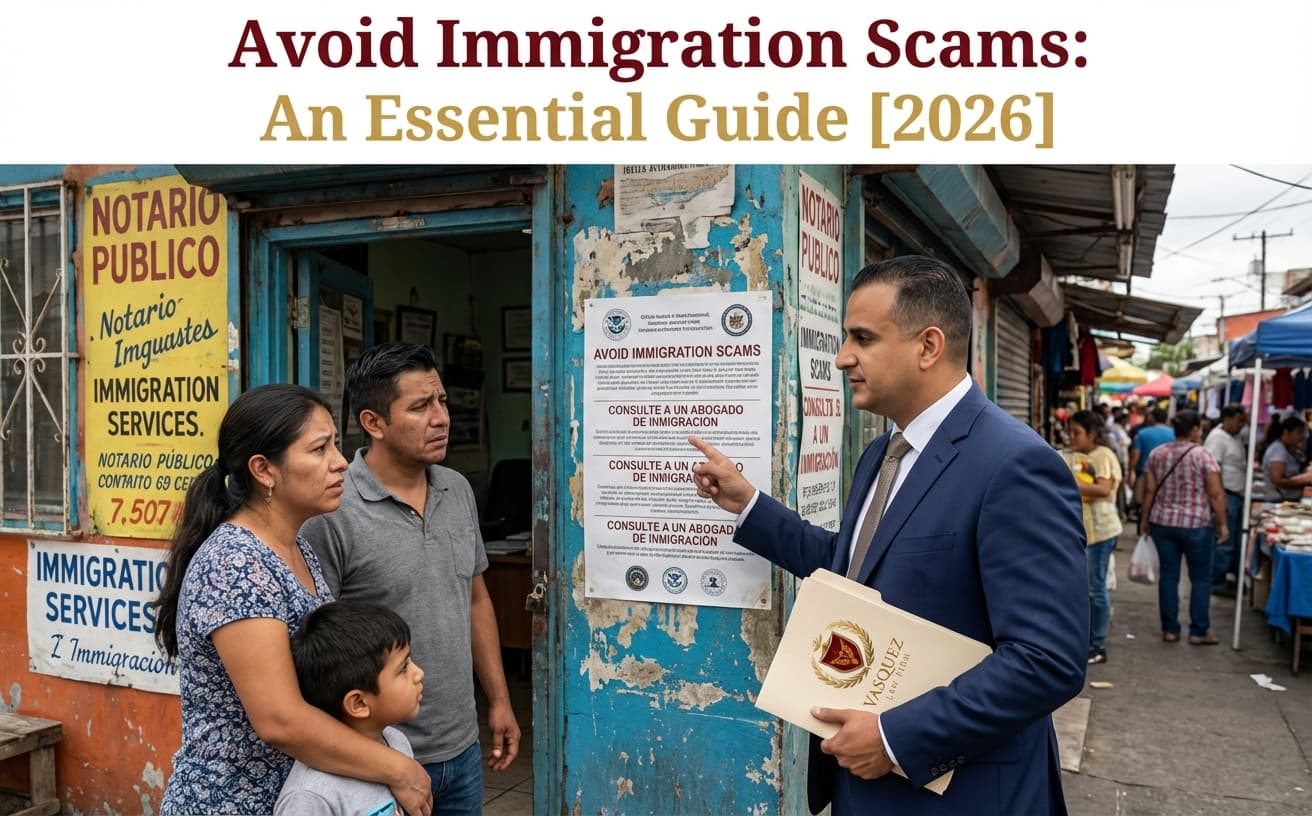
What You Need to Know About US Immigration Detention in 2026
Understand US immigration detention, facilities, and your rights in 2026. Get critical insights and contact Vasquez Law Firm for a free consultation today.
Published on February 23, 2026
Talk to an immigration attorney
Free call. A clear plan for your case.
Free & confidential · Se habla espanol · 24/7
Have questions? Talk to an attorney - free evaluation.
Call 1-844-967-3536Worried how the latest immigration news affects you?
Schedule a confidential case review with an immigration attorney - know exactly where you stand.
What You Need to Know About US Immigration Detention in 2026
Navigating the complexities of US immigration detention can be a daunting and often frightening experience for individuals and their families. As of 2026, understanding the system, knowing your rights, and having access to reliable legal counsel are more crucial than ever. This comprehensive guide from Vasquez Law Firm aims to demystify the process, explain the various types of detention facilities, and provide actionable steps if you or a loved one is detained by immigration authorities. We cover everything from the initial detainment to seeking release and what to expect during this challenging time. Our goal is to empower you with knowledge and ensure you know where to turn for help.
Need help with your case? Our experienced attorneys are ready to fight for you. Se Habla Español.
Schedule Your Free Case Evaluation
Or call us now: 1-844-967-3536
Quick Answer
US immigration detention involves holding non-citizens suspected of immigration violations, or those awaiting immigration court proceedings, in facilities managed by Immigration and Customs Enforcement (ICE). These facilities range from dedicated ICE detention centers to contract jails. Detainees often have due process rights, including the right to legal representation and bond hearings, though these vary by individual circumstances and immigration status. Seeking legal counsel immediately is critical for navigating this complex system effectively.
- ICE detains non-citizens for various immigration violations.
- Facilities include ICE detention centers and contract jails.
- Detainees may have rights to legal counsel and bond hearings.
- Legal representation is crucial for navigating the detention process.
- The ICE Detainee Locator System helps find detained individuals.
- Conditions and procedures vary significantly across detention centers.
Understanding US Immigration Detention
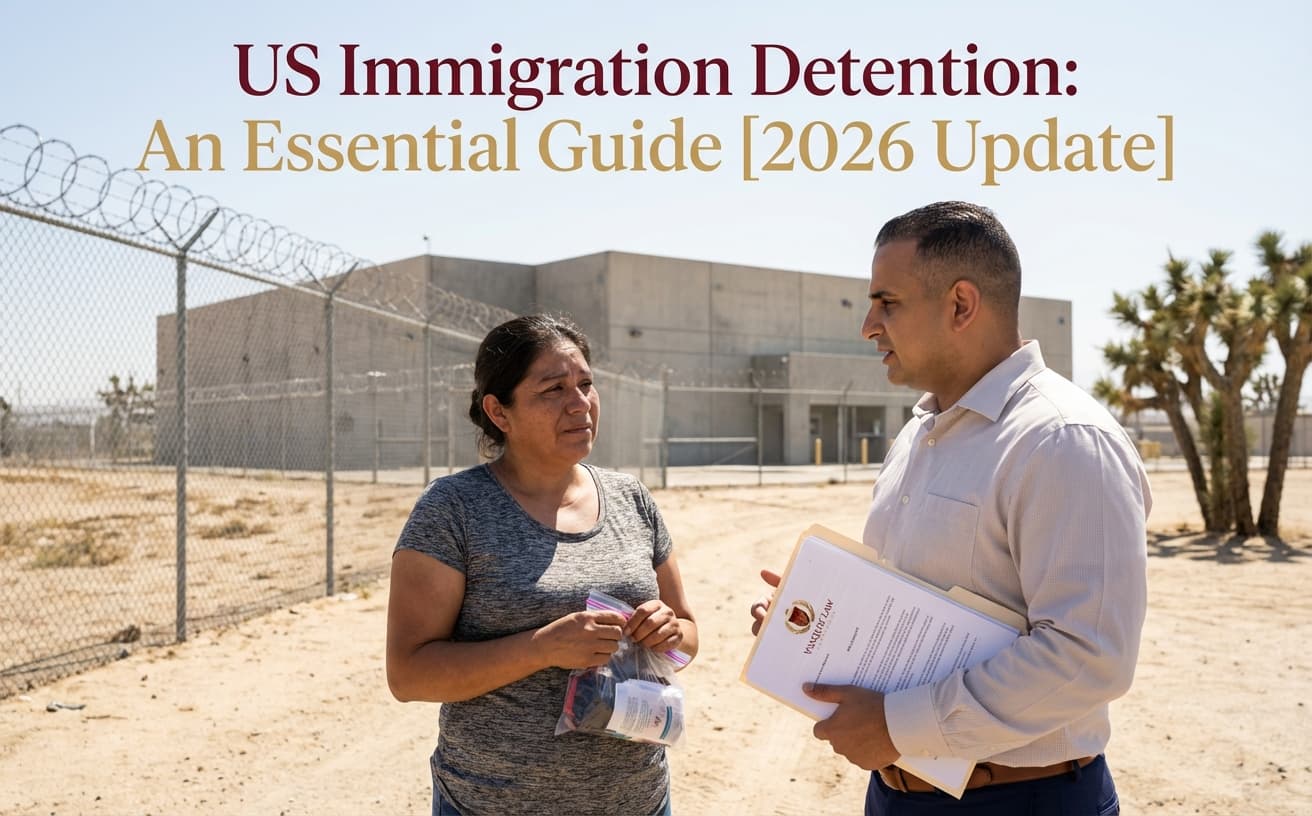
US immigration detention refers to the practice of holding non-citizens in custody while their immigration cases are pending or while awaiting deportation. This system is primarily managed by U.S. Immigration and Customs Enforcement (ICE), an agency within the Department of Homeland Security. Individuals can be detained for a variety of reasons, including unlawful entry, visa overstay, criminal convictions, or violations of immigration law. The primary purpose is to ensure individuals appear for their immigration court hearings and to facilitate their removal from the U.S. if ordered.
The legal framework for immigration detention is complex, drawing from the Immigration and Nationality Act (INA) and various regulations. Unlike criminal detention, immigration detention is considered civil, not punitive. However, the conditions in many immigration detention centers can be challenging, often mirroring those of criminal jails. It is essential for anyone facing this situation to understand their rights and the pathways available for potential release, such as applying for bond or seeking asylum. Vasquez Law Firm has extensive experience helping clients navigate these challenges in North Carolina, Florida, and nationwide.
Who Gets Detained by ICE?
ICE detains a broad range of non-citizens. This can include individuals apprehended at the border, those encountered within the U.S. who are out of status, or even lawful permanent residents with certain criminal convictions. The decision to detain often depends on factors such as flight risk, danger to the community, criminal history, and the strength of their immigration claim. For example, an individual with a serious criminal record is more likely to be detained without bond than someone with no criminal history seeking asylum.
The criteria for mandatory detention are outlined in the INA, particularly for those with certain criminal offenses. However, many individuals are subject to discretionary detention, where an immigration judge or ICE officer has the authority to grant bond. Understanding these nuances is critical, as it directly impacts an individual's chances of release. Our attorneys can assess your specific situation and advocate for the best possible outcome, whether you are in an immigration detention center in Orlando or elsewhere.
Types of Immigration Detention Facilities
When an individual is placed in US immigration detention, they are typically held in one of several types of facilities. These vary significantly in terms of management, conditions, and resources available to detainees. Understanding the differences can help families and legal representatives better assist their loved ones. ICE operates a network of facilities directly, but also relies heavily on contracts with local jails and private companies, which often leads to inconsistencies in standards and access to services.
One common type is an ICE-owned and operated processing center, designed specifically for immigration detainees. These facilities, while still restrictive, may offer more immigration-specific resources than county jails. However, the majority of detainees are held in contract facilities, which are local or county jails that have agreements with ICE to house immigrants. These contract jails often blend immigration detainees with the general criminal population, leading to concerns about access to legal resources, medical care, and appropriate living conditions. Vasquez Law Firm works with clients detained in various facilities across North Carolina and Florida.
ICE Detention Centers vs. Contract Jails
Dedicated ICE detention centers are facilities primarily or solely used for immigration detention. These centers are often larger and may have more specialized staff trained in immigration law and procedures. Examples include the Stewart Detention Center in Georgia or the Krome Service Processing Center in Miami, Florida. While these facilities are still restrictive, they are generally designed with the unique needs of immigration detainees in mind, such as access to law libraries and visitation schedules tailored for legal counsel.
In contrast, contract jails are local or county correctional facilities that hold immigration detainees alongside their criminal populations. These arrangements are cost-effective for ICE but can present significant challenges for detainees. Access to legal counsel, family visits, and culturally appropriate services may be limited. The conditions in these facilities can vary widely, and detainees may face difficulties communicating with family or attorneys. Knowing which type of facility an individual is in is the first step in providing effective legal support.
Finding a Detained Loved One: The ICE Detainee Locator
One of the most immediate concerns for families when a loved one is placed in US immigration detention is locating them. ICE provides a crucial tool for this purpose: the Online Detainee Locator System. This system allows individuals to search for immigration detainees held in ICE custody. It is an essential first step for family members and attorneys trying to establish contact and begin the legal process.
To use the ICE Detainee Locator, you will typically need the detainee's A-number (Alien Registration Number) or biographical information such as their full name, date of birth, and country of birth. The system provides information on the facility where the individual is held and, in some cases, basic details about their immigration case. It's important to note that the system may not update immediately, and sometimes, information for recently detained individuals might not be available for a few days. If you're having trouble locating someone, an experienced immigration attorney can often assist with the search.
How to Use the ICE Detainee Locator System
- Gather Information: Collect the detainee's full legal name, date of birth, and country of birth. If available, their A-number (a 9-digit number starting with '0' or '2') is the most efficient way to search.
- Access the System: Go to the official ICE Online Detainee Locator System website. You can typically find this by searching for "ICE Detainee Locator" or visiting ICE's official website.
- Enter Search Criteria: Input the required information. You can search by A-number or by biographical details.
- Review Results: The system will display the detention facility where the individual is located, along with contact information for that facility.
- Contact the Facility: Once located, you can contact the facility directly to inquire about visitation, sending money, or communicating with the detainee. Remember that only certain individuals may be authorized for visits.
Rights of Detained Immigrants and Due Process
Even while in US immigration detention, non-citizens retain important rights under U.S. law and the Constitution. These due process rights are critical for ensuring fair treatment and providing an opportunity to present their case for release or to remain in the country. Understanding these rights is fundamental for anyone facing detention, and legal representation plays a vital role in asserting them effectively. Detained immigrants have the right to challenge their detention, seek bond, and present their case before an immigration judge.
Key rights include the right to legal counsel (though not at government expense), the right to a bond hearing, the right to present evidence, and the right to appeal adverse decisions. Detainees also have the right to humane treatment, including adequate medical care and protection from abuse. However, enforcing these rights can be challenging within the detention system, making the assistance of a knowledgeable immigration attorney in Orlando, North Carolina, or nationwide invaluable. An attorney can ensure that all legal avenues are explored and that the detainee's voice is heard in court.
Applying for an Immigration Bond
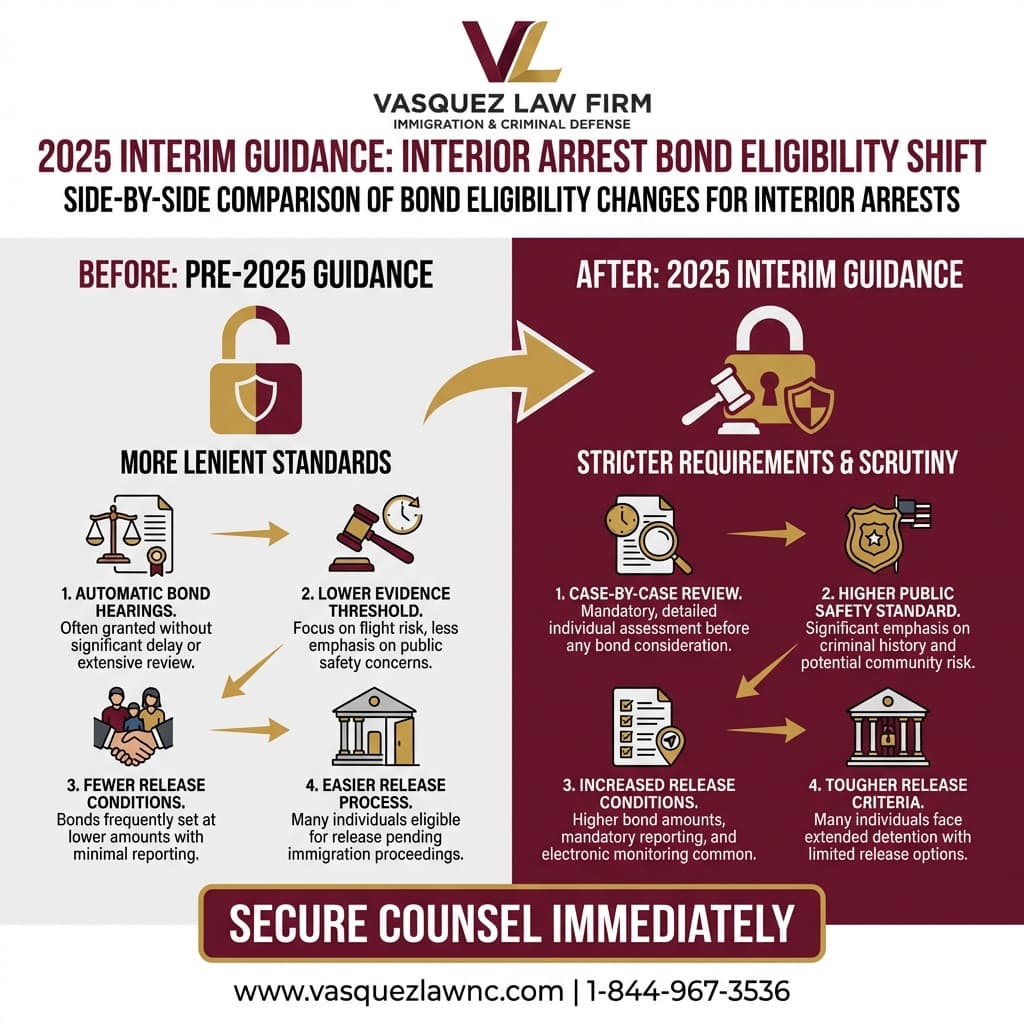
One of the most common ways to secure release from US immigration detention is through an immigration bond. An immigration bond is a sum of money paid to the Department of Homeland Security (DHS) to ensure that a detained non-citizen will appear for all future immigration court hearings. If the individual attends all their hearings, the bond amount is typically returned. The decision to grant bond, and the amount of the bond, is usually made by an immigration judge or, in some cases, by an ICE officer.
Factors considered when determining bond eligibility and amount include the detainee's ties to the community, criminal history, flight risk, and whether they pose a danger to the community. Individuals seeking asylum, for example, may have a stronger case for bond if they can demonstrate credible fear and community ties. An attorney can help prepare a strong bond application, gather supporting evidence, and present the case persuasively before an immigration judge. For more detailed information, refer to 8 C.F.R. § 236.1 regarding the apprehension and detention of aliens.
The Immigration Court Process While Detained
For individuals in US immigration detention, the immigration court process often proceeds more quickly than for those not detained. This expedited timeline means that legal representation is even more critical. Detained individuals will typically have their initial hearing, known as a Master Calendar Hearing, where they meet an immigration judge, state their plea, and identify any forms of relief they wish to pursue, such as asylum, cancellation of removal, or adjustment of status.
Subsequent hearings, including individual hearings, are scheduled to present evidence and arguments. Throughout this process, the detainee has the right to legal counsel, though at their own expense. Communication with an attorney, preparation of documents, and understanding complex legal terms can be incredibly difficult from within an immigration detention center. An experienced immigration lawyer, such as Attorney Vasquez, can navigate the court system, prepare necessary paperwork, and advocate vigorously on behalf of the detained individual. For official information on the court system, visit the Executive Office for Immigration Review (EOIR) website.
What to Expect in Immigration Court
- Master Calendar Hearing: This is the first appearance before an immigration judge. The judge will explain the charges, and the detainee (or their attorney) will enter a plea.
- Individual Hearing: If relief from removal is sought, an individual hearing will be scheduled. This is where evidence is presented, witnesses may testify, and the attorney makes legal arguments.
- Appeals: If the immigration judge's decision is unfavorable, an appeal can be filed with the Board of Immigration Appeals (BIA) and, in some cases, to a federal court of appeals.
- Legal Counsel: While you have the right to an attorney, the government does not provide one. It is crucial to secure private counsel to represent your interests effectively.
- Evidence Presentation: Detainees must gather and present evidence supporting their case, which can include documents, testimonials, and expert opinions.
Don't face your legal challenges alone. Our team is here to help you every step of the way.
Call today: 1-844-967-3536 | Se Habla Español
Common Mistakes to Avoid in Detention
Being in US immigration detention is a stressful situation, and it's easy to make mistakes that could negatively impact your case. Awareness of these common pitfalls can help you protect your rights and improve your chances of a favorable outcome. The most critical mistake is often trying to navigate the complex legal system without proper legal representation. Immigration law is constantly evolving, and a misstep can have severe, long-lasting consequences, including deportation.
Another common error is signing documents without fully understanding their implications. ICE agents may present documents that appear benign but could waive important rights or lead to voluntary departure, which can bar future re-entry. Always ask to speak with an attorney before signing any paperwork. Additionally, providing inconsistent statements or failing to disclose relevant information to your attorney can weaken your case. Honesty and transparency with your legal team are paramount. For guidance on avoiding scams, see our guide on how to avoid immigration scams.
How to Avoid Them:
- Don't Sign Without Legal Review: Never sign any document presented by an ICE agent or detention officer without first having an attorney review it. You have the right to consult with counsel.
- Remain Silent About Your Case: You are not required to discuss the details of your immigration case with anyone other than your attorney. Anything you say can be used against you.
- Do Not Misrepresent Facts: Always be truthful with your attorney. Inconsistent information can harm your credibility with the court.
- Keep Track of Your A-Number: This number is crucial for locating you and accessing your case information. Memorize it or ensure a trusted family member has it.
- Understand Your Bond Options: Do not assume you are not eligible for bond. Always discuss bond possibilities with your attorney.
- Communicate with Family: Ensure your family knows how to contact your attorney or find you through the ICE Detainee Locator.
- Attend All Hearings: Missing an immigration court hearing can result in an order of removal (deportation) in absentia.
If you only remember one thing: Always assert your right to legal counsel and do not sign anything or make statements without consulting your attorney first. This is your strongest defense while in US immigration detention.
NC, FL, and Nationwide Notes on Immigration Detention
While US immigration detention is a federal system, the practicalities and experiences can vary significantly depending on the state and specific facility. Vasquez Law Firm serves clients in both North Carolina and Florida, as well as providing nationwide immigration services. Understanding these regional differences can be crucial for families and attorneys.
North Carolina Immigration Detention
In North Carolina, individuals in immigration detention may be held in county jails that contract with ICE, such as those in Stewart, Georgia (for individuals apprehended in the Southeast), or other local facilities. Access to legal services and visitation can be challenging due to location and facility-specific rules. Our firm has experience working with detainees and their families across North Carolina, helping them navigate the local nuances of the federal system. We understand the local courts and resources available.
Florida Immigration Detention
Florida, with its large immigrant population and proximity to international borders, has several significant immigration detention centers, including the Krome Service Processing Center in Miami and the Glades County Detention Center. The legal landscape in Florida can be particularly complex due to the volume of cases and the diverse backgrounds of detainees. Our Orlando-based office is well-positioned to assist clients detained in Florida facilities, providing timely and effective legal representation to those facing immigration detention in the state.
Nationwide Immigration Concepts (General Only, Rules Vary)
Across the nation, the fundamental principles of US immigration detention and due process rights remain consistent due to federal law. However, the application of these laws, the availability of legal aid, and the conditions within facilities can differ. For instance, some states have policies that limit local law enforcement's cooperation with ICE (sanctuary policies), while others facilitate it. Regardless of location, the need for competent legal counsel is universal. Vasquez Law Firm extends its immigration services nationwide, ensuring that clients receive dedicated advocacy no matter where they are detained, always adhering to federal immigration law (8 U.S.C. Chapter 12).
When to Call a Lawyer Now
The moment you or a loved one is placed in US immigration detention is not the time to delay. Early legal intervention can significantly impact the outcome of an immigration case. An attorney can immediately begin working to locate the individual, assess their eligibility for bond, and prepare a defense against deportation. Waiting can lead to missed deadlines, lost opportunities for release, or even an order of removal. Our team at Vasquez Law Firm is ready to act swiftly and decisively.
Here are critical triggers indicating you should call an immigration lawyer immediately:
- A loved one has been detained by ICE or Border Patrol.
- You receive a Notice to Appear (NTA) in immigration court.
- ICE agents visit your home or workplace.
- You or a family member is facing deportation or removal proceedings.
- You believe you are eligible for an immigration bond but are being denied.
- You have a credible fear of returning to your home country and need to apply for asylum.
- You have been in the U.S. for a long time and fear being separated from your family.
- You need help navigating the ICE Detainee Locator System or contacting a detainee.
- You are unsure of your rights or what documents to sign.
About Vasquez Law Firm
At Vasquez Law Firm, we combine compassion with aggressive representation. Our motto "Yo Peleo" (I Fight) reflects our commitment to standing up for your rights and fighting tirelessly for justice. We understand the profound impact that immigration detention and legal challenges can have on individuals and families, and we approach every case with urgency and dedication.
- Bilingual Support: Se Habla Español - our team is fully bilingual, ensuring clear and effective communication with our diverse clientele.
- Service Areas: We proudly serve clients across North Carolina and Florida, offering comprehensive immigration services nationwide. Our expertise also extends to personal injury, workers' compensation, criminal defense, family law, and traffic cases within North Carolina.
- Experience: With over 15 years of dedicated legal experience, we have a proven track record of helping clients navigate complex legal matters and achieve favorable outcomes.
- Results: Attorney Vasquez has successfully handled thousands of cases, demonstrating a deep understanding of the law and a commitment to protecting our clients' futures.
Attorney Trust and Experience
Attorney Vasquez holds a Juris Doctor degree and is admitted to practice in both the North Carolina State Bar and Florida Bar. With over 15 years of dedicated legal experience, he has built a reputation for providing personalized attention and achieving favorable outcomes for his clients. His deep understanding of immigration law, coupled with a compassionate yet aggressive approach, makes him a trusted advocate for those facing the daunting challenge of US immigration detention. You can learn more about his background and commitment to justice on our attorneys page.
Don't face your legal challenges alone. Our team is here to help you every step of the way.
Call today: 1-844-967-3536 | Se Habla Español
Frequently Asked Questions
Where do immigrants go when they are detained?
Immigrants detained by ICE are typically held in dedicated ICE detention centers or in local and county jails that contract with ICE. These facilities are located across the country, including major hubs in Florida, Texas, Arizona, and California. The specific location often depends on where the individual was apprehended and the availability of space. You can use the ICE Online Detainee Locator System to find a detained individual.
How can I check if someone is in immigration detention?
You can check if someone is in US immigration detention using the ICE Online Detainee Locator System. You will need the detainee's A-number (Alien Registration Number) or their full name, date of birth, and country of birth. This online tool provides information about which facility is holding the individual and how to contact them. If you encounter difficulties, an immigration attorney can assist with the search.
What happens if you get detained by immigration?
If detained by immigration, you will typically be processed and held in an ICE facility or contract jail. You have the right to remain silent, to not sign any documents without understanding them, and to contact an attorney. You will likely face immigration court proceedings to determine your eligibility to remain in the U.S. or face deportation. Seeking legal counsel immediately is vital to protect your rights and explore options for release or relief.
Can I get released from immigration detention?
Yes, release from US immigration detention is possible through various avenues. Many individuals are eligible for an immigration bond, which allows for temporary release upon payment of a specified amount. Others may be released on their own recognizance or through parole. Eligibility depends on factors like criminal history, flight risk, and the strength of your immigration case. An experienced attorney can help assess your options and advocate for your release.
Do I have a right to a lawyer if I am in immigration detention?
Yes, you have the right to legal representation in US immigration detention proceedings. However, the government is not required to provide you with a lawyer if you cannot afford one. It is highly recommended to secure private legal counsel, as navigating the complex immigration system without an attorney significantly reduces your chances of a favorable outcome. Vasquez Law Firm offers free case evaluations to discuss your case.
How long can someone be held in immigration detention?
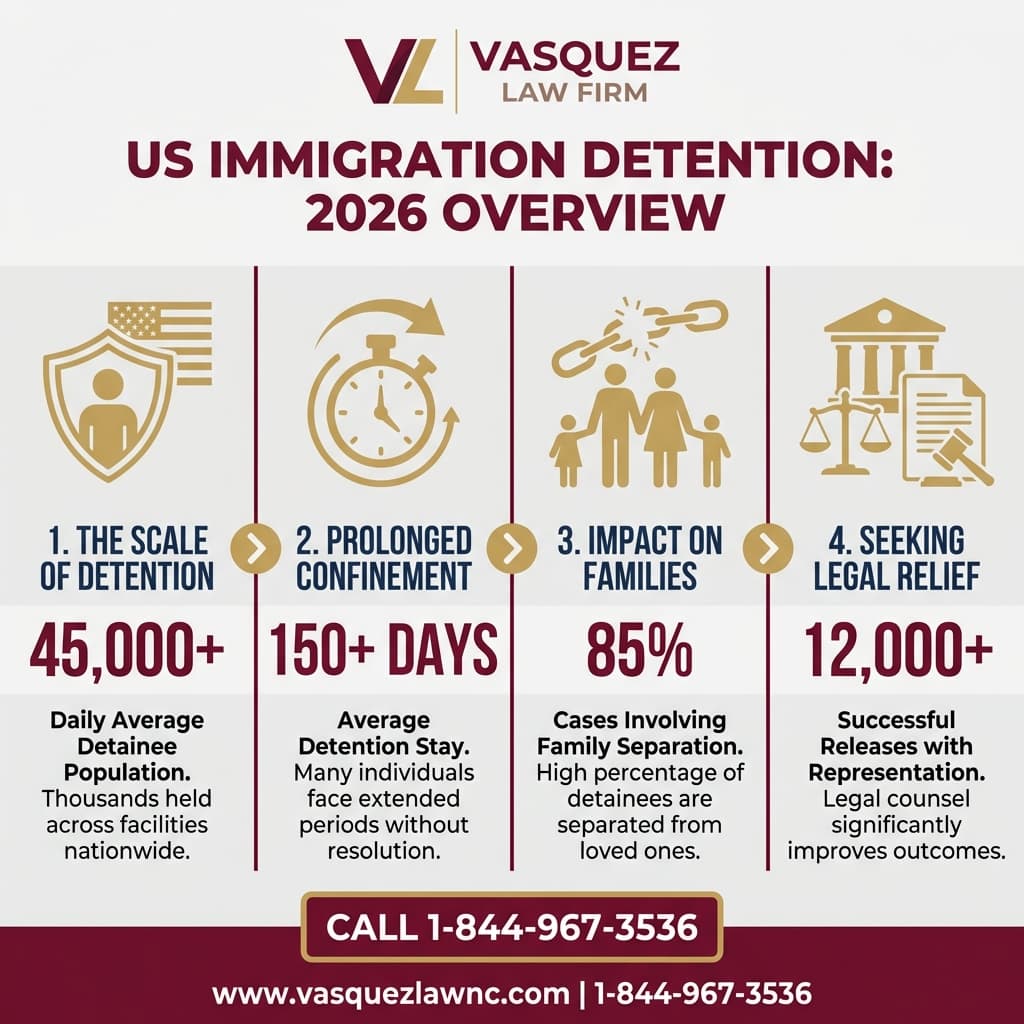
The length of time an individual can be held in US immigration detention varies widely. For some, it may be a few days or weeks until a bond hearing or initial court appearance. For others, particularly those facing mandatory detention or complex cases, detention can last for months or even years while their immigration proceedings unfold. There is generally no fixed time limit for civil immigration detention, making legal intervention crucial for expedited resolution.
What is the purpose of immigration detention centers?
The primary purpose of immigration detention centers is to ensure that non-citizens appear for their immigration court hearings and to facilitate their removal from the United States if ordered. These centers also serve to detain individuals deemed a flight risk or a danger to public safety while their immigration cases are pending. They are part of the broader immigration enforcement strategy managed by ICE.
Can detained immigrants receive visitors or communicate with family?
Yes, detained immigrants can generally receive visitors and communicate with family, though specific rules vary by facility. Visitation schedules, phone access, and mail policies are determined by each detention center. It is advisable to check the facility's website or contact them directly for their specific guidelines. Legal counsel can also help facilitate communication and ensure your rights are respected during your time in US immigration detention.
What is an A-number and why is it important in detention?
An A-number, or Alien Registration Number, is a unique nine-digit identification number assigned to non-citizens by the Department of Homeland Security. It is crucial in US immigration detention because it serves as the primary identifier for all immigration records and proceedings. Knowing an A-number is essential for locating a detained individual using the ICE Detainee Locator, accessing case information, and communicating with immigration authorities and legal counsel effectively.
How has US immigration detention changed in 2026?
As of 2026, US immigration detention policies continue to evolve with ongoing debates around border security, humanitarian concerns, and court backlogs. While the fundamental legal framework remains, there have been shifts in enforcement priorities and resource allocation. New court rulings and administrative directives may influence bond eligibility and processing times. Staying informed with expert legal advice is essential, as changes can impact individual cases and the overall detention landscape.
Sources and References
- U.S. Citizenship and Immigration Services (USCIS)
- Executive Office for Immigration Review (EOIR)
- U.S. Immigration and Customs Enforcement (ICE) Detainee Locator
- 8 U.S.C. Chapter 12 - Immigration and Nationality Act
- 8 C.F.R. § 236.1 - Apprehension, custody, detention and parole of aliens
Need immigration help? Our immigration attorneys can review your case.
Ready to take the next step? Contact Vasquez Law Firm today for a free, confidential consultation. We're committed to fighting for your rights and achieving the best possible outcome for your case.
Start Your Free Case Evaluation Now
Call us: 1-844-967-3536
Se Habla Español - Estamos aquí para ayudarle.


William Vasquez
Founder & CEO, Vasquez Law Firm, PLLC
William Vasquez is the founder and CEO of Vasquez Law Firm, PLLC, a results-driven firm specializing in immigration, criminal defense, personal injury, and workers' compensation. A U.S. Air Force veteran and recipient of the Joint Service Achievement Medal, William is dedicated to fiercely fighting for his clients' rights.
Related Legal Services
Need legal help? Learn more about immigration case consultation, or contact us for a free evaluation.
You can also visit NC immigration legal help for more information.