How to Spot Fake University Immigration Scams in 2026
Beware of fake university immigration scams in 2026. Learn how to identify fraudulent institutions and protect your visa status. Contact Vasquez Law Firm for help.
Published on February 20, 2026
Talk to an immigration attorney
Free call. A clear plan for your case.
Free & confidential · Se habla espanol · 24/7
Have questions? Talk to an attorney - free evaluation.
Call 1-844-967-3536Worried how the latest immigration news affects you?
Schedule a confidential case review with an immigration attorney - know exactly where you stand.
How to Spot Fake University Immigration Scams in 2026
The landscape of immigration in the United States is complex and ever-changing, making it a target for fraudulent schemes. One particularly insidious threat is fake university immigration scams, which can jeopardize a student's visa status and future in the country. These deceptive institutions often promise easy admission and visa sponsorship, only to leave international students in legal peril. Understanding how these scams operate and knowing the critical steps to protect yourself is essential in 2026. This guide will equip you with the knowledge to identify and avoid fake university immigration traps.
Need help with your case? Our experienced attorneys are ready to fight for you. Se Habla Español.
Schedule Your Free Case Evaluation
Or call us now: 1-844-967-3536
Quick Answer: Protecting Yourself from Fake University Immigration Schemes
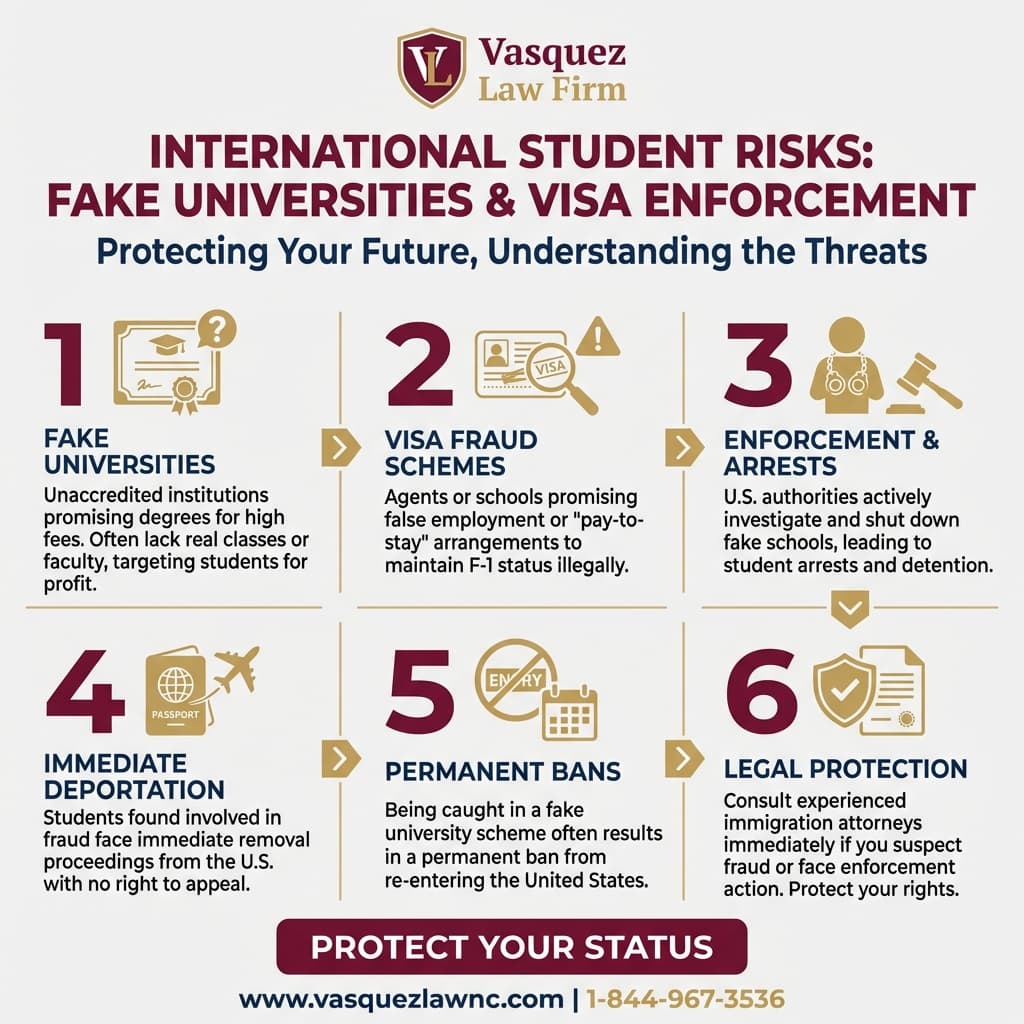
Fake university immigration schemes are fraudulent operations that enroll international students primarily to maintain their F-1 visa status, without providing legitimate education. These institutions often lack proper accreditation, offer no real classes, and can lead to severe immigration consequences for unsuspecting students, including visa revocation and deportation. Identifying red flags and seeking legal counsel is crucial to avoid becoming a victim.
- Verify accreditation with official U.S. Department of Education databases.
- Research the university's physical campus, faculty, and course offerings.
- Be wary of promises for easy visa approval or guaranteed admission.
- Consult an experienced immigration attorney before committing to any institution.
- Understand your F-1 visa responsibilities and maintain active academic engagement.
The Threat of Fake University Immigration Scams in 2026
Fake university immigration scams pose a significant threat to international students seeking education in the United States. These schemes exploit the desire for higher education and the complexities of the U.S. immigration system. Typically, these fraudulent institutions exist primarily on paper, or with minimal facilities, offering little to no actual instruction. Their main purpose is to allow foreign nationals to maintain F-1 student visa status without legitimate academic pursuit, often for a fee.
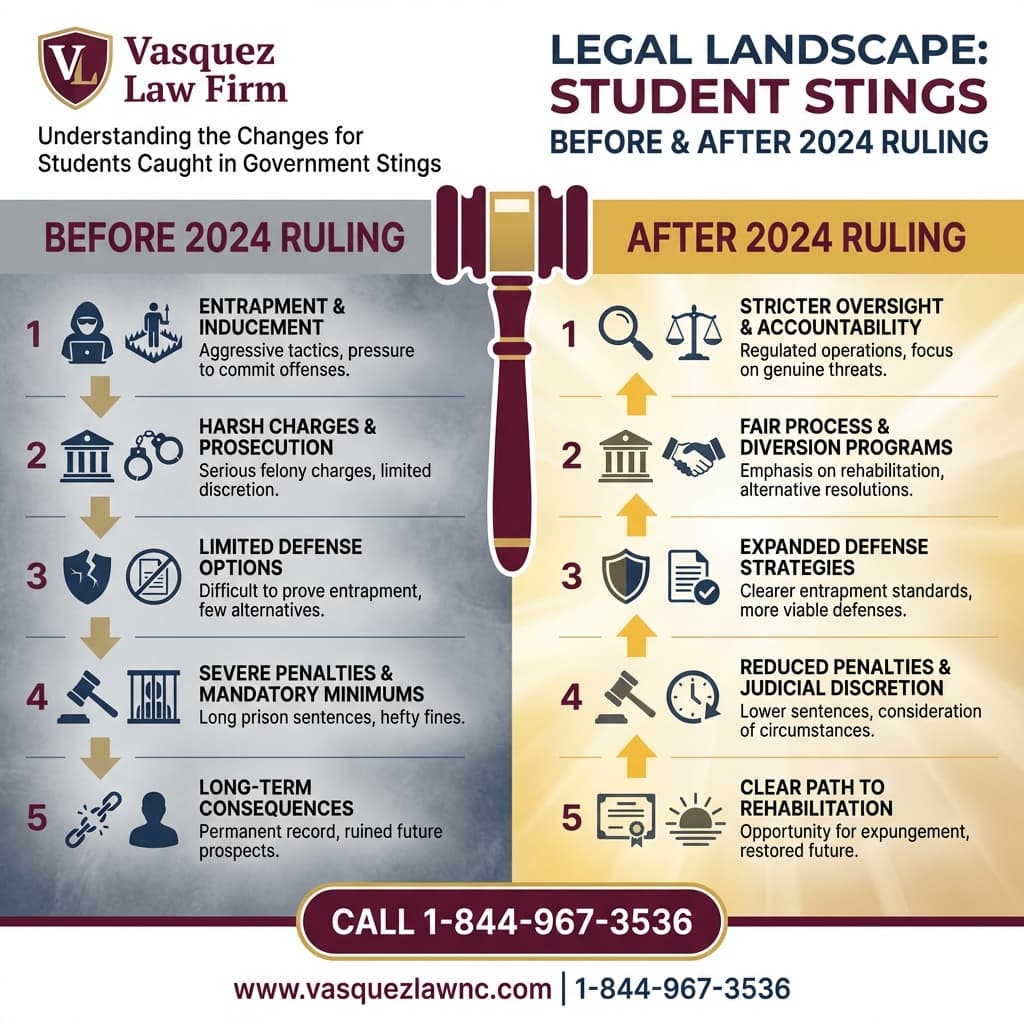
The U.S. government, particularly agencies like U.S. Immigration and Customs Enforcement (ICE) and U.S. Citizenship and Immigration Services (USCIS), actively investigates and prosecutes these operations. Students unknowingly involved in such schemes can face severe penalties, including visa revocation, detention, and deportation. The consequences extend beyond immediate immigration issues, potentially affecting future visa applications and eligibility for other immigration benefits. It is imperative for students to exercise extreme caution and diligence when choosing an educational institution.
Recent Examples and Government Crackdowns
In recent years, federal agencies have intensified efforts to combat fake university immigration schemes. A notable example was the investigation into the University of Farmington, a fake institution created by Homeland Security Investigations (HSI) to expose visa fraud. This operation, which concluded in 2019, resulted in hundreds of arrests and deportations of individuals who knowingly or unknowingly participated in the scheme.
Such operations serve as a stark reminder of the government's commitment to upholding immigration laws and the severe risks involved. As of 2026, authorities continue to monitor for similar fraudulent entities. Students must be aware that simply being enrolled in a school, even if it issues an I-20, does not guarantee its legitimacy or protect them from immigration violations if the institution is found to be fraudulent.
How to Identify a Fake University: Key Warning Signs
Identifying a fake university is crucial for international students. These institutions often display several red flags that, once recognized, can help you avoid a potentially devastating situation. Being proactive in your research and scrutinizing every detail can save you from falling victim to a fake university immigration scam.
One of the most significant indicators is a lack of proper accreditation. Legitimate universities in the U.S. are accredited by agencies recognized by the U.S. Department of Education. If a school cannot provide clear evidence of such accreditation, or if its accreditation seems questionable, it should immediately raise suspicion. Always cross-reference accreditation information with official government databases.
Common Red Flags of Fraudulent Institutions
- No Physical Campus or Poor Facilities: Many fake universities operate solely online or from small, unassuming offices without real classrooms, libraries, or student services. A legitimate institution will have a well-maintained campus.
- Lack of Faculty Information: Scammers often provide minimal information about their faculty, or list individuals with questionable credentials. Verify faculty profiles and their academic backgrounds.
- Vague or Non-Existent Course Offerings: A real university offers a clear curriculum, course descriptions, and academic calendars. Fake schools may have generic program titles without detailed content or schedules.
- Guaranteed Admission or Visa: Be extremely wary of any institution that promises guaranteed admission or F-1 visa approval, especially without a rigorous application process. Legitimate schools cannot guarantee visa outcomes.
- Unusually Low Tuition or Fees: While some legitimate schools offer competitive tuition, excessively low fees for what seems like a degree program can be a sign of fraud. Conversely, some fake universities charge high fees to maximize profits.
- Aggressive Recruitment Tactics: Fraudulent schools may pressure students to enroll quickly, make immediate payments, or discourage them from asking too many questions.
- Poor Online Presence or Reviews: A legitimate university will have a professional website, an active online presence, and typically, student reviews. A lack of these, or numerous negative reviews, should be a warning.
Step-by-Step: Protecting Your F-1 Visa Status
If you are an international student, protecting your F-1 visa status is paramount. This involves careful planning, thorough research, and adherence to all immigration regulations. Taking these proactive steps can help you avoid issues related to fake university immigration scams and maintain your legal standing in the United States.
Begin by meticulously researching any potential school. Don't rely solely on their website or promotional materials. Use independent sources to verify their claims. Your due diligence is your first line of defense against becoming a victim of a fake university.
Essential Steps for International Students
- Verify Accreditation: Check the U.S. Department of Education's database of accredited postsecondary institutions and programs. Also, look up regional and national accrediting agencies to confirm the school's standing.
- Research the Institution Thoroughly: Investigate the school's history, campus, faculty, and student body. Look for news articles, independent reviews, and official government records. Sites like U.S. Department of State can offer guidance on student visas and school legitimacy.
- Understand Your I-20 and SEVIS: Ensure the school is authorized by the Student and Exchange Visitor Program (SEVP) to issue I-20 forms. Your I-20 is a critical document for your F-1 visa, and its validity depends on the school's legitimate SEVP certification.
- Maintain Active Academic Engagement: Once enrolled, consistently attend classes, make academic progress, and comply with all F-1 visa requirements. Simply being enrolled is not enough; active participation is expected.
- Seek Legal Counsel: Before enrolling or if you have any doubts, consult with an experienced immigration attorney. An attorney can help verify a school's legitimacy and advise you on your immigration rights and responsibilities.
Don't face your legal challenges alone. Our team is here to help you every step of the way.
Call today: 1-844-967-3536 | Se Habla Español
Common Mistakes and How to Avoid Them in Immigration Cases
Falling victim to a fake university immigration scam often stems from making common mistakes due to lack of information or desperation. Avoiding these pitfalls is key to a successful and legitimate educational journey in the U.S. Being informed and cautious can prevent severe immigration consequences.
Many students overlook the importance of verifying a school's accreditation or fail to research its reputation beyond what is presented by the institution itself. This oversight can lead them directly into a fraudulent scheme. Always remember that if something seems too good to be true, it likely is.
Avoiding Immigration Pitfalls with Fake Universities
- Mistake: Not Verifying Accreditation. How to Avoid: Always check the U.S. Department of Education's website for recognized accrediting agencies. Contact the accrediting body directly to confirm the school's status.
- Mistake: Relying Solely on Agent Recommendations. How to Avoid: While agents can be helpful, always conduct your own independent research on any recommended institution. Some agents may unknowingly or knowingly promote fraudulent schools.
- Mistake: Believing Guaranteed Visa Promises. How to Avoid: No legitimate school or individual can guarantee a U.S. visa. The decision rests with consular officers and immigration authorities. Be skeptical of such claims.
- Mistake: Ignoring Red Flags. How to Avoid: If a school lacks a real campus, has no clear faculty, or offers vague programs, do not proceed. Trust your instincts and investigate further.
- Mistake: Not Understanding F-1 Visa Rules. How to Avoid: Educate yourself on the responsibilities of an F-1 student, including maintaining full-time enrollment, academic progress, and authorized employment. Ignorance is not a defense.
- Mistake: Delaying Legal Consultation. How to Avoid: If you suspect you are involved in a fake university immigration scheme or have questions about a school's legitimacy, consult an immigration attorney immediately. Early intervention can prevent serious issues.
- Mistake: Paying Large Sums Upfront to Unverified Entities. How to Avoid: Be cautious about making significant payments before thoroughly verifying the institution and understanding all terms. Use secure payment methods and get receipts.
If you only remember one thing: Always verify a university's accreditation and SEVP certification independently before committing, and consult an immigration attorney if you have any doubts or concerns.
Immigration Notes: Nationwide, North Carolina, and Florida Context
Immigration law in the United States is primarily federal, meaning the rules and regulations regarding F-1 visas and fraudulent institutions apply nationwide. However, the practical implications and resources available can vary by location. Whether you are in North Carolina, Florida, or any other state, the core federal laws regarding fake university immigration remain the same. Vasquez Law Firm assists clients across North Carolina, Florida, and nationwide with immigration matters.
Nationwide Context for Fake University Immigration
The U.S. government's enforcement actions against fake universities, such as the University of Farmington case, are federal initiatives. Agencies like USCIS, ICE, and the Department of State work together to identify and dismantle fraudulent operations that exploit the student visa program. The Immigration and Nationality Act (INA) serves as the foundational law for all immigration processes, including student visas. For example, 8 U.S.C. § 1255 outlines adjustment of status, a process that can be jeopardized by involvement with illegitimate schools. All international students, regardless of their state of residence, are subject to these federal laws and enforcement actions.
North Carolina Specifics
In North Carolina, international students attending universities in cities like Charlotte, Raleigh, or Durham must also be vigilant. While the legal framework is federal, local ICE field offices and USCIS district offices in North Carolina are responsible for enforcing these laws. Students in North Carolina who find themselves entangled in a fake university immigration scheme should seek legal assistance from an attorney familiar with both federal immigration law and local enforcement practices. Our firm serves clients throughout North Carolina, offering guidance on complex immigration issues.
Florida Specifics
Florida, with its numerous educational institutions and large international student population, is another area where students must be especially cautious. Major cities like Orlando, Miami, and Tampa attract many international students, making them potential targets for fraudulent schemes. The Department of Homeland Security (DHS) maintains a significant presence in Florida, and enforcement actions can be swift. Students in Florida facing issues related to fake university immigration should contact a knowledgeable immigration attorney in Orlando or elsewhere in the state who can provide immediate assistance and representation.
When to Call a Lawyer Now Regarding Fake University Immigration
The moment you suspect you might be involved with a fake university immigration scheme, or if you receive any communication from immigration authorities, it's critical to act immediately. Delaying legal consultation can have severe and irreversible consequences for your immigration status.
An experienced immigration attorney can assess your situation, verify the legitimacy of your institution, and advise you on the best course of action. Do not attempt to navigate these complex legal waters alone. Our firm, Vasquez Law Firm, is ready to provide the aggressive and compassionate representation you need.
Urgent Triggers to Seek Legal Counsel
- You receive a Notice to Appear (NTA) in immigration court.
- You are contacted by ICE, HSI, or USCIS regarding your student visa or institution.
- Your school's accreditation status becomes questionable or is revoked.
- You learn your school is under investigation for visa fraud.
- You are denied a visa or adjustment of status due to issues with your educational institution.
- Your F-1 visa is revoked or your SEVIS record is terminated.
- You are unsure about the legitimacy of an educational institution before enrolling.
- You feel pressured by an agent or school to engage in suspicious activities related to your visa.
- You need help understanding your F-1 visa compliance requirements.
About Vasquez Law Firm
At Vasquez Law Firm, we combine compassion with aggressive representation. Our motto "Yo Peleo" (I Fight) reflects our commitment to standing up for your rights. We understand the anxieties and challenges that come with immigration matters, especially when facing complex issues like fake university immigration scams. Our dedicated team is here to provide clear guidance and strong advocacy.
- Bilingual Support: Se Habla Español - our team is fully bilingual, ensuring you can communicate comfortably and clearly.
- Service Areas: We proudly serve clients in North Carolina, Florida, and across the nation for all immigration-related needs.
- Experience: With over 15 years of dedicated experience, Attorney Vasquez has a proven track record of helping clients navigate complex legal matters.
- Results: We are committed to achieving favorable outcomes, handling thousands of successful cases across multiple practice areas including immigration, personal injury, and workers' compensation.
Attorney Trust and Experience
Attorney Vasquez holds a Juris Doctor degree and is admitted to practice in both the North Carolina State Bar and Florida Bar. With over 15 years of dedicated legal experience, he has built a reputation for providing personalized attention and achieving favorable outcomes for his clients. His deep understanding of immigration law, coupled with a compassionate approach, makes Vasquez Law Firm a trusted ally for individuals navigating the U.S. legal system. We fight for your rights, every step of the way.
Don't face your legal challenges alone. Our team is here to help you every step of the way.
Call today: 1-844-967-3536 | Se Habla Español
Frequently Asked Questions About Fake University Immigration
What exactly is a fake university immigration scam?
A fake university immigration scam involves fraudulent institutions that enroll international students, not for legitimate education, but primarily to allow them to maintain F-1 visa status. These schools often lack proper accreditation, offer minimal or no actual classes, and primarily exist to collect fees from students seeking to stay in the U.S. without proper academic engagement, leading to severe legal risks for students.
How can I verify if a university is legitimate and accredited?
You can verify a university's legitimacy by checking the U.S. Department of Education's database of accredited institutions and programs. Also, look for regional and national accrediting agencies recognized by the Council for Higher Education Accreditation (CHEA). Ensure the school is authorized by the Student and Exchange Visitor Program (SEVP) to issue I-20 forms. Independent research and cross-referencing information are crucial steps.
What are the consequences if I unknowingly enroll in a fake university?
Unknowingly enrolling in a fake university can lead to severe immigration consequences. Your F-1 visa may be revoked, your SEVIS record terminated, and you could face detention and deportation. You might also be barred from future visa applications. Even if you were unaware, involvement in such schemes violates immigration law, making legal counsel essential to mitigate potential damage.
Can an immigration attorney help me if I'm involved with a fraudulent school?
Yes, an experienced immigration attorney can provide critical assistance. They can assess your situation, help determine if your school is legitimate, and advise you on the best course of action if you are involved in a scam. An attorney can represent you before USCIS or in immigration court, helping to protect your rights and explore options to rectify your immigration status.
What is the University of Farmington case, and how does it relate to current risks?
The University of Farmington was a fake university created by U.S. Homeland Security Investigations (HSI) to expose F-1 visa fraud. It operated from 2015 to 2019 and led to hundreds of arrests and deportations. This case highlights the government's aggressive stance against visa fraud and serves as a strong warning for international students to conduct thorough due diligence when choosing an educational institution, even in 2026.
Are online universities more likely to be fake?
Not necessarily, but online-only universities require extra scrutiny. While many legitimate online programs exist, fraudulent institutions often operate exclusively online to avoid physical presence. Always verify accreditation, faculty credentials, and program details for any online school. The same red flags apply to online institutions as they do to traditional ones, so thorough research is paramount.
What should I do if ICE or USCIS contacts me about my student visa?
If ICE or USCIS contacts you, do not provide any information or sign any documents without first consulting an immigration attorney. You have the right to legal counsel. Contact an attorney immediately to understand your rights, prepare for any interviews, and ensure your responses do not inadvertently jeopardize your immigration status. This is a critical step to protect yourself.
How can I ensure my F-1 visa remains compliant while studying?
To ensure F-1 visa compliance, you must maintain full-time enrollment, make satisfactory academic progress, and comply with all terms of your visa. This includes not working without authorization, notifying your Designated School Official (DSO) of any changes, and ensuring your I-20 and SEVIS record are always up-to-date. Regular communication with your DSO and understanding regulations are key.
Can I change schools if I suspect my current one is fraudulent?
Yes, you can transfer to a new SEVP-certified school. If you suspect your current institution is fraudulent, contact an immigration attorney and your DSO immediately. They can guide you through the transfer process to a legitimate school while minimizing potential immigration issues. Acting quickly is essential to protect your F-1 status and educational future.
What role does SEVP play in preventing fake university scams?
The Student and Exchange Visitor Program (SEVP) certifies schools to enroll international students and monitors their compliance. Only SEVP-certified schools can issue I-20 forms. SEVP helps prevent fake university scams by setting strict requirements for institutions and maintaining a database of approved schools. Students should always confirm a school's SEVP certification through official channels before enrolling.
Sources and References
- U.S. Citizenship and Immigration Services (USCIS)
- U.S. Department of State
- Executive Office for Immigration Review (EOIR)
Need immigration help? Our immigration attorneys can review your case.
Ready to take the next step? Contact Vasquez Law Firm today for a free, confidential consultation. We're committed to fighting for your rights and achieving the best possible outcome for your case.
Start Your Free Case Evaluation Now
Call us: 1-844-967-3536
Se Habla Español - Estamos aquí para ayudarle.
William Vasquez
Founder & CEO, Vasquez Law Firm, PLLC
William Vasquez is the founder and CEO of Vasquez Law Firm, PLLC, a results-driven firm specializing in immigration, criminal defense, personal injury, and workers' compensation. A U.S. Air Force veteran and recipient of the Joint Service Achievement Medal, William is dedicated to fiercely fighting for his clients' rights.
Related Legal Services
Need legal help? Learn more about our immigration law practice, or contact us for a free evaluation.
You can also visit our North Carolina immigration practice for more information.