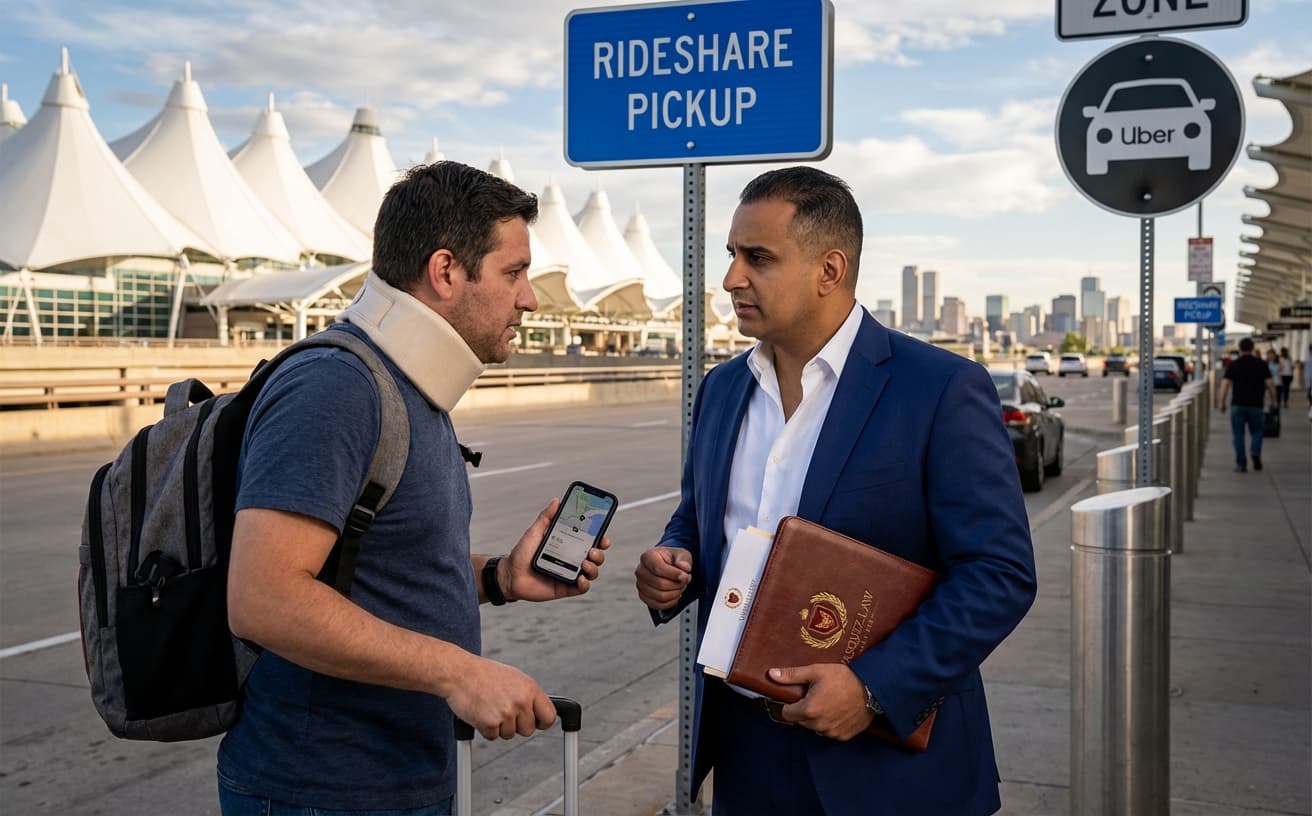
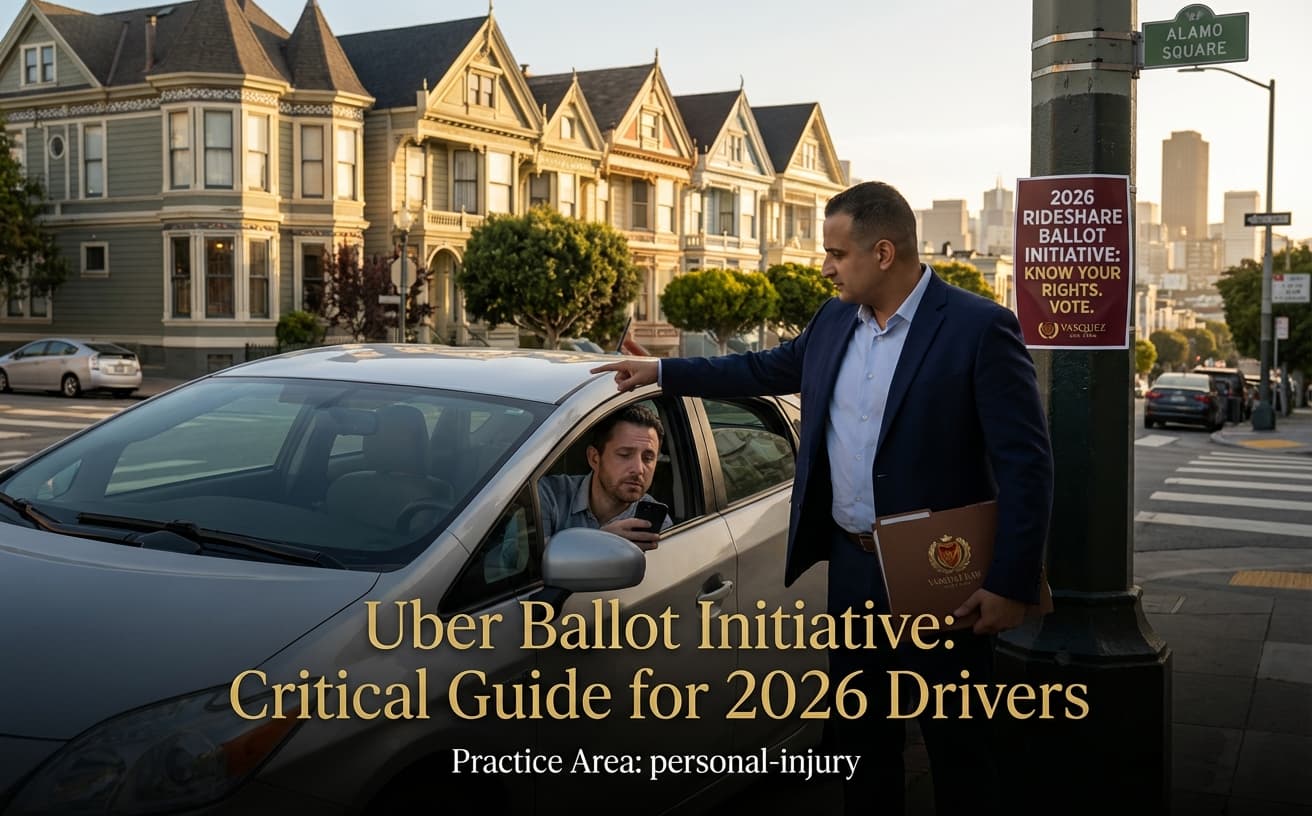
How the Uber Ballot Initiative Affects Drivers in 2026
Understand the Uber ballot initiative and its impact on drivers and passengers in 2026. Protect your rights. Contact Vasquez Law Firm for a free consultation today.
Published on February 24, 2026
Injured? Get what your case is worth
Free review. No fee unless we win.
Free & confidential · Se habla espanol · 24/7
Have questions? Talk to an attorney - free evaluation.
Call 1-844-967-3536Get What Your Injury Is Worth
Schedule your consultation - no fee unless we win.
How the Uber Ballot Initiative Affects Drivers in 2026
The Uber ballot initiative is a significant legal and economic development that could reshape the gig economy for rideshare drivers and passengers across North Carolina, Florida, and potentially nationwide in 2026. This initiative sparks intense debate, particularly concerning worker classification, compensation, and legal protections. For anyone involved in or impacted by rideshare services, understanding the nuances of this ballot measure is essential. It directly affects how drivers are compensated, their access to benefits, and the legal recourse available in case of an accident or dispute. At Vasquez Law Firm, we are closely monitoring these changes to ensure our clients are well-informed and their rights protected amidst evolving regulations.
Need help understanding your rights regarding the Uber ballot initiative? Our experienced attorneys are ready to fight for you. Se Habla Español.
Schedule Your Free Case Evaluation
Or call us now: 1-844-967-3536
Quick Answer
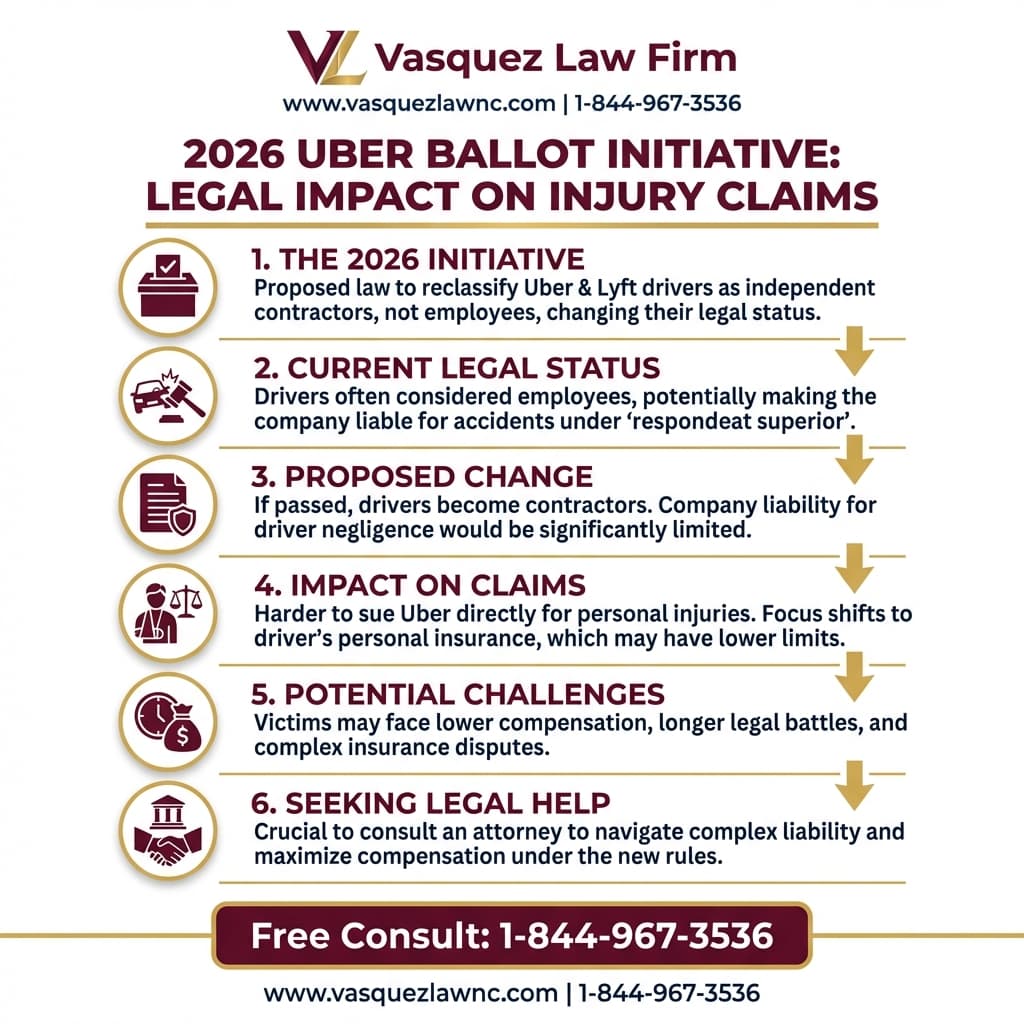
The Uber ballot initiative is a proposed measure aimed at defining rideshare drivers as independent contractors rather than employees, thereby altering their benefits and legal protections. It seeks to establish specific compensation structures and accident liability rules for rideshare companies.
- Reclassifies drivers as independent contractors.
- Establishes new minimum earnings and benefit provisions.
- Limits company liability in certain personal injury cases.
- Impacts legal recourse for drivers in North Carolina and Florida.
- Requires public vote for implementation in specific jurisdictions.
Understanding the Uber Ballot Initiative in 2026
The Uber ballot initiative represents a critical juncture for the gig economy, particularly for rideshare companies like Uber and their drivers. As of 2026, various states are considering or have already implemented measures that aim to clarify the employment status of rideshare drivers. Historically, the debate has centered on whether drivers are employees, entitled to benefits like minimum wage, overtime, and workers' compensation, or independent contractors, who are self-employed and responsible for their own benefits and expenses. This initiative typically proposes a third way, offering some benefits while maintaining the independent contractor model, which often translates to lower operational costs for companies.
For drivers, the implications are substantial. Being classified as an independent contractor means flexibility but often comes at the cost of traditional employment protections. The ballot initiative often includes provisions for a minimum earnings floor, health care stipends, and accident insurance, attempting to balance the needs of drivers with the business model of rideshare platforms. However, these provisions are frequently less robust than those afforded to traditional employees, leading to significant opposition from labor advocates and legal professionals.
Key Provisions and Their Impact
Most ballot initiatives related to rideshare companies include several common provisions. These typically involve defining drivers as independent contractors, guaranteeing a minimum earnings rate (often calculated per engaged time or mile), and providing some form of occupational accident insurance. They might also include health care subsidies for drivers who meet certain thresholds of active driving time. While these provisions aim to offer some security, critics argue they fall short of the comprehensive protections employees receive, such as unemployment insurance, Social Security contributions, and the right to collective bargaining.
The impact on personal injury cases is particularly noteworthy. If drivers are classified as independent contractors, their ability to seek workers' compensation for injuries sustained while on the job may be severely limited or entirely eliminated. Instead, they would typically rely on the occupational accident insurance provided by the rideshare company, which often has lower limits and specific exclusions. This shift places a greater burden on injured drivers to navigate complex insurance claims and potentially pursue personal injury lawsuits, underscoring the need for skilled legal representation, especially in Raleigh, North Carolina, and across Florida.
Legal Ramifications for Drivers and Passengers
The Uber ballot initiative carries profound legal ramifications for both rideshare drivers and passengers. For drivers, the primary concern revolves around their status as independent contractors versus employees. This classification dictates access to vital protections such as minimum wage, overtime pay, workers' compensation benefits, and unemployment insurance. If the initiative passes, it could solidify their independent contractor status, potentially limiting their ability to pursue certain claims against Uber for lost wages or benefits, even in cases of serious injury. This legal framework could force drivers to bear more financial risk, especially if they are involved in an accident.
Passengers also face potential changes, particularly regarding liability in accident scenarios. While rideshare companies typically carry substantial insurance policies, the specific terms and conditions of these policies can be influenced by driver classification. If a driver is deemed an independent contractor, the company might argue for reduced liability, pushing more responsibility onto the driver's personal insurance or making it more challenging for injured passengers to recover full compensation. Understanding these intricate legal shifts is crucial for anyone involved in a rideshare accident, whether in North Carolina or Florida.
Personal Injury Claims and the Gig Economy
In North Carolina and Florida, personal injury law is complex, and the gig economy adds another layer of intricacy. If a rideshare driver is involved in an accident, the question of who is liable becomes paramount. With an independent contractor classification, the rideshare company might distance itself from direct liability for the driver's actions or negligence, arguing that the driver operates their own business. This can complicate personal injury claims for both injured drivers and passengers, requiring a deeper legal understanding of insurance policies, state laws, and the specific provisions of any ballot initiative.
Victims of rideshare accidents in Raleigh or elsewhere need to consult with an attorney who is well-versed in both personal injury law and the evolving landscape of gig economy regulations. Determining whether the driver was on an active ride, logged into the app, or off-duty at the time of the accident significantly impacts which insurance policies apply and who can be held responsible. Vasquez Law Firm has extensive experience helping clients navigate these challenging situations, ensuring their rights are protected and they receive fair compensation.
NC and FL Specific Notes
While the Uber ballot initiative often emerges from a national context, its implementation and specific provisions are often state-specific. For residents and drivers in North Carolina and Florida, understanding the localized impact is crucial. Both states have dynamic legal environments that respond to legislative and public pressures regarding the gig economy. As of 2026, discussions around worker classification and rideshare company responsibilities continue to evolve, making it imperative for individuals to stay informed about local developments.
North Carolina Context
In North Carolina, the legal framework for rideshare services has historically treated drivers as independent contractors. Any new ballot initiative would either solidify this status or introduce specific benefits and protections that fall short of traditional employment. For personal injury cases in North Carolina, this means injured rideshare drivers or passengers must navigate a complex web of insurance policies. Typically, Uber provides significant liability coverage when a driver is engaged in a ride, but disputes often arise over the exact moment of engagement or the extent of coverage. Understanding North Carolina General Statutes related to insurance and transportation is vital for any personal injury claim arising from a rideshare accident in Raleigh or other parts of the state.
Florida Context
Florida, known for its robust tourism and large population, also has a significant rideshare presence. Similar to North Carolina, Florida's legal landscape generally classifies rideshare drivers as independent contractors. A ballot initiative here could codify this status while adding specific requirements for companies to provide certain benefits. For personal injury claims in Florida, the intricacies of rideshare insurance policies become critical. Florida's no-fault insurance system (Personal Injury Protection or PIP) adds another layer of complexity, requiring injured parties to first seek compensation from their own insurance, regardless of who was at fault. Navigating these rules, especially concerning the interplay between personal auto insurance, PIP, and rideshare company policies, requires experienced legal guidance. The Vasquez Law Firm serves clients across Florida, providing expert assistance in these challenging personal injury cases.
Step-by-Step: What to Do If Impacted
If you are a rideshare driver or a passenger involved in an accident, or if you are concerned about the implications of the Uber ballot initiative, taking proactive steps is crucial. The legal landscape is constantly shifting, and understanding your rights and obligations can protect your financial and physical well-being. Here’s a step-by-step guide to help you navigate these complex situations:
- Stay Informed: Regularly check official government websites (like North Carolina Courts or relevant Florida state legislative sites) and reputable news sources for updates on any ballot initiatives or legislative changes affecting rideshare companies in 2026. Knowledge is your first line of defense.
- Document Everything: If you are a driver, keep meticulous records of your driving hours, earnings, and expenses. For accident victims, document the scene, injuries, medical treatments, and communications with insurance companies. Photos, videos, and witness contacts are invaluable.
- Understand Your Insurance: Review your personal auto insurance policy and any policies provided by the rideshare company. Understand what is covered, under what circumstances, and any limitations. This is particularly important for personal injury protection and liability coverage in North Carolina and Florida.
- Seek Medical Attention Immediately: In the event of an accident, prioritize your health. Get a medical evaluation even if you feel fine, as some injuries may not manifest immediately. Timely medical records are crucial for any personal injury claim.
- Do Not Sign Anything Without Legal Review: Insurance companies may offer quick settlements. Do not sign any waivers or settlement agreements without consulting an attorney. These often waive your right to further compensation.
- Consult an Experienced Attorney: The most critical step is to seek legal advice from a qualified personal injury attorney specializing in rideshare accidents and gig economy law. An attorney can help you understand your rights, navigate complex claims, and fight for the compensation you deserve. Vasquez Law Firm offers free case evaluations to help you assess your situation.
Common Mistakes and How to Avoid Them
Navigating the aftermath of a rideshare accident or understanding the implications of a new Uber ballot initiative can be fraught with potential pitfalls. Avoiding common mistakes can significantly impact the outcome of your case and your ability to secure fair compensation.
- Not Reporting the Accident Immediately: Failure to report an accident to law enforcement and the rideshare company can jeopardize your claim. Always report the incident promptly, even if it seems minor.
- Admitting Fault: Never admit fault at the scene of an accident. Stick to the facts and let investigators and legal professionals determine liability. Any admission can be used against you.
- Delaying Medical Treatment: Waiting to seek medical attention can not only harm your health but also weaken your personal injury claim. Insurance companies may argue your injuries are not severe or are unrelated to the accident if there's a significant delay.
- Not Documenting the Scene: Failing to take photos, gather witness information, or document vehicle damage can make it harder to prove your case. Collect as much evidence as possible at the scene.
- Talking to Insurance Adjusters Without Legal Counsel: Insurance adjusters represent the insurance company's interests, not yours. They may try to minimize your claim or get you to say something that harms your case. Always consult an attorney before giving any recorded statements.
- Accepting a Low Settlement Offer: Initial settlement offers are often far below the true value of your claim. Do not accept an offer without a thorough evaluation of your damages by an experienced attorney.
- Failing to Understand Driver Classification: For drivers, misunderstanding whether you are an employee or independent contractor can impact your benefits and legal recourse. Stay informed about the current laws and any ballot initiatives.
- Not Consulting a Personal Injury Lawyer: Attempting to handle a complex rideshare accident claim or understanding new legislation on your own can lead to missed deadlines, undervalued claims, or a complete denial of benefits. A qualified attorney understands the intricacies of personal injury law and the gig economy.
If you only remember one thing: always seek legal advice from a qualified attorney before making any decisions or signing any documents related to a rideshare accident or a ballot initiative's impact on your rights.
When to Call a Lawyer Now
Given the complexities surrounding the Uber ballot initiative and rideshare accidents, knowing when to seek immediate legal counsel is crucial. Delays can often compromise your rights and potential for compensation, especially in North Carolina and Florida.
- You've been involved in a rideshare accident: Whether as a driver, passenger, or another motorist, a severe accident requires immediate legal review to protect your rights.
- You've sustained significant injuries: If your injuries require extensive medical treatment, rehabilitation, or result in lost wages, an attorney can help ensure you receive full compensation.
- An insurance company contacts you: Before speaking to any insurance adjuster, consult with a lawyer. They can protect you from statements that might harm your case.
- You're offered a settlement: Never accept a settlement offer without an attorney reviewing it. It's often less than what your case is truly worth.
- Your claim is denied or delayed: If your insurance claim is rejected or significantly delayed, legal intervention may be necessary to compel fair treatment.
- You're confused about your driver classification: If you are an Uber driver and are unsure about your employment status or how the ballot initiative affects your rights, get legal clarification.
- You're facing medical debt from an accident: An attorney can help you manage medical bills and ensure they are factored into your compensation claim.
- You believe your rights as a gig worker are being violated: If you feel you are not receiving fair compensation or benefits according to current laws or proposed initiatives, seek legal advice.
About Vasquez Law Firm
At Vasquez Law Firm, we combine compassion with aggressive representation. Our motto "Yo Peleo" (I Fight) reflects our commitment to standing up for your rights. We understand the challenges individuals face when navigating complex legal matters, especially in the evolving landscape of personal injury and gig economy law. Our dedicated team is here to provide the unwavering support and fierce advocacy you deserve.
- Bilingual Support: Se Habla Español - our team is fully bilingual, ensuring clear and effective communication for all our clients.
- Service Areas: Personal injury in North Carolina; immigration nationwide, including Florida
- Experience: With over 15 years of dedicated legal experience, Attorney Vasquez has a proven track record of helping clients achieve favorable outcomes in a wide range of practice areas.
- Results: We are committed to securing the best possible results for our clients, whether through negotiation or litigation, fighting tirelessly for their justice.
Attorney Trust and Experience
Attorney Vasquez holds a Juris Doctor degree and is admitted to practice in both the North Carolina State Bar and Florida Bar. With over 15 years of dedicated legal experience, he has built a reputation for providing personalized attention and achieving favorable outcomes for his clients. His deep understanding of the law, combined with a compassionate approach, makes Vasquez Law Firm a trusted advocate for those seeking justice. Learn more about our team and our commitment to client success.
Don't face your legal challenges alone. Our team is here to help you every step of the way.
Call today: 1-844-967-3536 | Se Habla Español
Frequently Asked Questions
What is the Uber ballot initiative?
The Uber ballot initiative is a proposed state measure, often put to a public vote, that seeks to define rideshare drivers as independent contractors rather than employees. This classification affects their eligibility for benefits like minimum wage, overtime, and workers' compensation. It typically includes provisions for some alternative benefits, such as a minimum earnings guarantee and occupational accident insurance, but generally falls short of full employee protections.
How does this initiative affect Uber drivers' rights?
If passed, the initiative generally limits Uber drivers' rights by cementing their status as independent contractors. This means they might not be entitled to traditional employee benefits and protections under state labor laws, including unemployment insurance or collective bargaining rights. While some alternative benefits may be offered, they are typically less comprehensive than those for employees, impacting drivers' financial security and legal recourse.
What are the implications for personal injury claims?
The initiative can significantly impact personal injury claims. If drivers are independent contractors, they generally cannot claim workers' compensation for on-the-job injuries. Instead, they would rely on the rideshare company's occupational accident insurance, which might have lower coverage limits and specific exclusions. This could make it more challenging for injured drivers and passengers to recover full compensation, necessitating expert legal guidance in North Carolina and Florida.
Will the Uber ballot initiative affect passengers?
Yes, passengers can be indirectly affected. While direct liability for passenger injuries typically falls under the rideshare company's insurance, the driver's classification as an independent contractor could influence the company's overall liability posture. This might lead to more complex claims processes or disputes over coverage limits, especially if the company attempts to limit its responsibility based on the driver's non-employee status. Passengers should always consult an attorney after a rideshare accident.
Is the initiative being considered in North Carolina and Florida?
Discussions and legislative efforts around rideshare driver classification are ongoing in many states, including North Carolina and Florida, as of 2026. While specific ballot initiatives vary by jurisdiction, the underlying debate about independent contractor status versus employee status is a nationwide trend. Residents and drivers in Raleigh, NC, and across Florida should monitor local legislative developments and proposed ballot measures to understand their potential impact.
What should I do if I'm an Uber driver and get into an accident?
If you're an Uber driver involved in an accident in North Carolina or Florida, first ensure safety and seek medical attention. Report the accident to law enforcement and through the Uber app immediately. Do not admit fault or give recorded statements to insurance adjusters without consulting a personal injury attorney. An attorney can help you understand your rights, navigate insurance claims, and pursue fair compensation for your injuries and losses.
Can I sue Uber if I'm injured as a passenger?
As an injured passenger, you generally have the right to seek compensation. Uber typically carries substantial liability insurance policies for passengers during active rides. However, the process can be complex, involving multiple insurance companies and legal arguments. Consulting a personal injury attorney is highly recommended to ensure all responsible parties are identified, and you receive the maximum compensation for medical expenses, lost wages, pain, and suffering.
How can Vasquez Law Firm help with my rideshare accident case?
Vasquez Law Firm specializes in personal injury cases, including those involving rideshare accidents in North Carolina and Florida. Our experienced attorneys understand the complexities of gig economy laws and insurance policies. We can help you investigate the accident, gather evidence, negotiate with insurance companies, and if necessary, represent you in court to ensure you receive fair compensation for your injuries, lost wages, and other damages. Contact us for a free case evaluation.
What is the difference between an employee and an independent contractor?
An employee typically works under the direct control of an employer, receives a salary or hourly wage, and is entitled to benefits like minimum wage, overtime, workers' compensation, and unemployment insurance. An independent contractor, however, is self-employed, controls their own work, and is generally not entitled to these employer-provided benefits. The Uber ballot initiative seeks to maintain the independent contractor model for rideshare drivers while offering some limited benefits.
Does the initiative impact other gig economy workers?
While the Uber ballot initiative specifically targets rideshare drivers, its outcome and the legal arguments surrounding it can set a precedent for other gig economy workers. If successful, similar measures could be proposed for food delivery drivers, freelance workers, and other independent contractors across various industries. This makes the initiative a bellwether for the future of worker classification in the broader gig economy, influencing legal frameworks nationwide.
Sources and References
- North Carolina Courts - Official website for information on court systems and legal procedures in North Carolina.
- North Carolina Department of Transportation (NCDOT) - Provides information on transportation laws and regulations in NC.
- Legal Information Institute, Cornell Law School (Independent Contractor) - Provides definitions and legal context for independent contractors.
Ready to take the next step? Contact Vasquez Law Firm today for a free, confidential consultation. We're committed to fighting for your rights and achieving the best possible outcome for your case.
Start Your Free Case Evaluation Now
Call us: 1-844-967-3536
Se Habla Español - Estamos aquí para ayudarle.

William Vasquez
Founder & CEO, Vasquez Law Firm, PLLC
William Vasquez is the founder and CEO of Vasquez Law Firm, PLLC, a results-driven firm specializing in immigration, criminal defense, personal injury, and workers' compensation. A U.S. Air Force veteran and recipient of the Joint Service Achievement Medal, William is dedicated to fiercely fighting for his clients' rights.
Related Legal Services
Need legal help? Learn more about NC personal injury legal team, or contact us for a free evaluation.
You can also visit NC personal injury legal help for more information.