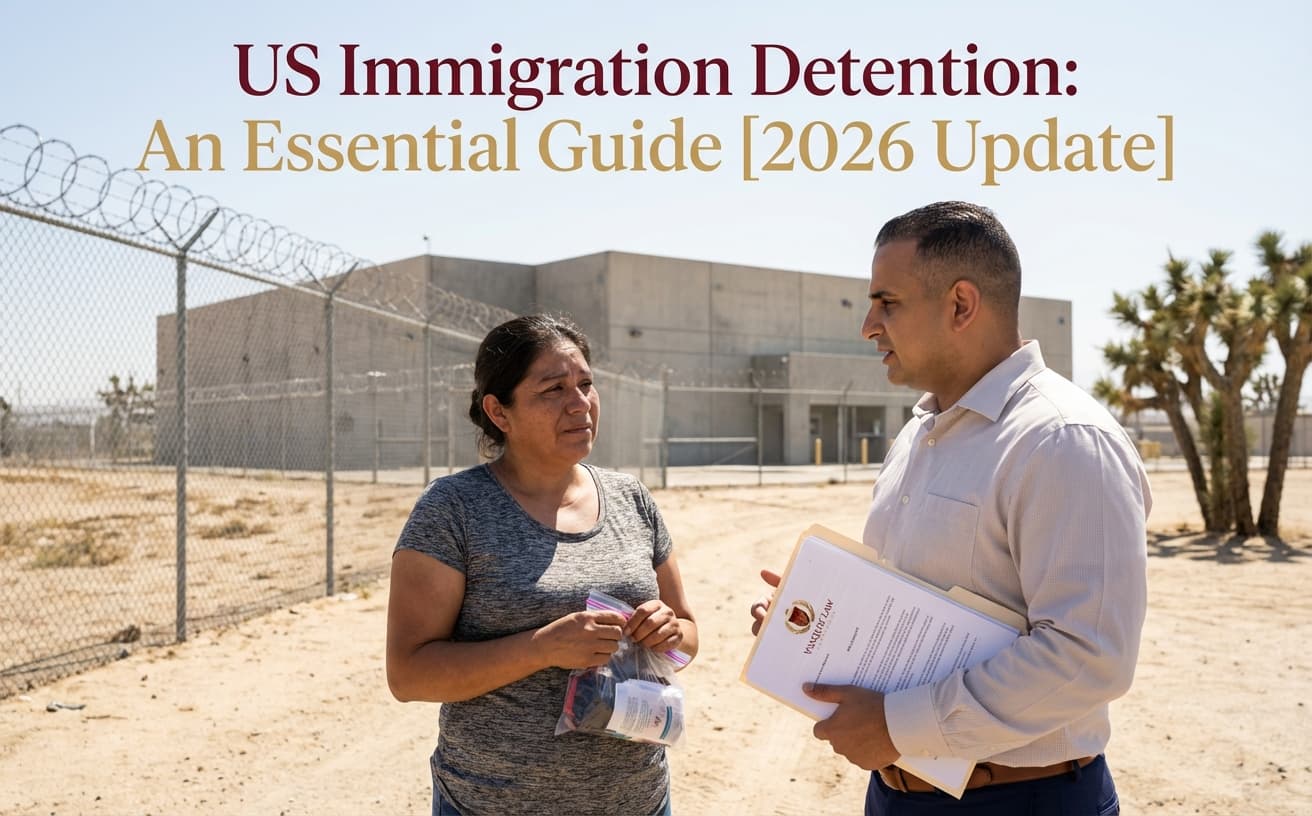
What You Need to Know About Cameroon Deportation in 2026
Facing Cameroon deportation? Understand your rights, legal protections, and how to fight back in 2026. Contact Vasquez Law for a free consultation today.
Published on February 23, 2026
Talk to an immigration attorney
Free call. A clear plan for your case.
Free & confidential · Se habla espanol · 24/7

Have questions? Talk to an attorney - free evaluation.
Call 1-844-967-3536Check your case status now
Look up your immigration case below, then talk to an attorney about what it means — free.
Questions about your result?
Talk to an attorney about your case — free, no obligation.
What You Need to Know About Cameroon Deportation in 2026
Understanding the complexities surrounding Cameroon deportation is critical for individuals and families in 2026. Recent events have highlighted the urgent need for accurate information and strong legal representation. This comprehensive guide provides essential insights into the deportation process, legal defenses available, and what steps you can take to protect your rights, whether you are in North Carolina, Florida, or elsewhere in the U.S. Navigating immigration law, especially concerning deportation cases, requires a deep understanding of federal regulations and a strategic approach. Vasquez Law Firm is dedicated to helping individuals facing such challenging circumstances.
Need help with your case? Our experienced attorneys are ready to fight for you. Se Habla Español.
Schedule Your Free Case Evaluation
Or call us now: 1-844-967-3536
Quick Answer: Understanding Cameroon Deportation
Cameroon deportation involves the removal of non-citizens from the U.S. to Cameroon, often due to immigration violations, criminal convictions, or denied asylum claims. Individuals facing deportation may have legal avenues to challenge removal, including asylum, withholding of removal, or Convention Against Torture (CAT) relief. Seeking immediate legal counsel is crucial to explore all possible defenses and protections available under U.S. immigration law in 2026.
- Deportation is a federal process managed by ICE and EOIR.
- Asylum, withholding of removal, and CAT relief are primary defenses.
- Recent reports highlight concerns about the safety of deportees to Cameroon.
- Legal representation is vital to navigating complex court procedures.
- Even with a final order, some options for relief may still exist.
Why Cameroon Deportation Matters: Human Rights Concerns
The issue of Cameroon deportation has garnered significant attention due to widespread reports of human rights abuses, political instability, and violence in the country. Many individuals facing removal to Cameroon are asylum seekers who fear persecution based on their political opinions, ethnicity, religion, or sexual orientation. Sending individuals back to a country where they face a credible threat of harm raises serious humanitarian and legal concerns, impacting families and communities across the U.S., including those in Raleigh, North Carolina, and throughout Florida.
Advocacy groups and international organizations have repeatedly urged the U.S. government to halt deportations to Cameroon, citing evidence of torture, arbitrary detention, and extrajudicial killings. These concerns underscore the importance of robust legal defense for anyone facing a deportation order. An attorney can help present compelling evidence of potential harm, ensuring that U.S. immigration courts fully consider the dangers a client might face upon return. The legal landscape surrounding these deportations is constantly evolving, making expert guidance indispensable for those at risk.
The Deportation Process and Your Rights
The process of deportation, or removal, typically begins when U.S. Immigration and Customs Enforcement (ICE) issues a Notice to Appear (NTA) to a non-citizen. This document charges the individual with violating immigration law and initiates proceedings before an immigration judge at the Executive Office for Immigration Review (EOIR). Understanding each stage of this process is fundamental to building a strong defense against Cameroon deportation.
You have several key rights during deportation proceedings, including the right to legal representation, the right to present evidence, and the right to appeal a judge's decision. However, the U.S. government does not provide attorneys for non-citizens in immigration court, making it essential to secure private counsel. A skilled immigration lawyer can help you understand the charges, identify potential forms of relief, and navigate the complex legal system to protect your future. Early engagement with a legal professional can significantly impact the outcome of your case.
Initiating Removal Proceedings
Removal proceedings formally begin with the Notice to Appear (NTA), which outlines the specific reasons the government believes an individual is deportable. This could be due to overstaying a visa, entering without inspection, or committing certain crimes. Once an NTA is issued, the individual must appear before an immigration judge. It is crucial to attend all scheduled hearings, as failure to appear can result in an in absentia order of removal, making it much harder to fight the Cameroon deportation.
Upon receiving an NTA, contact an immigration attorney immediately. They can review the charges, assess the legal basis for deportation, and begin preparing your defense. The initial master calendar hearing is primarily for procedural matters, but it sets the stage for future individual hearings where arguments and evidence are presented. Having a lawyer from the outset ensures that all deadlines are met and that your rights are fully protected throughout the complex legal journey.
Forms of Relief from Deportation
Several forms of relief may be available to individuals facing Cameroon deportation. The most common include asylum, withholding of removal, and protection under the Convention Against Torture (CAT). Asylum is sought by those who fear persecution in their home country based on race, religion, nationality, political opinion, or membership in a particular social group. Withholding of removal offers similar protection but has a higher burden of proof and does not lead to permanent residency.
CAT relief protects individuals from being deported to a country where there are substantial grounds to believe they would be tortured. Other potential reliefs include cancellation of removal for certain non-permanent residents, waivers, or adjustment of status if eligible. Each form of relief has specific eligibility requirements and demands extensive documentation and testimony. An experienced attorney can evaluate your case, determine the most suitable defense, and help you gather the necessary evidence to support your claim. For more information on asylum law, explore our detailed guide.
Step-by-Step: Fighting Cameroon Deportation
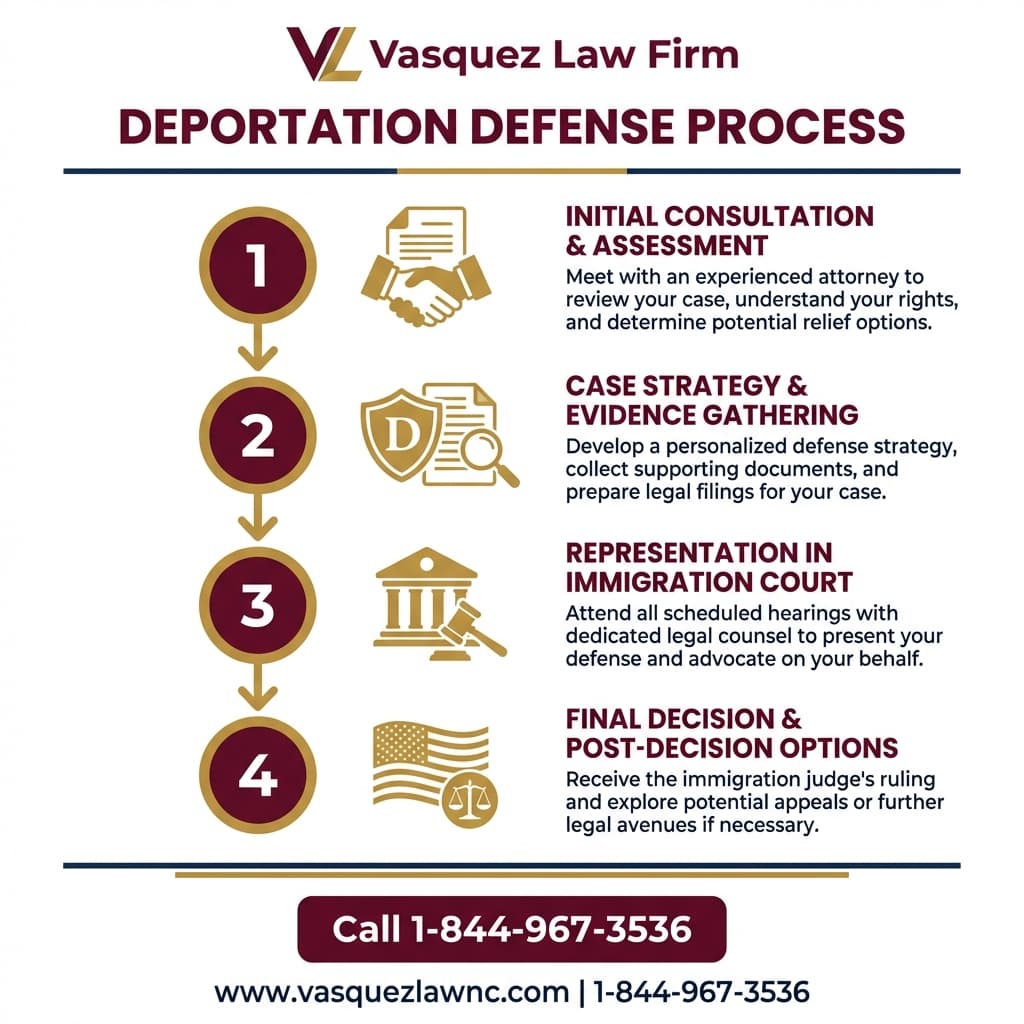
Facing a deportation order can be overwhelming, but a structured approach can help. Here's a step-by-step guide to challenging Cameroon deportation, emphasizing the importance of legal counsel at each stage:
- Seek Immediate Legal Counsel: As soon as you receive a Notice to Appear (NTA) or are detained by ICE, contact an experienced immigration attorney. Do not sign any documents without understanding them.
- Understand the Charges: Your attorney will review the NTA and explain the specific grounds for your potential deportation. This clarity is the first step in formulating a defense strategy.
- Identify Potential Relief: Work with your lawyer to determine if you are eligible for asylum, withholding of removal, CAT relief, cancellation of removal, or other forms of protection.
- Gather Evidence: Collect all necessary documents, including personal affidavits, witness testimonies, country condition reports, medical records, and any evidence supporting your claim of fear or eligibility for relief.
- Prepare for Court Hearings: Your attorney will prepare you for master calendar and individual hearings, including practicing testimony and reviewing evidence.
- Present Your Case: During individual hearings, your lawyer will present your evidence and arguments to the immigration judge. You will have the opportunity to testify and be cross-examined.
- Appeal if Necessary: If the immigration judge denies your relief, your attorney can help you file an appeal with the Board of Immigration Appeals (BIA). Further appeals may be possible to federal circuit courts.
- Explore Post-Order Options: Even after a final order of removal, there may be options such as a motion to reopen or a stay of removal, especially if conditions in Cameroon worsen or new evidence emerges.
Documents Checklist for Deportation Defense
A strong defense against Cameroon deportation relies heavily on comprehensive and credible documentation. Organizing these documents early can significantly strengthen your case. Here's a checklist of essential documents and evidence you might need:
- Identification Documents: Passport, birth certificate, national ID from your home country.
- Immigration Records: Any past visa applications, entry stamps, I-94 records, or previous immigration court documents.
- Asylum Application (Form I-589): If applicable, ensure it's accurately completed and submitted.
- Affidavits: Personal declarations detailing your fear of persecution or torture, and affidavits from witnesses supporting your claims.
- Country Condition Reports: Official reports from human rights organizations (e.g., Amnesty International, Human Rights Watch), the U.S. Department of State, or academic sources detailing conditions in Cameroon.
- Evidence of Persecution/Torture: Police reports, medical records, photos of injuries, newspaper articles, or other documentation proving past harm or threats.
- Evidence of Ties to the U.S.: Proof of employment, tax records, utility bills, school records, marriage certificates, birth certificates of U.S. citizen children, and letters from community members.
- Criminal Records: If applicable, certified disposition records for any arrests or convictions, demonstrating the outcome of legal proceedings.
- Financial Records: Bank statements, pay stubs, or other proof of financial stability.
- Medical Records: Documentation of any physical or psychological conditions, especially those related to trauma or torture.
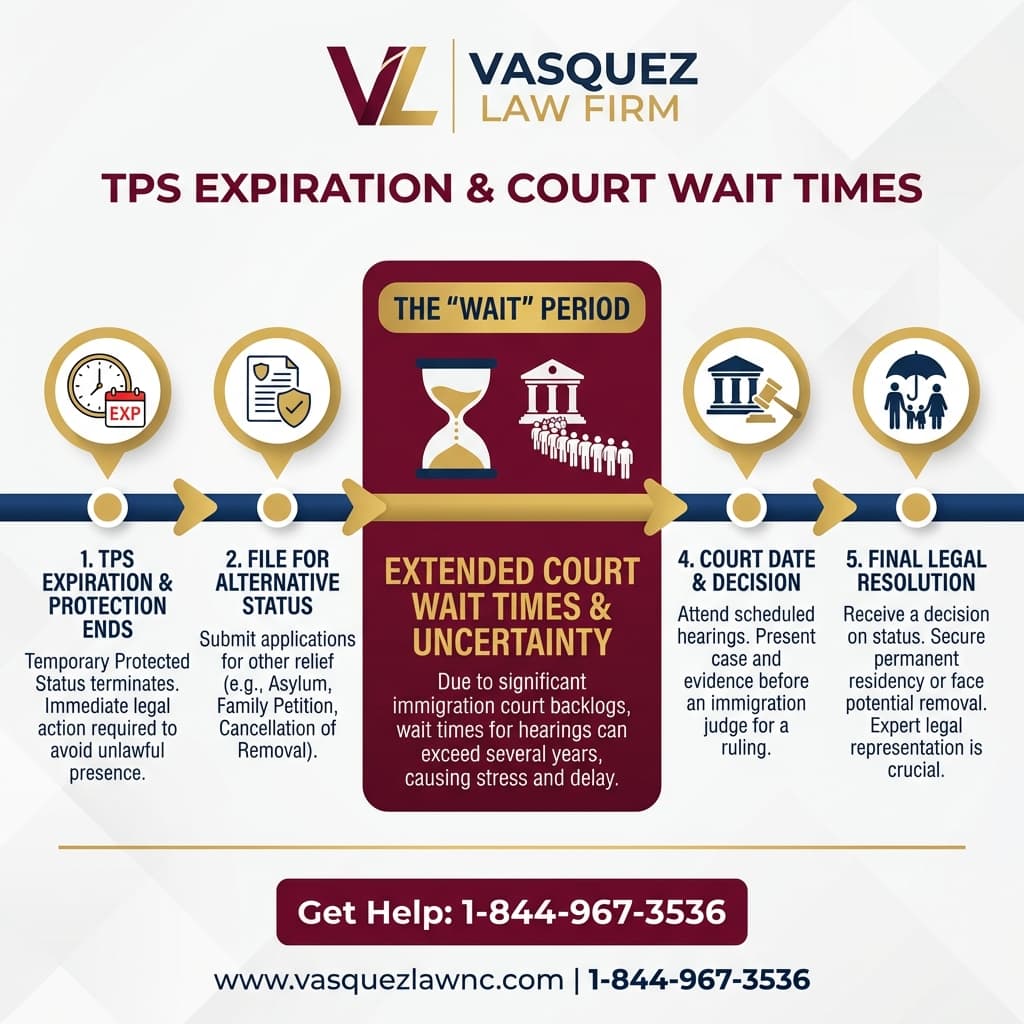
Timeline: What to Expect in a Deportation Case
The timeline for a Cameroon deportation case can vary significantly depending on factors like court backlogs, case complexity, and the availability of evidence. However, understanding the general stages can help manage expectations:
- Initial Detention/Notice to Appear (NTA): This can happen immediately upon apprehension or after an immigration violation is identified. An NTA is typically issued within weeks or months.
- Master Calendar Hearings (MCH): These are preliminary hearings where charges are explained, and a plea is entered. There may be multiple MCHs over several months to a year.
- Individual Hearing (Merits Hearing): This is where evidence is presented, and testimony is heard. This hearing may be scheduled anywhere from 6 months to 2 years after the initial NTA, depending on court dockets.
- Decision by Immigration Judge: A decision can be rendered at the end of the individual hearing or within a few weeks.
- Appeals to Board of Immigration Appeals (BIA): If a decision is appealed, the BIA typically takes 6 months to 2 years to issue a decision.
- Federal Court Appeals: Further appeals to a U.S. Circuit Court of Appeals can add another 1 to 2 years to the process.
- Final Order of Removal/Deportation: Once all appeals are exhausted or waived, a final order is issued, leading to potential removal by ICE. This entire process can take anywhere from 1 to 5+ years.
Costs and Fees: What Impacts the Price of Deportation Defense
The cost of fighting a Cameroon deportation can vary widely based on several factors, including the complexity of the case, the specific forms of relief sought, and the attorney's experience. Legal fees typically cover court appearances, document preparation, evidence gathering, and communication with immigration authorities. While it's a significant investment, the cost of not having experienced legal representation can be far greater, potentially leading to forced removal from the U.S.
Factors influencing costs include the number of court hearings required, whether appeals are necessary, the volume of evidence to be prepared, and the need for expert witnesses or country condition reports. Some attorneys offer flat fees for specific stages of the process, while others bill hourly. Vasquez Law Firm is transparent about our fee structures and offers initial consultations to discuss your options. We believe in accessible legal help, especially for those facing critical situations like deportation. It's an investment in your future and freedom.
Common Mistakes in Deportation Cases and How to Avoid Them
Navigating the immigration system is fraught with potential pitfalls. Avoiding common mistakes can significantly improve your chances of successfully fighting a Cameroon deportation. Here are some key errors to watch out for:
- Missing Court Hearings: Failing to appear for any scheduled hearing can lead to an in absentia removal order, making it extremely difficult to reopen your case. Fix: Always attend all hearings or have your attorney request a continuance if absolutely necessary.
- Not Disclosing All Information: Withholding information from your attorney, even if you think it's irrelevant or embarrassing, can weaken your case. Fix: Be completely honest and transparent with your legal team from the start.
- Filing Incomplete or Incorrect Applications: Errors or omissions on immigration forms can lead to delays or outright denials. Fix: Work with an attorney to ensure all applications are meticulously prepared and submitted.
- Not Gathering Sufficient Evidence: A lack of compelling evidence to support your claims of fear or eligibility for relief can undermine your case. Fix: Proactively collect all relevant documents, affidavits, and country condition reports.
- Falling for Immigration Scams: Relying on unethical notaries or non-attorneys for legal advice can lead to disastrous outcomes. Fix: Only seek advice from licensed immigration attorneys. Learn more about avoiding immigration scams.
- Delaying Legal Action: Waiting too long to seek legal help can limit your options and reduce the time available to prepare a strong defense. Fix: Contact an immigration lawyer immediately upon receiving any notice from ICE or USCIS.
- Traveling Internationally Without Legal Advice: Leaving the U.S. while in removal proceedings or with a deportation order can trigger further complications or prevent re-entry. Fix: Never travel without consulting your immigration attorney first.
- Not Understanding Your Rights: Being unaware of your legal rights during interactions with ICE or other authorities can lead to self-incrimination. Fix: Know your rights, remain silent, and state that you wish to speak with an attorney.
If you only remember one thing: Never face immigration proceedings, especially a Cameroon deportation case, without an experienced immigration attorney. Their expertise is your strongest defense.
Immigration Law: NC, FL, and Nationwide Considerations
Immigration law in the United States is primarily federal, meaning the rules and regulations regarding Cameroon deportation are generally the same across all states, including North Carolina and Florida. However, the practical application and experience can vary based on local ICE field offices, immigration courts, and available legal resources.
North Carolina Considerations
In North Carolina, individuals facing deportation may find themselves in immigration court in Charlotte. The state has a significant immigrant population, and local attorneys are familiar with the specific practices and judges within the Charlotte immigration court. Access to legal aid and advocacy organizations can vary, making private counsel from firms like Vasquez Law Firm in Raleigh crucial for effective defense. We serve clients across North Carolina, providing dedicated support for complex immigration cases.
Florida Considerations
Florida, with its diverse and large immigrant communities, has multiple immigration courts, including those in Miami and Orlando. These courts often handle a high volume of complex cases, including those involving asylum seekers from various countries, including Cameroon. The legal landscape in Florida can be particularly challenging, but experienced immigration attorneys understand the nuances of the local judicial system. Vasquez Law Firm also extends its immigration services to clients throughout Florida, ensuring robust representation against deportation.
Nationwide Immigration Framework
Regardless of location, the core principles of U.S. immigration law, as defined by the Immigration and Nationality Act (INA) and federal regulations (e.g., 8 U.S.C. § 1229a), govern all deportation proceedings. This means that while local courts may have procedural differences, the forms of relief and legal arguments remain consistent nationwide. Our firm provides immigration services across the nation, leveraging our deep understanding of federal immigration law to protect clients from Cameroon deportation, no matter where they are located.
When to Call an Immigration Lawyer Now
The urgency of your situation cannot be overstated when facing potential Cameroon deportation. Certain triggers should prompt you to call an immigration lawyer immediately:
- You have received a Notice to Appear (NTA) from ICE or USCIS.
- You or a family member has been detained by ICE.
- You have a final order of removal.
- You fear persecution or torture if returned to Cameroon.
- Your asylum application has been denied.
- You have a criminal conviction that could lead to deportation.
- You are considering leaving the U.S. but are unsure of the immigration consequences.
- You need to understand your eligibility for deportation protection.
- You suspect you are the target of an immigration scam.
- You have questions about your immigration status and potential risks.
About Vasquez Law Firm
At Vasquez Law Firm, we combine compassion with aggressive representation. Our motto "Yo Peleo" (I Fight) reflects our commitment to standing up for your rights. We understand the profound fear and uncertainty that comes with facing Cameroon deportation, and we are here to provide unwavering support and strategic legal counsel.
- Bilingual Support: Se Habla Español - our team is fully bilingual, ensuring clear communication and cultural understanding.
- Service Areas: We proudly serve clients across North Carolina and Florida, offering nationwide immigration services.
- Experience: With over 15 years of dedicated experience, Attorney Vasquez has a proven track record of helping clients navigate complex legal matters.
- Results: We are committed to achieving the best possible outcomes, fighting tirelessly for our clients' freedom and futures.
Attorney Trust and Experience
Attorney Vasquez holds a Juris Doctor degree and is admitted to practice in both the North Carolina State Bar and Florida Bar. With over 15 years of dedicated legal experience, he has built a reputation for providing personalized attention and achieving favorable outcomes for his clients. His deep understanding of immigration law, combined with a compassionate approach, makes Vasquez Law Firm a trusted advocate for those facing the daunting prospect of Cameroon deportation. Learn more about our legal team.
Don't face your legal challenges alone. Our team is here to help you every step of the way.
Call today: 1-844-967-3536 | Se Habla Español
Frequently Asked Questions About Cameroon Deportation
Can I stop a deportation order to Cameroon once it's issued?
Even after a deportation order is issued, there may still be options to challenge it, such as filing a motion to reopen your case or requesting a stay of removal. These options are time-sensitive and require strong legal arguments, often based on new evidence or changes in country conditions. An attorney can assess your specific situation and advise on the feasibility of these post-order remedies. Early intervention is always best.
What is asylum, and how does it relate to Cameroon deportation?
Asylum is a form of protection granted to individuals who have a well-founded fear of persecution in their home country based on race, religion, nationality, political opinion, or membership in a particular social group. Many individuals facing Cameroon deportation seek asylum due to the severe human rights concerns in Cameroon. If granted, asylum prevents deportation and provides a path to legal permanent residency.
What is the Convention Against Torture (CAT) relief?
The Convention Against Torture (CAT) relief provides protection to individuals who face a substantial risk of torture if returned to their home country. Unlike asylum, CAT relief does not require proving persecution based on specific grounds, only that torture by or with the acquiescence of government officials is more likely than not. This is a critical defense for many facing Cameroon deportation due to the documented abuses there.
How long does a typical deportation case take?
The duration of a deportation case can vary widely, from several months to many years, depending on factors such as court backlogs, the complexity of the legal arguments, and the need for appeals. Cases involving detailed asylum claims or multiple forms of relief often take longer. Having an experienced attorney can help streamline the process and ensure all deadlines are met efficiently.
Can a criminal record affect my defense against Cameroon deportation?
Yes, certain criminal convictions can significantly impact your ability to fight deportation. Some crimes are considered "aggravated felonies" or "crimes involving moral turpitude," making individuals deportable and potentially ineligible for certain forms of relief. It's crucial to discuss any criminal history openly with your attorney to understand its implications for your immigration case.
What happens if my asylum claim is denied?
If your asylum claim is denied by an immigration judge, you generally have the right to appeal the decision to the Board of Immigration Appeals (BIA). If the BIA also denies your appeal, you may have further options to appeal to a federal circuit court. It is essential to have legal representation throughout this appeals process to present the strongest possible arguments.
Is there a difference between deportation and removal?
Legally, the terms "deportation" and "removal" are often used interchangeably in common language, but "removal" is the current official term used in U.S. immigration law since 1996. Both refer to the government's process of expelling a non-citizen from the United States. The legal procedures and consequences are essentially the same whether referred to as deportation or removal.
How can Vasquez Law Firm help with Cameroon deportation cases?
Vasquez Law Firm provides comprehensive legal representation for individuals facing Cameroon deportation. Our services include evaluating your case, identifying potential forms of relief like asylum or CAT, preparing and filing all necessary documents, representing you in immigration court, and handling appeals. We offer bilingual support and are committed to fighting aggressively for your rights and protection, leveraging over 15 years of immigration law experience.
What should I do if ICE detains me?
If ICE detains you, it is crucial to remain calm and assert your rights. Do not sign any documents without speaking to an attorney. You have the right to remain silent and to speak with a lawyer. Provide only your name, and immediately request to contact an attorney. Remember any identifying numbers or information regarding your detention facility. Then, contact Vasquez Law Firm as soon as possible for urgent legal assistance.
Are there any recent changes to U.S. policy regarding Cameroon deportations in 2026?
U.S. immigration policy is subject to frequent changes, and the specific approach to Cameroon deportation can evolve based on international relations, human rights reports, and court decisions. As of 2026, advocacy groups continue to monitor and challenge these deportations. It is vital to consult with an immigration attorney for the most current information and to understand how any policy changes might affect your specific case. Legal counsel ensures you are aware of all available protections.
Sources and References
- U.S. Citizenship and Immigration Services (USCIS)
- Executive Office for Immigration Review (EOIR)
- U.S. Department of State
- 8 U.S.C. § 1229a - Removal Proceedings
Ready to take the next step? Contact Vasquez Law Firm today for a free, confidential consultation. We're committed to fighting for your rights and achieving the best possible outcome for your case.
Start Your Free Case Evaluation Now
Call us: 1-844-967-3536
Se Habla Español - Estamos aquí para ayudarle.


William Vasquez
Founder & CEO, Vasquez Law Firm, PLLC
William Vasquez is the founder and CEO of Vasquez Law Firm, PLLC, a results-driven firm specializing in immigration, criminal defense, personal injury, and workers' compensation. A U.S. Air Force veteran and recipient of the Joint Service Achievement Medal, William is dedicated to fiercely fighting for his clients' rights.
Related Legal Services
Need legal help? Learn more about experienced immigration attorneys in Charlotte, or contact us for a free evaluation.
You can also visit NC immigration legal help for more information.